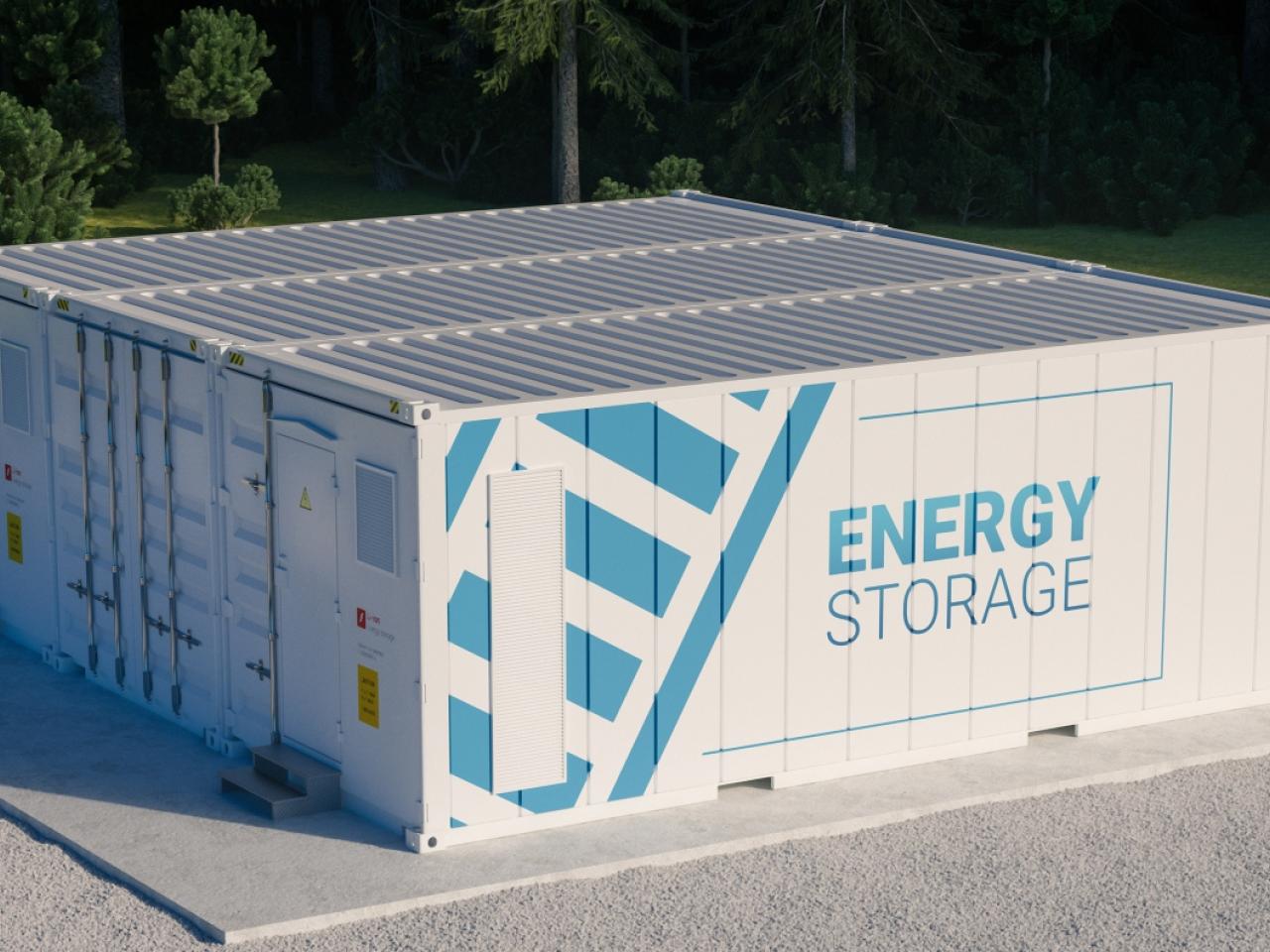
The global supply of stationary energy storage systems has expanded dramatically as the number of solar and wind farms increase – but ensuring the safe operation of larger systems is critical to their long-term success.
Sustainable Brands® recently unveiled program details and speaker lineup for New Metrics '17, scheduled for November 13 -15 in Philadelphia, PA. Gathering together over 350 business executives, sustainability strategists and financial leaders from across the globe, New Metrics focuses on cutting-edge ideas and tools for quantifying previously-ignored risks, costs and revenue potential associated with sustainability impacts.
The federal government has long played a central role in shaping U.S. energy independence and security. Today, however, we stand at an inflection point where states, municipal governments and even corporations are stepping up to become the primary drivers of the future of clean energy.
Business action on water will be key in the coming years, as demand for water is set to outstrip water supply 40% by 2030. In other words, wasting water no longer makes sense from a business perspective. Yet, 80% of wastewater still goes back into the environment untreated.
As a global provider of energy-efficient technology solutions, Ingersoll Rand is positioned to pursue opportunities that arise from the nexus between energy efficiency and climate change mitigation. While energy resource demands and climate change represent great risks for society and the planet, we recognize that the innovation that addresses these issues is a potential growth driver for our business.
While the White House’s plans for a $1 trillion federal infrastructure program continue to coalesce, one recent estimate puts the depreciated value of the American electric infrastructure—including power plants, transmission lines, distribution lines, substations and transformers—at around $1.5 trillion to $2 trillion, with a replacement value of $4.8 trillion.
A new report jointly commissioned by WBCSD, WaterAid and the UN Global Compact’s CEO Water Mandate, uncovers key areas where businesses can drive substantial progress on water, sanitation and hygiene (WASH) across supply chains.
A new administration has vowed to roll back numerous environmental regulations aimed at reducing the nation’s carbon footprint. Does this give power providers new impetus to rewrite their long-term planning? This year’s Strategic Directions: Electric Industry Report finds this isn’t necessarily the case.
Texas Trees Foundation (“Texas Trees”) announced findings from the 2017 Dallas Urban Heat Island Effect report, a year-long study of the impacts and implications of air temperatures at the neighborhood level. Most notable among them: Dallas is heating up faster than every city in the country except for Phoenix.
Reliability and resilience are the critical centerpieces of today’s power industry. Even as utilities balance new, advanced technologies and changing regulatory mandates, organizational leaders remain focused on meeting evolving customer demand while delivering reliable, uninterruptable power flows. Black & Veatch’s new 2017 Strategic Directions: Electric Industry Report demonstrates the range of ways in which power providers — from generation to delivery — are broadening their views and adopting more flexible financial, planning and technology initiatives to meet these demands.
AEG embraces its responsibility to enrich the lives of people in the communities around the world where we do business, and to use business to create...
In states where Key has a presence, there are approximately 1.7 million low- to moderate-income (LMI) households. Many LMI individuals don’t have bank...
Diverse teams build better products — period. At GoDaddy, we make apps and services that our worldwide community of entrepreneurs can relate to. Our...
Everyone’s financial journey is different. We make intentional efforts to meet the individual needs of clients and communities through a diverse range...