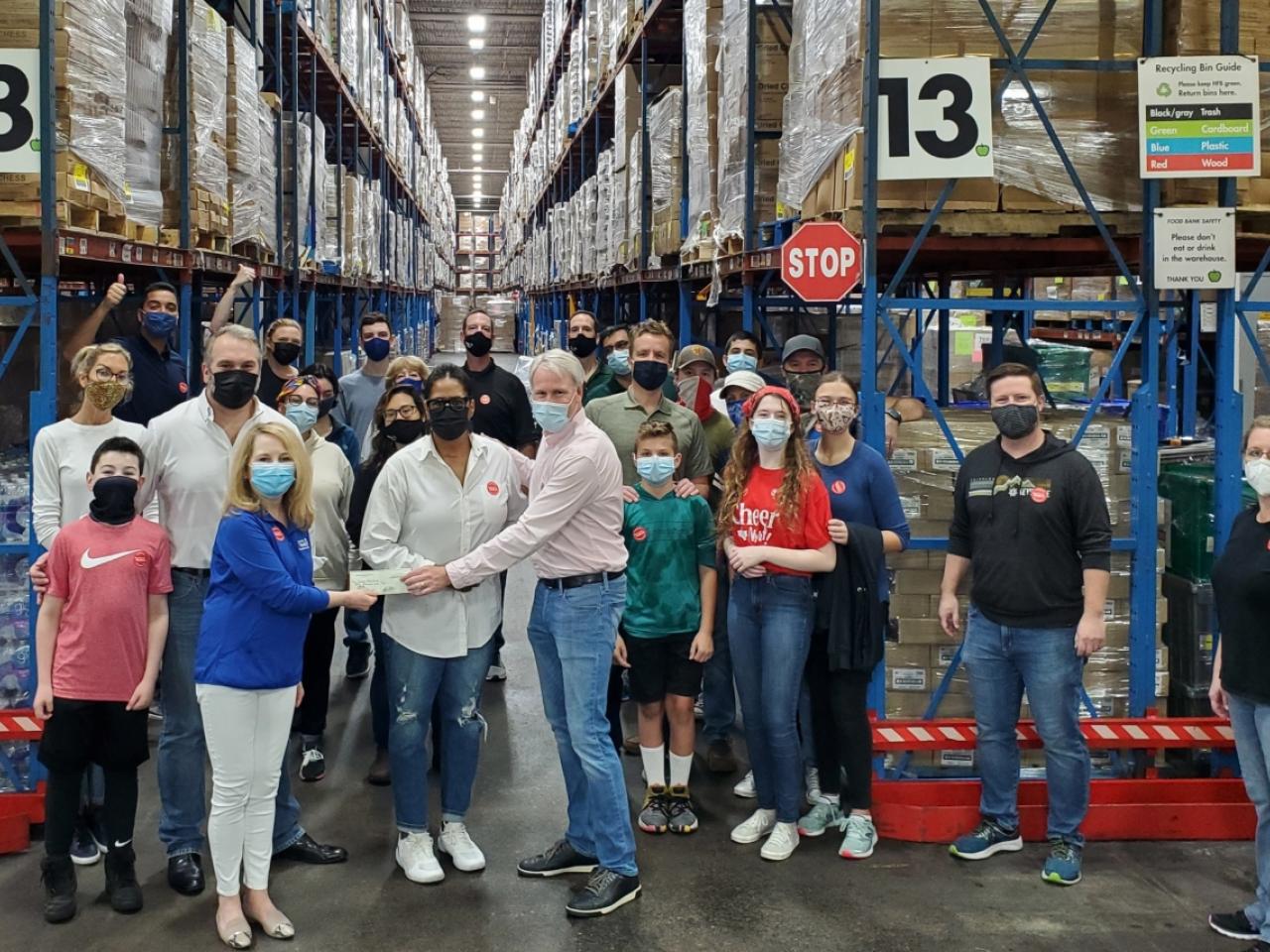
The Baker Hughes Foundation has announced a $150,000 grant to five organizations that promote food security in local communities. The funds will help provide food and basic services to meet increased demand prompted by the COVID-19 pandemic.
As with all Cargill-CARE partnerships globally, the Central America collaboration melds Cargill’s expertise in food and agriculture with CARE’s decades of success in community-led rural development, helping communities to take a leading role in identifying problems and developing solutions they can sustain for themselves.
Cargill's purpose is to nourish the world in a safe, responsible, sustainable way. Learn more about our four key priorities for a sustainable future: addressing climate change, land use, water resources and farmer livelihoods. It's part of our commitment to nourish the world and protect the planet.
Tamara Coger of Tetra Tech’s Environment and Natural Resources sector discusses the benefits of investing in sustainable natural resources management to people, societies, and economies around the world. All opinions expressed in this post are the author’s own.
Having served for most of my career in the public sector and now with one year of private sector experience at DuPont, I see now, more than ever, the importance of public-private partnerships. I firmly believe we can leverage the leadership and innovation that a company like DuPont wields to establish a responsive and sustainable agriculture industry that helps address our food security challenges.
General Mills’ 2017 Global Responsibility Report highlights much of our important work and progress over the last year across four key focus areas: our food, our planet, our workplace and our community.
Cargill’s cocoa sustainability program aims to deliver sector-wide transformation in the world’s second biggest cocoa producing region. It’s a strategy aligned to the government of Ghana’s plans to reinvigorate the economy.
Waste is a crucial issue for businesses; reducing waste doesn’t just prevent pollution and conserve energy, it saves companies money. This is especially evident in the food service industry, where billions of dollars are lost due to food waste. It’s very clear that waste reduction isn’t just about sustainability; it’s a business imperative.
One in nine people still go to bed hungry every night. Because of rapid population growth, the demand for livestock is expected to more than double by 2050, making it increasingly difficult to supply enough protein to nourish everyone. This pressure on the planet also amplifies greenhouse gas emissions and water scarcity. We have no choice but to discover alternative ways to feed people.
A pioneer in rescuing produce that would otherwise go to waste, FareShare helps feed half a million people each week. CEO Lindsay Boswell tells us how.
Join us as we travel the world to uncover real stories of impact—from landfills and energy transition to workplace safety, emerging contaminants, and...
Trane Technologies is a global climate innovator with a clear purpose to boldly challenge what’s possible for a sustainable world. See how embedding...
In states where Key has a presence, there are approximately 1.7 million low- to moderate-income (LMI) households. Many LMI individuals don’t have bank...
Diverse teams build better products — period. At GoDaddy, we make apps and services that our worldwide community of entrepreneurs can relate to. Our...
Diverse teams build better products — period. At GoDaddy, we make apps and services that our worldwide community of entrepreneurs can relate to. Our...