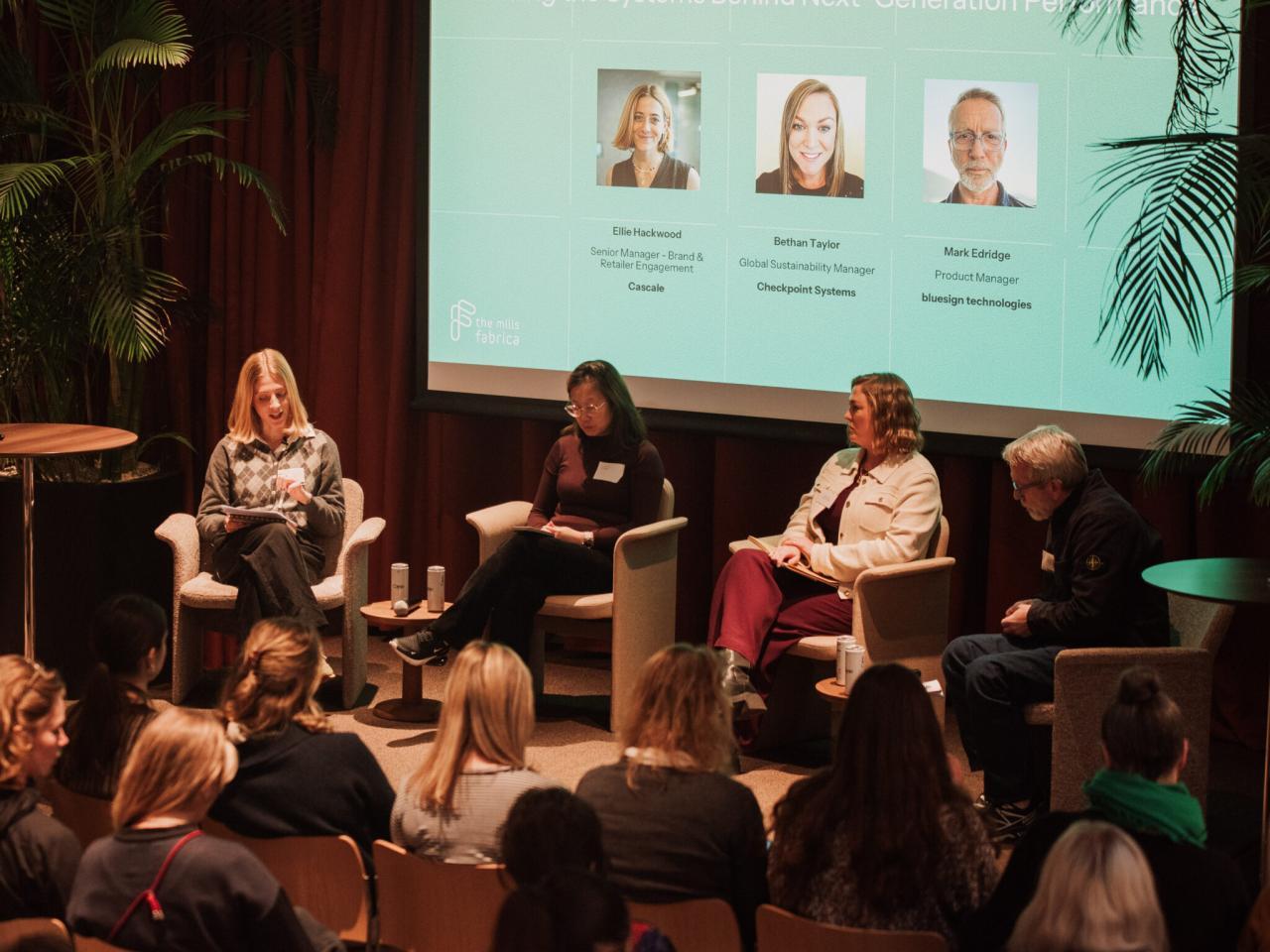
In London, The Mills Fabrica convened industry peers including Cascale for the “Performance Without Toxicity” launch event, celebrating fiber innovation and innovators.
Coca-Cola HBC AG published on March 17, 2016 its fourth integrated report, “Refreshing business”, which provides details on all aspects of business, governance and sustainability performance, and celebrates a year of strong results and achievements.
“Just as Prius changed the world nearly 20 years ago, the hydrogen-powered Mirai is ready to make history,” said Bill Fay, group vice president and general manager, Toyota Division.
Watch the 2017 Chevrolet Bolt EV coming together on the Orion Assembly line. Pre-production is underway for the all-electric vehicle that will make affordable efficiency an everyday reality. The Bolt EV will be available in late 2016.
Emory University’s WaterHub is able to treat wastewater on-site and meet nearly 40% of the University’s water needs, which should save it millions of dollars over the next 20 years.
We interviewed Supply Chain Compliance Lawyer Michael Littenberg and received insight on his background along with some interesting predictions for conflict minerals reporting in 2016.
GSK is targeting a carbon neutral value chain by 2050 and has ambitious goals to reduce carbon, water and waste in the meantime. We’ve made significant progress in the last five years. In fact, we turned a corner in 2014 and by the end of 2015, 60% of GSK sites globally sent no waste to landfill. To better understand what zero waste to landfill means in the US, I spoke with Gary, GSK Shipping Coordinator at our Marietta, PA vaccine manufacturing and packaging site. Gary has worked with GSK for nearly ten years and has led the Waste Management Committee for this site to achieve this remarkable environmental milestone. Below is a summary of our recent conversation.
Everyone’s financial journey is different. We make intentional efforts to meet the individual needs of clients and communities through a diverse range...
At Whirlpool Corporation, we have a history of advances in sustainability founded on a simple principle: "Do the right things, the right ways. Always...
Advancing women and minority-owned small businesses and entrepreneurs around the world. Small to mid-sized businesses power their local economies and...