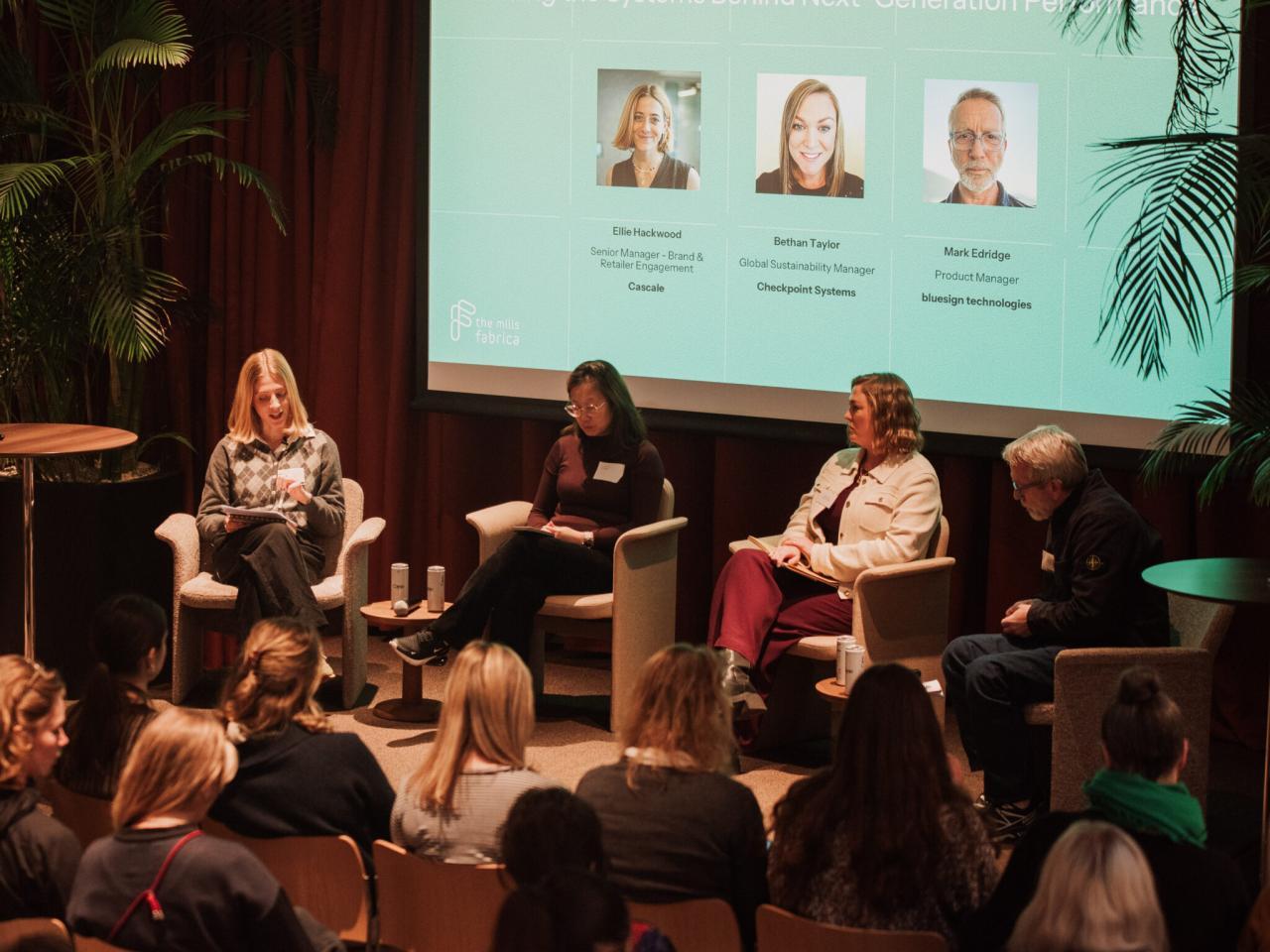
In London, The Mills Fabrica convened industry peers including Cascale for the “Performance Without Toxicity” launch event, celebrating fiber innovation and innovators.
Swazi sewing shop might seem a surprising place to see the impacts of big business first hand. But it’s where I found myself one morning in 2013, travelling as a guest of a big global brand. The smiling owner opened the door to us. She was smartly dressed, and rightly proud of the enterprise she’d grown. I’ll never forget the noise of her workshop. About two dozen women were hard at work, mostly from the local village. They were producing uniforms for the factory owned by our client down the road.
This week, Global Sourcing Council's 17 Weeks for 17 SDGs Intiative explores Goal 2 with examples of action from organizations and businesses to end hunger, achieve food security, improve nutrition, and promote sustainable agriculture in their business strategy.
At the beginning of the year, GM's team at the Arlington Assembly plant in Texas successfully turned millions of gallons of wasted water into a resource with a simple fix that will save money and serve as a model for similar facilities.
Even a modest 8-ounce steak represents 3.5 pounds of consumed grain. That’s a lot of plants, and therefore a lot of farm land, dedicated to our collective love of red meat.
There is a shift occurring from the traditional linear take-make-waste economy to a more circular model of use-recover-regenerate. According to new research from UPS and GreenBiz, circular economy principles are projected to gain traction, nearly doubling in importance over the next two years. 97% of business leaders agree that logistics will be critical to a successful circular economy. Find out more about the roles waste, recyclability and first mile logistics will play in driving the circular economy.
Nearly nine out of 10 (86 percent) of sustainability executives surveyed believe that circular economy will be important to their business two years from now, nearly double from two years ago when just 47 percent felt them important, according to findings of the 2016 UPS/GreenBiz Circular Economy Research Study released today. Respondents project the biggest growth in the adoption of the circular economy model will come from the technology sector, especially electronics such as computers and cell phones, as take-back systems and product reuse are most easily integrated in those models.
We’re constantly bombarded with messages about what makes for a happy life: advertisers and brands tell us it comes from owning and consuming their products.
These developing nations don’t just have stunning natural beauty, they are champions of human rights, animal welfare, environmental conservation and renewable energy.
In an effort to identify new sustainable water technologies and incorporate them into its global operations, MGM Resorts International has partnered with WaterStart.
At Whirlpool Corporation, we have a history of advances in sustainability founded on a simple principle: "Do the right things, the right ways. Always...
Advancing women and minority-owned small businesses and entrepreneurs around the world. Small to mid-sized businesses power their local economies and...