The Latest News From Leading Brands
Corporate and nonprofit news distributed by 3BL, including press releases, op/eds, multimedia, and the full range of stories that shape reputation.
Education & Workforce Development | Motorola Solutions
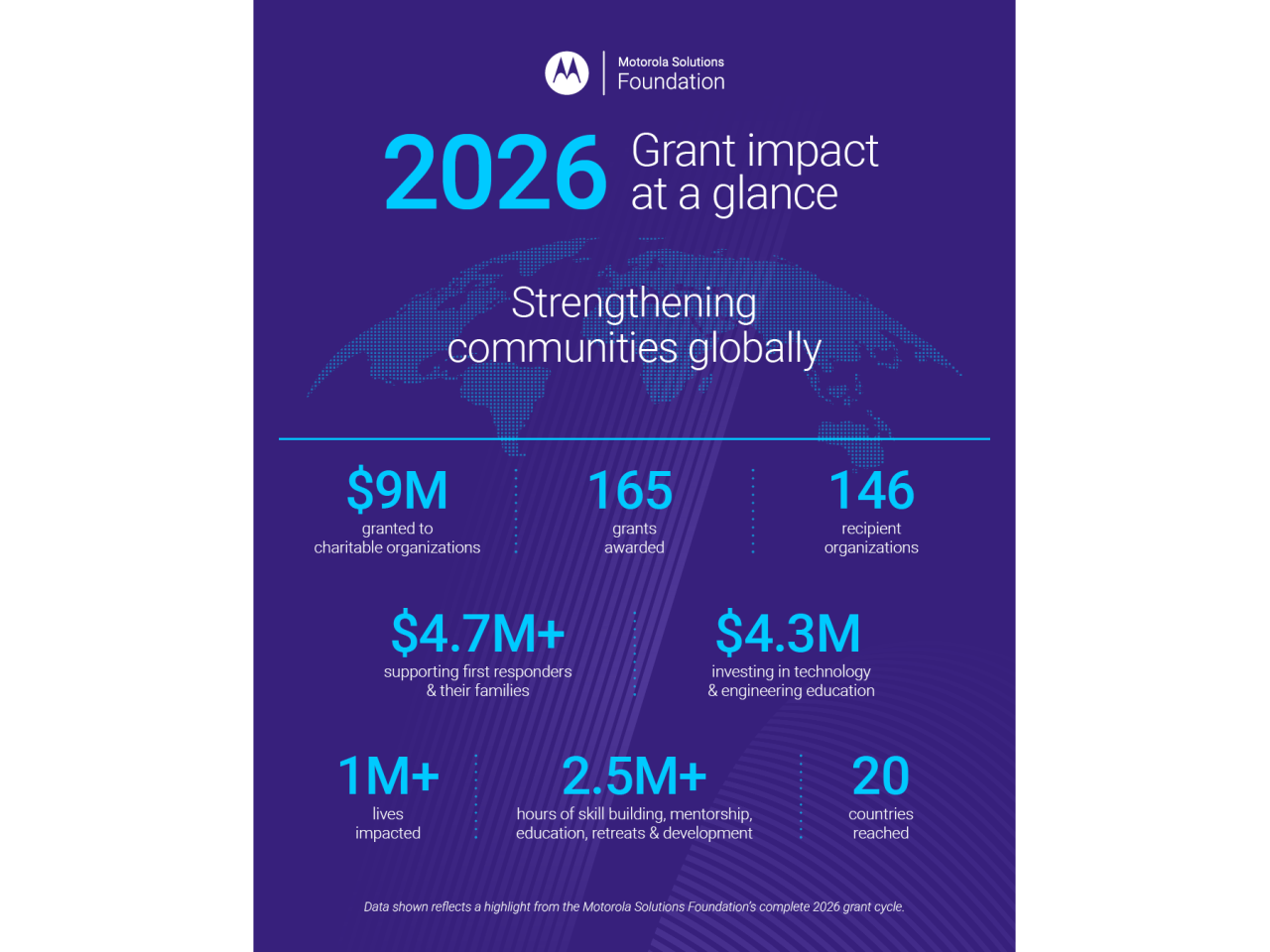
Behind every siren is a first responder facing the emotional toll of protecting their community. In classrooms worldwide, students are facing a different hurdle: a lack of the technology and mentorship required to succeed. These disparate challenges share a common solution.