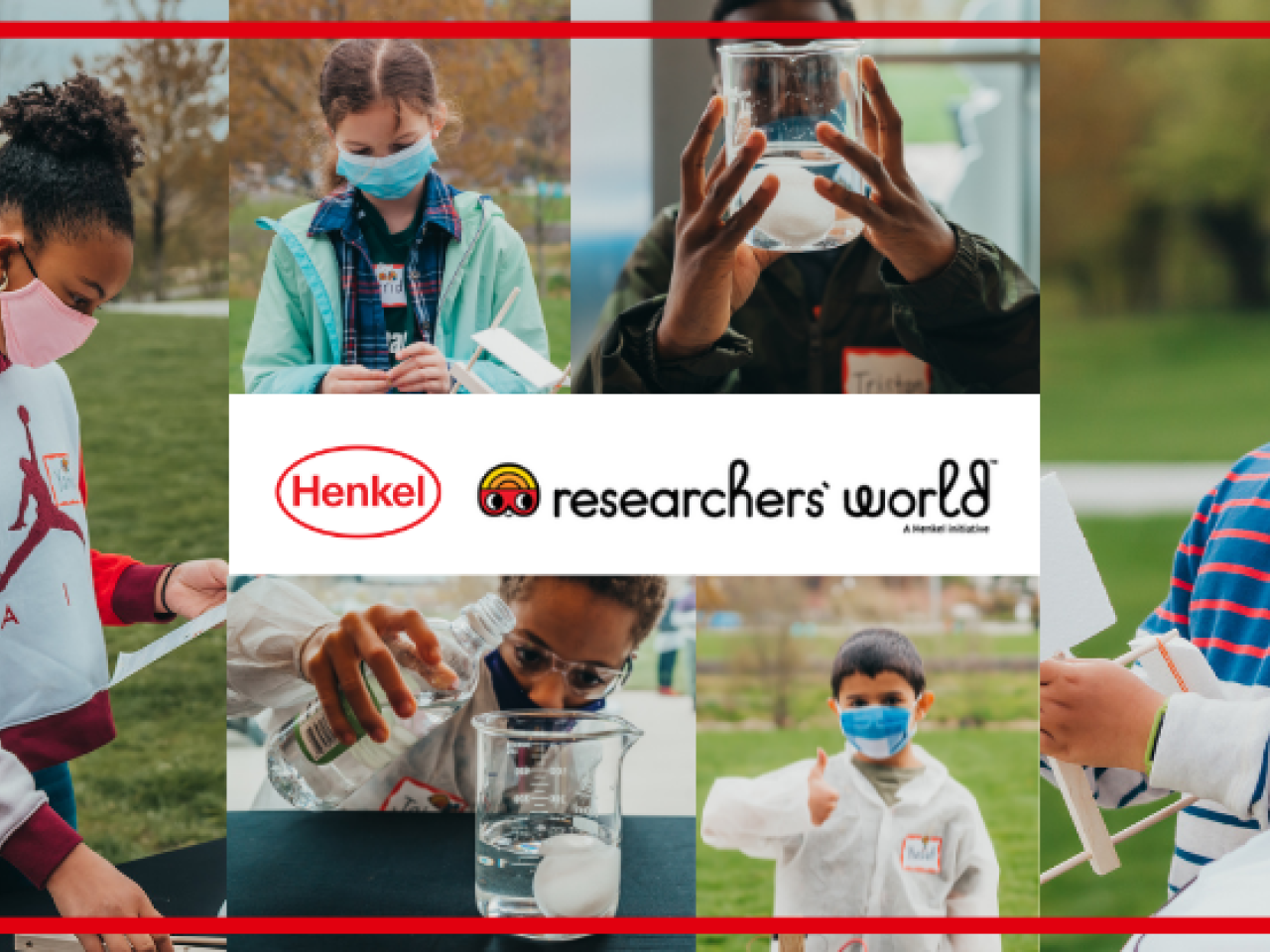
Beginning June 17, 2021, Researchers’ World at Mill River Park will offer free workshops, introducing students to the concepts of sustainability, consumption, recycling, materials science and more.
When World Wide Technology (WWT) first started reselling Dell computers in 1990, the minority-owned company had just seven employees in St. Louis. Today WWT is a global technology solution provider with $10.4 billion in annual revenue and more than 4,600 employees. And the company received the 2017 Dell EMC North America Partner of the Year Award.
Around the world, employers are seeking to enlist workers with relevant skills for existing and emerging roles in science, technology, engineering, and mathematics, also known as STEM. According to the CECP 2017 Giving in Numbers report, workforce development and education, particularly as related to STEM, are two of the largest focal areas for corporate and foundation giving. These are also two of the largest mission focus areas for nonprofits. In spite of such determined investment and effort, gaps persist, leaving employers and students without the critical thinking and applied skills needed to propel our evolving global economy.
Stan Litow’s new book, The Challenge for Business and Society: From Risk to Reward published by John Wiley & Sons, presents a fact-based assessment of the role that corporations have played in society both historically and currently and perhaps most important, offers a road map for a more promising future.
Access to modern sources of energy is fundamental to eradicating poverty and spurring economic growth. Energy touches every aspect of a household’s quality of life. Without access to electric lighting, kids huddle around smoky kerosene lamps to study at night—endangering both their health and education. Lack of refrigeration and gas or electric cooking also impacts a family’s health as it hinders food preservation, makes it harder to purify water, and brings more smoky pollutants into the home. And without electricity for charging phones and starting businesses, many people are falling further and further behind both informationally and economically.
All across the U.S. this week, kids arriving for their first day of school are being met with cheers, applause and high fives. It’s part of a nationwide “Clap-In” given by Verizon employees to welcome students into Verizon Innovative Learning, a transformative program that gives a free tablet and internet access to every student and teacher, and provides extensive teacher training, support, and a unique, immersive curriculum.
Around the world, employers are seeking highly-skilled workers to take on existing and emerging roles in science, technology, engineering, and mathematics, also known as STEM. Workforce development and education, particularly as related to STEM, are two of the largest focus areas for corporate and foundation giving as well as two of the largest mission focuses for nonprofits, according to the CECP’s 2017 Giving in Numbers report. Yet, even given this great investment, gaps in STEM education still exist, leaving both employers and students without the critical thinking and analytical problem-solving skills sorely needed in our ever-changing global economy.
Investing in Society, CECP’s recently launched compendium of data, research, and case studies illustrates innovations in corporate efforts to solve the world’s most pressing problems. Divided into five sections – Priorities, Performance, People, Planet, and Policies – the collection of insights offers a far-reaching assessment of what leading companies are doing in each of the five focus areas.
In the People section, CECP asks, “How can large corporations maximize societal impact and outcomes through employee engagement and purpose?”
The challenge of diversifying the tech workforce is confronting companies across sectors as more jobs are requiring computational thinking and digital fluency. Simultaneously, the demographics of the United States are changing rapidly, and companies are challenged with ensuring that the talent pipeline reflects those dynamic shifts. Developing a robust and diverse technical workforce in the United States is becoming a national priority as a result of the emerging technologies and their impact on industries.
Trevor Clements, Tetra Tech’s Mid Atlantic regional manager for Integrated Water Management, discusses how educating water resources graduate students about Holistic Management and One Water principles and practices is an essential part of shifting the global and domestic water management paradigm to address today’s challenges.
Stellar Girls™, an after-school science program offered to more than 600 girls from 25 Chicago-area schools, was the recipient of an $8,570 check raised from voluntary contributions by employees of Astellas Medical Affairs, Americas (MAA) with a match from the Astellas Matching Gifts program. The donation, earmarked for program supply kits, augments funding provided by the Astellas USA Foundation and the One Astellas Spirit Run fundraiser sponsored by the Womens Employee Resource Group (Stellar Women) during the US National Sales Forum.
AEG embraces its responsibility to enrich the lives of people in the communities around the world where we do business, and to use business to create...
From the frontline to the back office, every Chemours employee knows they are a part of something bigger than themselves and are proud to be a part of...
Focus on preventing and treating malnutrition across life stages. Highlights include early detection, community-based treatment (e.g., MUAC screening...
Cascale shares updates on its strategic partnerships with industry stakeholders geared toward shifting the industry into one that gives back more than...
The SCS Kingfisher certification mark is showing up on an increasing number of products around the world. It differentiates companies that are making...