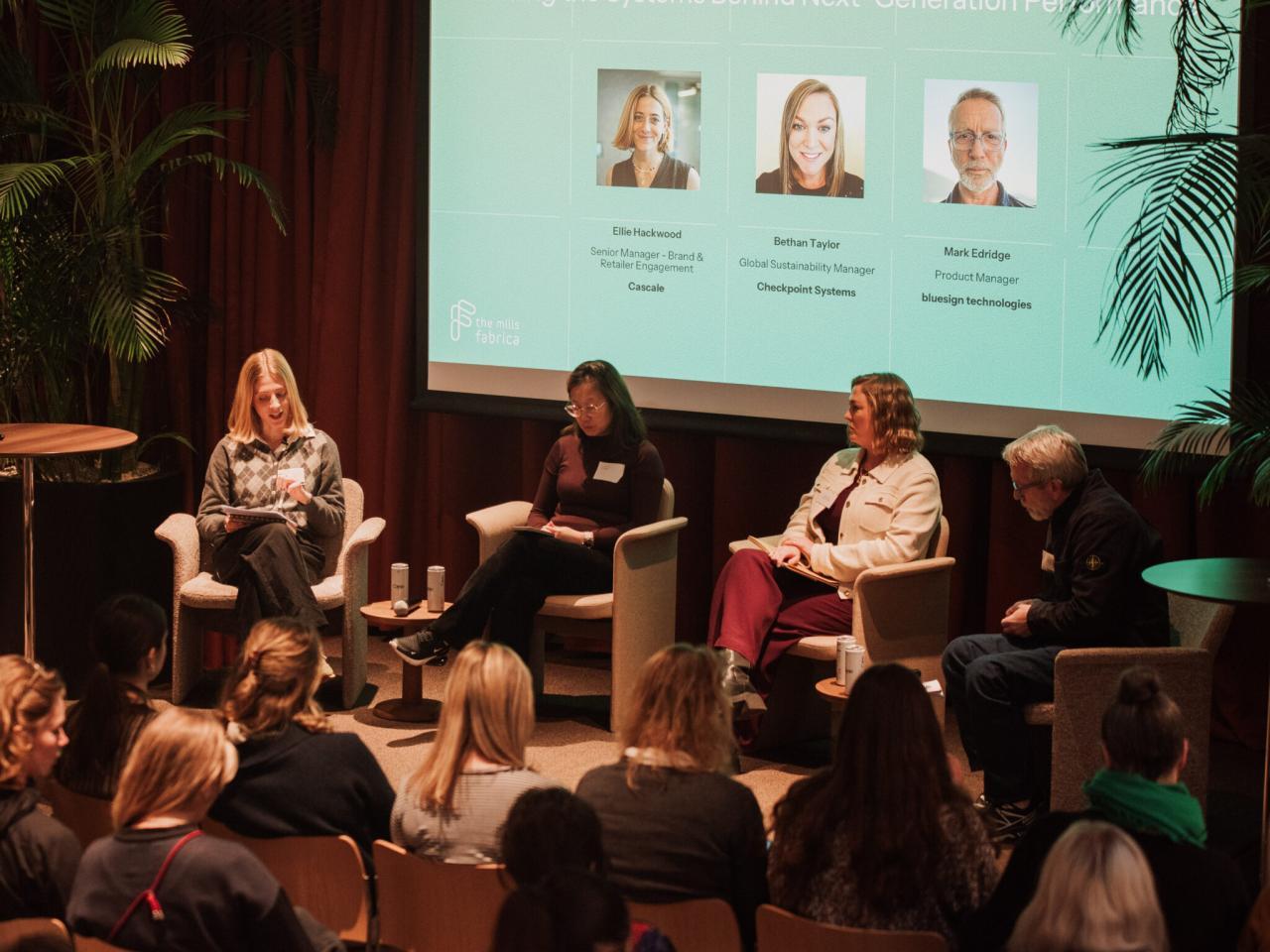
In London, The Mills Fabrica convened industry peers including Cascale for the “Performance Without Toxicity” launch event, celebrating fiber innovation and innovators.
AIAG's Greenhouse Gas Workgroup has developed a training session to increase suppliers awareness in water management and how to report via CDP Water Supply Chain.
Northern Ghana Shea (NGS), a social enterprise operating in the Upper West region of Ghana, has joined the Business Call to Action (BCtA) with a commitment to expand market access for 4,000 rural women who pick shea nuts and produce shea butter, and to diversify their customer base by securing at least two international buyers by 2018. As part of its commitment, by 2017 the company will increase the volume of these small-scale farmers’ production by 60 percent.
Nespresso, the worldwide pioneer and reference in premium, single-serve coffee, is pleased to announce it has expanded its partnership with UPS from 20 to 48 states to significantly extend the reach of its U.S. recycling program. By adding additional collection points in more locations across the country, it is now easier than ever for consumers to recycle Nespresso used capsules.
Dell created a closed-loop recycled plastics supply chain to recycle computers back into new computers. Philips sells lighting as a service instead of a product that a consumer would otherwise purchase and own. The Dow Chemical Company recovers non-recycled plastics to convert into a usable energy source.
72 hours before more than 130 world leaders are expected to travel to New York to sign the Paris Agreement, organisations that collectively represent more than 400 institutional investors with USD 24 trillion of assets under management have called on world leaders to not only sign but accede to the Paris Agreement and implement it into national law as a matter of urgency.
The Sustainability Consortium’s first-ever impact report, Greening Global Supply Chains: From Blind Spots to Hotspots to Action, identifies and quantifies the impact of the consumer goods supply chain and explores TSC tools that identify and reduce these risks around the products we love and the retailers we love to buy them from.
Everyone’s financial journey is different. We make intentional efforts to meet the individual needs of clients and communities through a diverse range...
At Whirlpool Corporation, we have a history of advances in sustainability founded on a simple principle: "Do the right things, the right ways. Always...
Advancing women and minority-owned small businesses and entrepreneurs around the world. Small to mid-sized businesses power their local economies and...