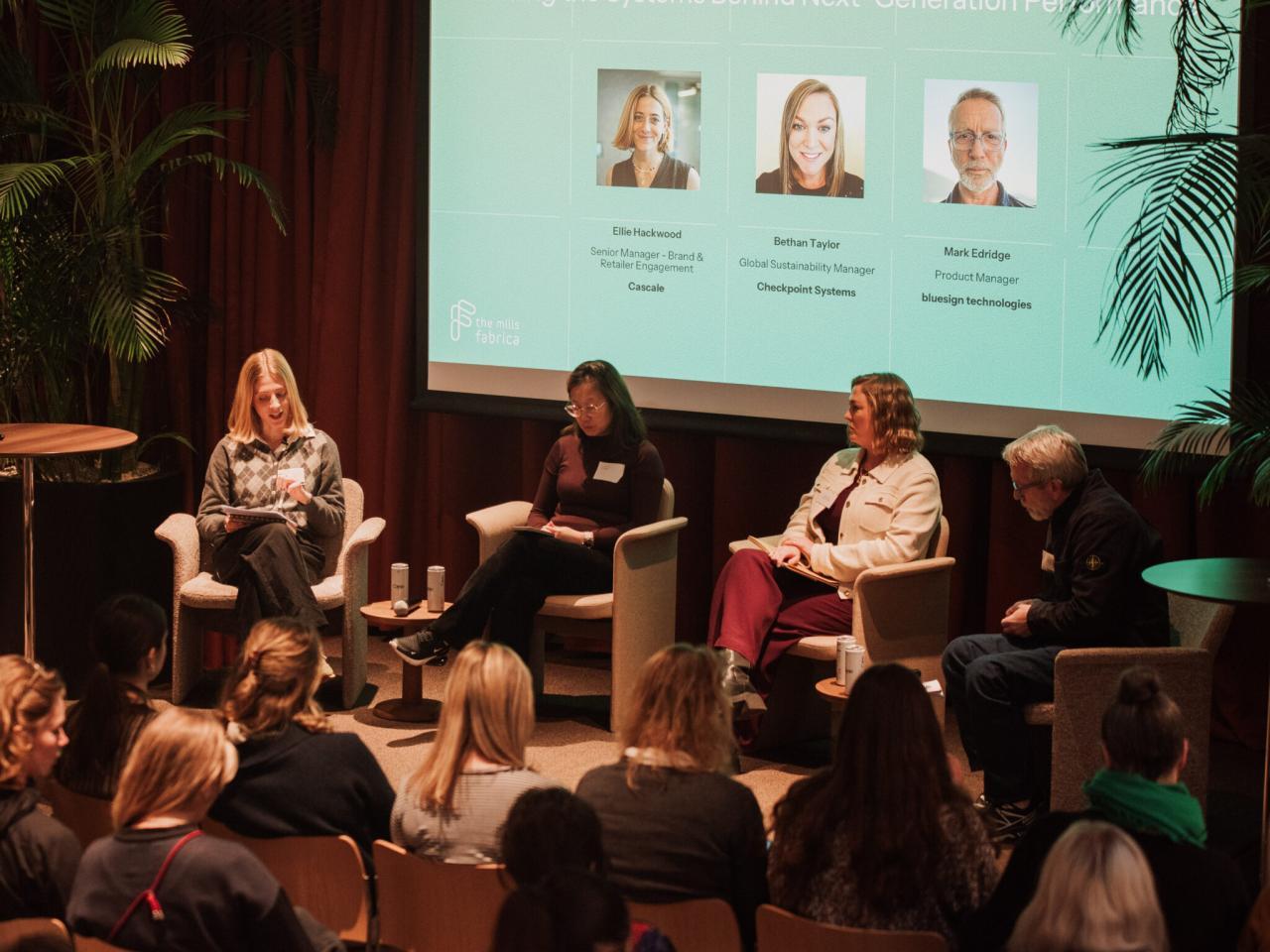
In London, The Mills Fabrica convened industry peers including Cascale for the “Performance Without Toxicity” launch event, celebrating fiber innovation and innovators.
In just 3 short weeks, thought leaders, practitioners and intrapreneurs from around the world will gather for the 2016 Shared Value Leadership Summit at the Conrad New York on May 10-11, 2016 to discuss how global companies are driving and enabling solutions to some of the world's most pressing problems.
The Partnership for a Healthier America (PHA) was established in 2010 to tackle the childhood obesity crisis by transforming the marketplace and our communities. PHA works with the private sector to make healthier choices easier for busy parents and families. The group ensures that commitments made are commitments kept, by working with unbiased third parties to monitor and publicly report on the progress its partners are making.
Every SIX MONTHS the American Apparel and Footwear Association (AAFA) releases and updates their restricted substances list to provide retailers within the footwear and apparel industry information on a list of laws and regulations that restrict various chemicals in finished products. This Article runs by who and what is affected with the latest restricted substances list update.
Sustainable Brands® recently announced activities in the Activation Hub at SB’16 San Diego, June 6-9, 2016 at Paradise Point Resort & Spa. As a central networking hub, this action-centered environment will serve as an ideation marketplace for global brands looking for specific solutions to scale sustainability initiatives.
In recognition of its continuing efforts to revitalize the Elizabeth River in Southern Virginia, the CITGO Chesapeake Terminal received its fourth Sustained Distinguished Performance Award this year from The Elizabeth River Project, a nonprofit that leads community environmental restoration efforts along the River.
Intermodal freight – consumer goods that move in containers and trailers by more than one mode of transportation – has been one of Norfolk Southern’s fastest-growing market segments.
As the president and owner of two General Motors’ Green Dealer facilities – Sunshine Chevrolet in Arden, North Carolina and Don Elliott Autoworld in Wharton, Texas – I believe the smart thing to do today is embrace energy conservation.
Antea Group Project Manager Annie Richardson presented on current and upcoming OSHA regulations pertinent to railroads at the recent ASLRRA Connections Convention in Washington DC. Her presentation includes an overview of how OSHA regulates the rail industry, a summary of current regulations and a look at pending regulatory activity, and tips for planning for succes in complying wiht OSHA regulations.
Everyone’s financial journey is different. We make intentional efforts to meet the individual needs of clients and communities through a diverse range...
At Whirlpool Corporation, we have a history of advances in sustainability founded on a simple principle: "Do the right things, the right ways. Always...
Advancing women and minority-owned small businesses and entrepreneurs around the world. Small to mid-sized businesses power their local economies and...