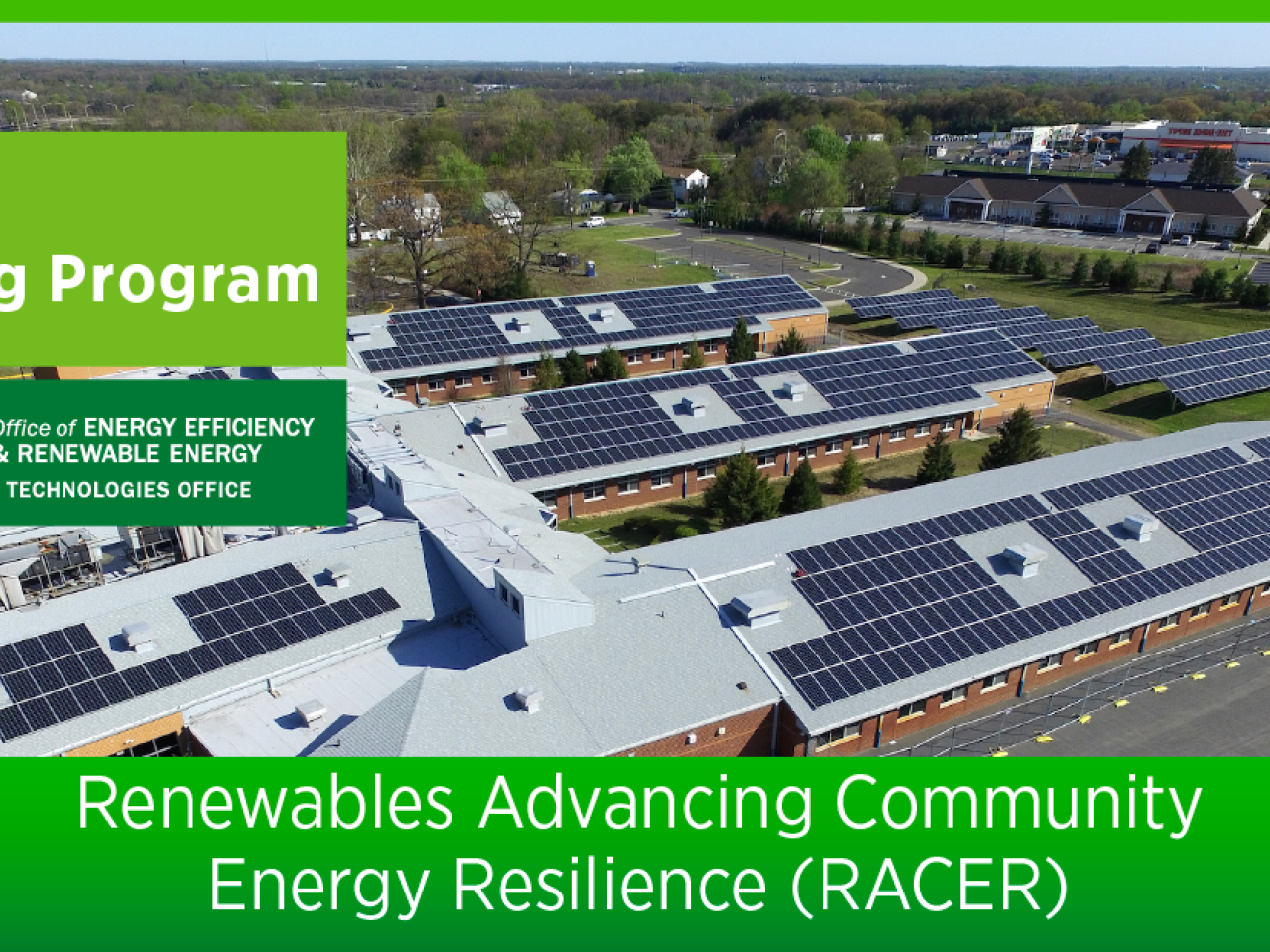
Groundswell, a nonprofit that builds community power through equitable community solar projects, announced its selection to receive a $1 million award from the U.S. Department of Energy (DOE) Solar Energy Technologies Office (SETO) to advance community energy resilience.
Transportation accounts for more than one-quarter of the nation’s greenhouse gas emissions, according to the U.S. Environmental Protection Agency. In a country with more than 70,000 transit vehicles — and with buses averaging roughly 34,000 miles of travel each year — electrification of the U.S. fleet and mass transportation spheres is becoming a top priority for city officials and utilities as they reimagine how people and goods move sustainably across urban landscapes. Removing fossil fuels from mass transit will go far in reducing that carbon footprint.
In today’s digital economy, a new breed of buildings is emerging. As a key ingredient in expanding urban landscapes, buildings of all types are undergoing a major technological shift toward greater efficiency and sustainability, driven by connected technologies, big data and analytics.
Massachusetts is a national hub for innovation in the technology, healthcare, and clean energy sectors. From world-class universities to a rapidly growing biotechnology industry and unparalleled healthcare sector, Bay State businesses and institutions are on the cutting edge. So, it comes as no surprise that a growing number of companies are investing in the rapidly growing clean energy sector and powering their operations with renewable energy and energy efficiency. As the businesses community embraces clean energy, Massachusetts must do its part to keep pace and strengthen the Commonwealth’s clean energy policies this legislative session.
As the cost of sensors, devices, edge networks, machine learning, and analytics decreases, the impact of the Internet of Things (IoT) is creating a new industrial paradigm that impacts every industry, energy included. Energy has been evolving in terms of generation and distribution, and the IoT stands to be the most transformational aspect of this brave new world. Here’s how we expect it to affect corporate energy users in the next decade.
For many executives, the myriad of ways in which to enact energy savings are too varied and not succinct enough to be actionable. Here, we present four different tried-and-true methods for saving on energy expenditures.
Consumers Energy has a track record of doing more than is required to ensure Michigan’s air, water and land are cleaner for future generations to enjoy.
CHARLOTTE, N.C., March 29, 2018 /3BL Media/ -- A Duke Energy power plant is using renewable natural gas from North Carolina-based hog farms to produce electricity – the first application of the technology from in-state farms.
What would US energy policy look like if we had more committed progressives in Congress? Our guest today on Sea Change Radio, Ray Linsenmayer, hopes he can help us find out.
“Our work addresses a fundamental and universal need: financial security. Literally millions of people rely on us. Last year alone, we paid out close to €50 billion in claims and benefits to our customers. Financial security is something that many people lack, which not only has serious implications for them, but for wider society too. We’re here to change that.”
AEG embraces its responsibility to enrich the lives of people in the communities around the world where we do business, and to use business to create...
Environmental Responsibility: We’ve achieved 14 out of 16 of the environmental goals we set in 2010, and we will accelerate our progress as we work to...
At Whirlpool Corporation, we have a history of advances in sustainability founded on a simple principle: "Do the right things, the right ways. Always...