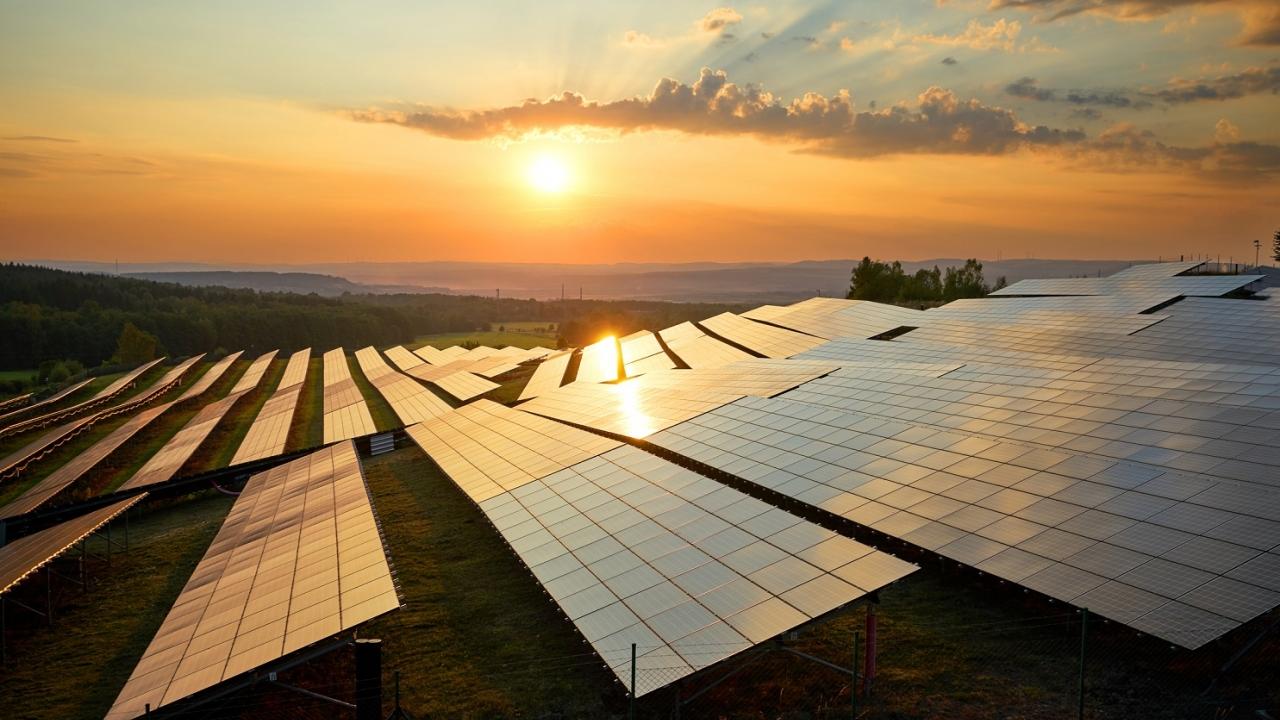
To help address growing demand for solar energy generation in the southwestern U.S., Diode Ventures (Diode) announced today that has reached financial close on the Grizzly Ridge Solar Project
It’s estimated that scaling off-grid renewables can create 4.5 million jobs by 2030. But of the 10.3 million renewable energy jobs in the world today, just 76,000 are in Africa. In other words, less than 1% of the jobs worldwide are in the region that most urgently needs them. The same trend holds true for energy-poor communities in Asia and elsewhere.
That is why Schneider Electric is supporting the launch of the #PoweringJobs campaign, a global effort to ensure the creation of an energy access workforce.
It seems that with or without federal-level support, market forces will continue to promote growth in low-carbon technologies. Customers large and small are voicing—with their wallets—that renewables continue to be economically and environmentally attractive and the power sector is responding.
Battery-based energy storage is a proven technology that can enable your schools to use more self-generated solar power and help stabilize the grid, while significantly reducing district energy costs.
Global institutions today face what is known as the energy “trilemma”—the need to balance energy security with energy that is both affordable and environmentally responsible. The U.S. Energy Information Administration (EIA) currently projects that world energy consumption will increase 28% by 2040. Simultaneously, the energy delivery system around the world is expected to undergo massive disruption in the forms of decentralization, digitization, and decarbonization.
Futureproofing energy supply has become a predominant goal for managing risk and resilience for a majority of companies.
An enormous opportunity exists for organizations with distributed energy load to act by acquiring renewables.
Duke Energy wants non-residential customers to have another option to install solar power on their premises. The company recently filed to be a certified solar lessor with the North Carolina Utilities Commission (NCUC). Duke Energy Clean Energy Resources (DECER), a non-regulated affiliate of Duke Energy, will build, own and operate on-site solar facilities that will allow customers to access renewable energy without a large upfront investment. DECER is not financially supported by either Duke Energy Carolinas or Duke Energy Progress, Duke Energy's operating companies in the Carolinas.
The scale of these rollbacks — measured in GHG emissions, in economic costs to be paid and benefits to be lost, and in human lives — is breathtaking. These rollbacks not only reveal a bad “instinct” for science, they also show a bad sense for business.
The electric utility industry is in the middle of a transformation that has no precedent. Historically speaking, delivering electricity was relatively simple; utilities generated power and provided it to customers over a one-way delivery system. Companies requested, and utility regulators granted, periodic rate hikes to cover infrastructure upgrades while providing a reasonable rate of return on that investment.
To effectively map out the current and future states of power delivery, it’s imperative to discuss what the landscape looked like in the past. Understanding the evolution of any industry typically requires a healthy dose of historical context, and making sense of today’s energy grid is no exception.
Separated by decades of progress and technology’s endless march, it’s easy to think electric vehicles share little heritage with their internal combustion forebears. But even as they bookend the automotive spectrum, today’s EVs are much like the first automobiles in one important respect: When the first cars were made, they had an outsized dependency on infrastructure. Without a robust system of roads (let alone highways), what was the incentive to buy?
Cascale shares updates on its strategic partnerships with industry stakeholders geared toward shifting the industry into one that gives back more than...
Cascale shares insights regarding policy and regulation impacting the consumer goods industry, and highlights how it's supporting members prepare for...
Our Prescription for a Better World framework is organized around three key pillars: building healthy communities (Health in Action), protecting the...
The SCS Kingfisher certification mark is showing up on an increasing number of products around the world. It differentiates companies that are making...
The business landscape is reorienting itself and you can almost hear priorities shifting toward change-readiness and the bigger picture. And in this...