We focus on minimizing and mitigating our impact on water, land, air quality, climate and biodiversity, and working with stakeholders on systemic solutions to complex environmental challenges.
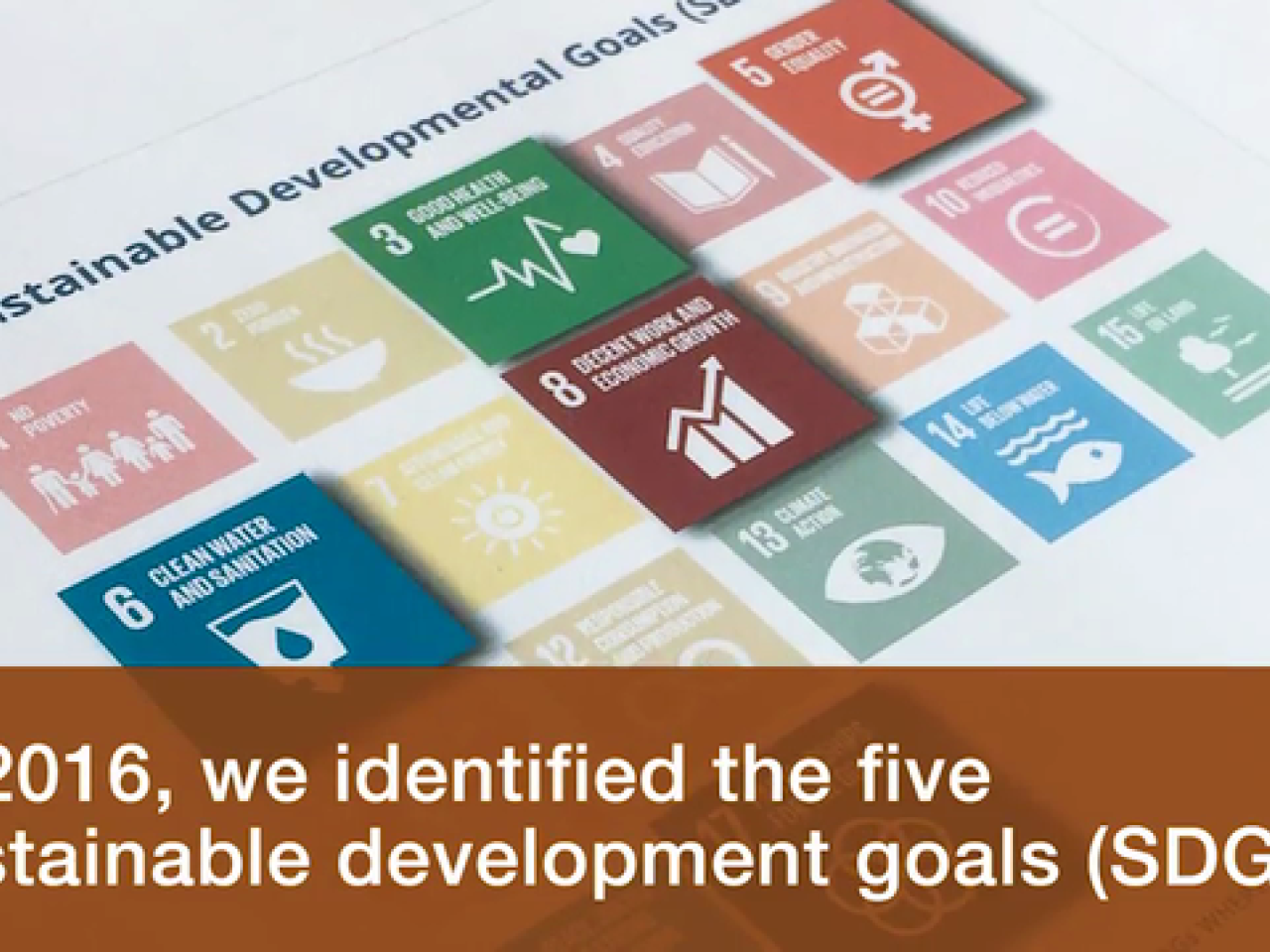
In 2015, more than 130 heads of state at the United Nations (UN) Summit on Sustainable Development adopted 17 sustainable development goals (SDGs) that aim to end poverty, protect the environment and promote prosperity by 2030.
Social Impact & Volunteering
| Newmont Mining Corporation
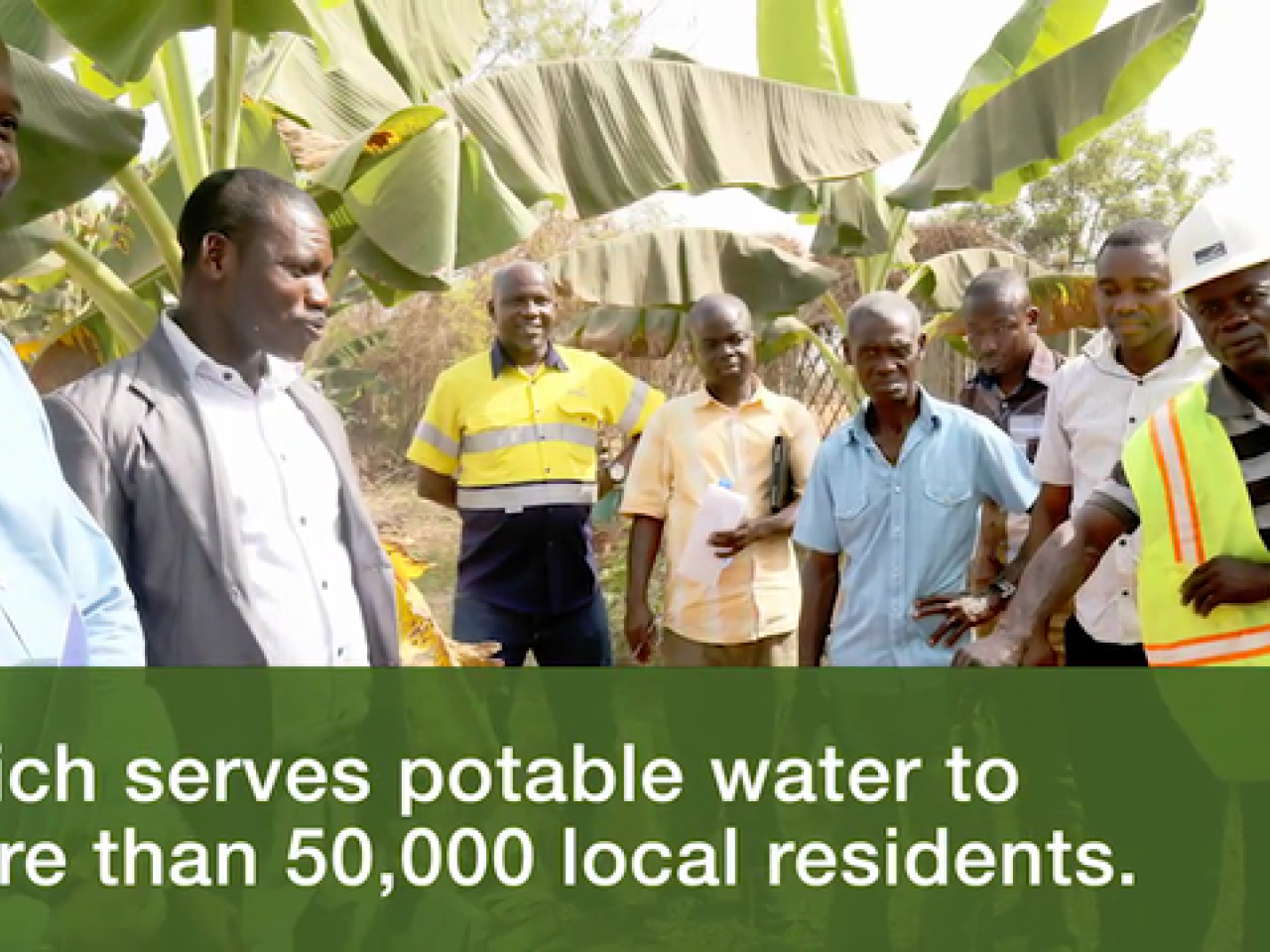
In 2010, work started on the Kenyasi Water Project (KWP) – an expansion and integration of the water systems. Today, there are three water systems serving more than 50,000 residents, and activity is expected to continue with additional boreholes and the construction of a new overhead reservoir planned for 2017.
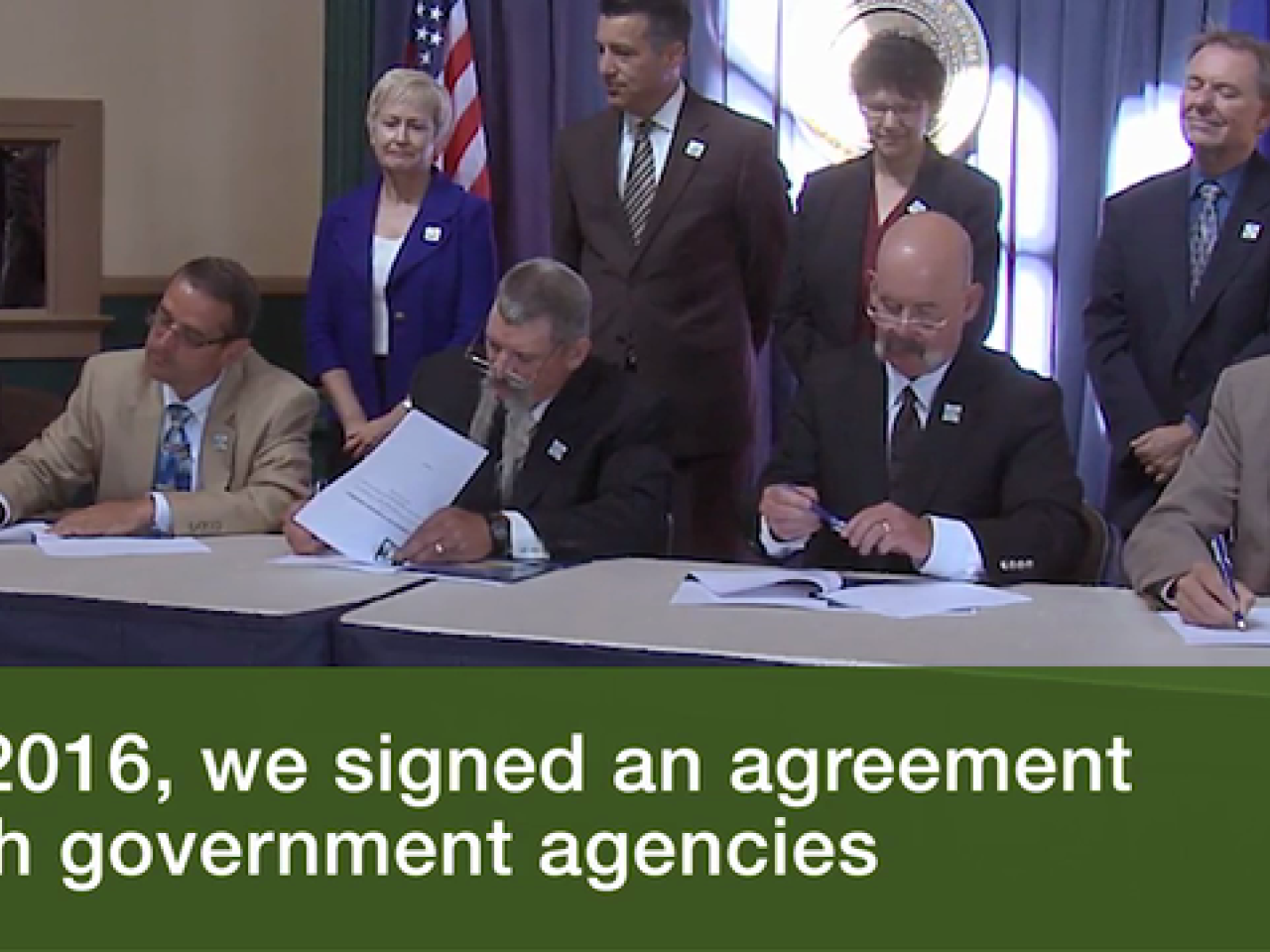
In 2016, Newmont, the State of Nevada and the U.S. Department of the Interior established the Conservation Framework Agreement, a mutually agreed upon framework governing Newmont’s management of more than 1.5 million acres of sagebrush habitat in Nevada.
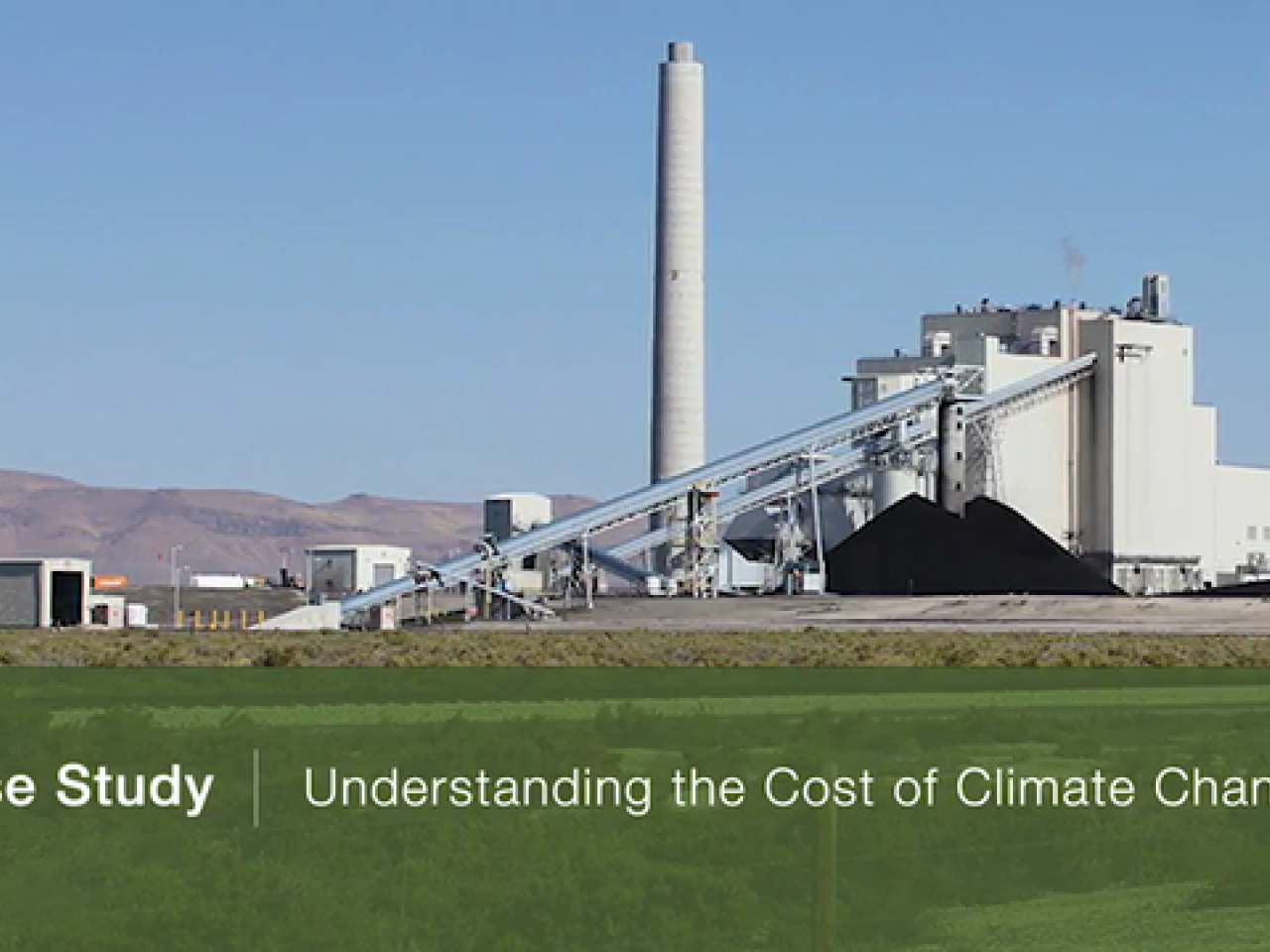
We remain committed to mitigating impacts of climate change by managing our emission intensity through improvements in energy efficiency and portfolio adjustment in the short-term; and transitions to low-carbon energy sources and renewables in the longer term. Toward this effort, we developed an internal pricing mechanism in 2016 to better understand the impact of adopting low-carbon energy alternatives for our operations.
This week marks 25 years of World Water Week in Stockholm, Sweden. This annual international conference brings organizations together to focus on the planet’s water challenges. As part of this global water conversation effort, Newmont will be exploring water issues and strategies specific to mining over the coming months.
Mining, like all large-scale industrial operations, is energy-intensive and uses myriad energy sources including diesel fuel, coal, natural gas, electric grid power and renewable sources to run our operations. Fossil fuels are well known sources of greenhouse gas (GHG) emissions which trap heat in the atmosphere and lead to changes in our climate.
In 2015, more than 130 heads of state at the United Nations (UN) Summit on Sustainable Development adopted 17 sustainable development goals (SDGs) that aim to end poverty, protect the environment and promote prosperity by 2030.
A recently published report, coordinated by the Government of Indonesia’s Ministry of Research, Technology and Higher Education, concluded that Newmont’s former Mesel gold mine in North Sulawesi, Indonesia – which ceased production in 2004 – responsibly managed tailings disposal at the operation.
The region of Cajamarca, located in northern Peru, is home to many rural communities whose residents depend on agriculture. From May to October, the region sees little to no rainfall creating drought-like conditions impacting agricultural production and livestock grazing. This annual dry season also impacts life in the City of Cajamarca, where inadequate water infrastructure means many households only have access to running water for a few hours day.
As part of the Newmont water management strategy, regions are completing evaluations of their watershed to develop methodology that are in line with the ICMM guidelines on Catchment based water management for the mining and metals industry. These guidelines were developed to help with examining activities and issues within the entire watershed, taking into account hydrology and land use as well as the broader political, economic, social and ecological dynamics.
Newmont Ghana is working in collaboration with the Forestry Research Institute of Ghana (FORIG) and the Wildlife Division of the Ghana Forestry Commission to ensure sustainable biodiversity conservation.
For an unprecedented three years in a row, Newmont was named by the prestigious Dow Jones Sustainability World Index (DJSI World) as the mining industry’s overall leader in sustainability. Newmont’s inclusion on the index also marked the 11th year running we have been selected for the DJSI World.
In 2010, work started on the Kenyasi Water Project (KWP) – an expansion and integration of the water systems. Today, there are three water systems serving more than 50,000 residents, and activity is expected to continue with additional boreholes and the construction of a new overhead reservoir planned for 2017.
In recognition of World Water Week and its theme, “Water and Waste: Reduce and Reuse”, we are highlighting Newmont’s commitment to transparency as it relates to the Company’s global water strategy. This is the first in a series of blogs on Newmont’s water performance.
In 2016, Newmont, the State of Nevada and the U.S. Department of the Interior established the Conservation Framework Agreement, a mutually agreed upon framework governing Newmont’s management of more than 1.5 million acres of sagebrush habitat in Nevada.
Providing jobs, paying taxes and royalties, sourcing with local businesses, investing in community programs and infrastructure, and fostering mutually...