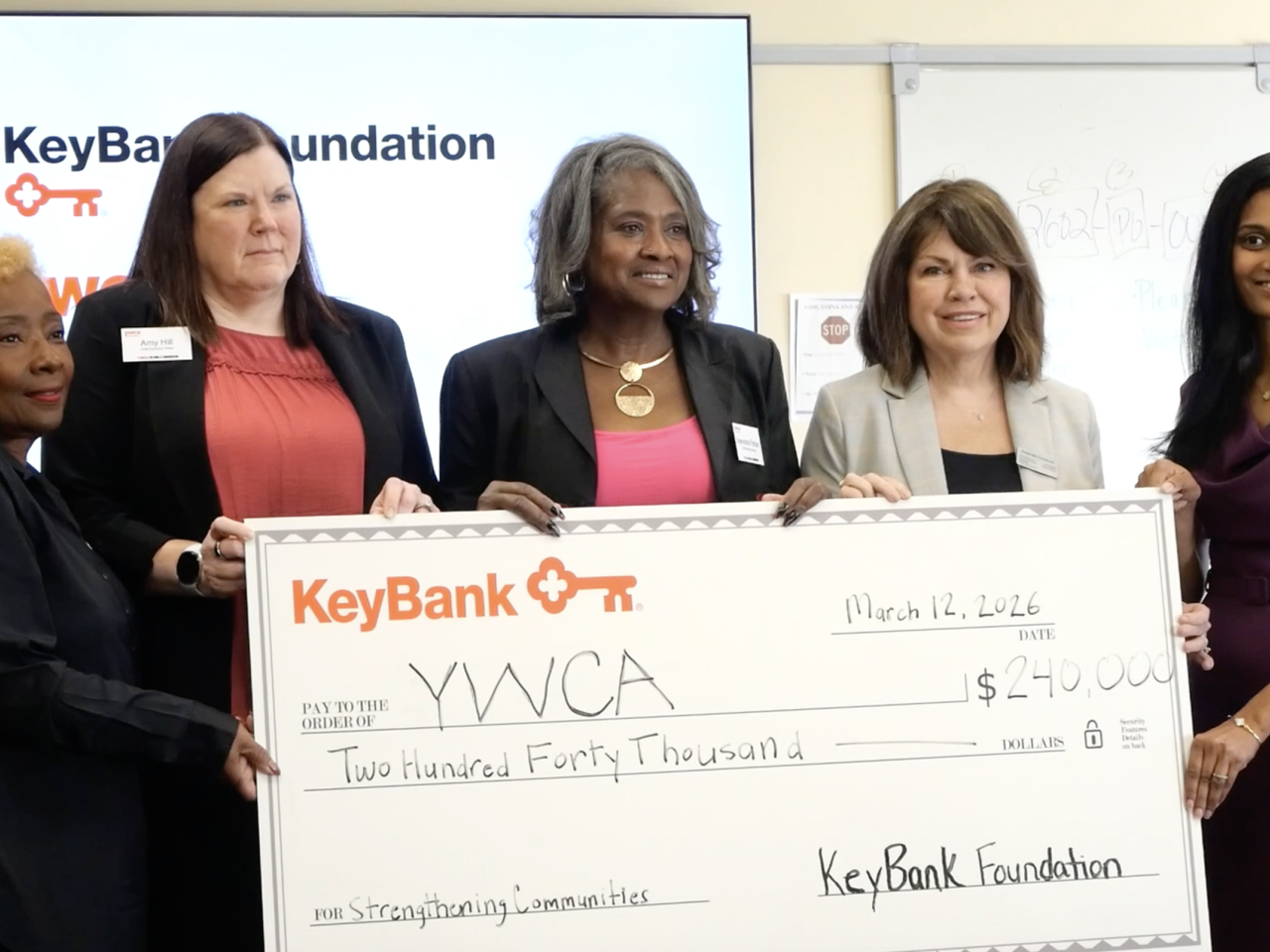
The KeyBank Foundation announced an investment of $240,000 in YWCA North Central Indiana’s Strengthening Communities Initiative, a comprehensive program designed to enhance the social and economic well-being of survivors of abuse.
At PayPal, we pride ourselves on always looking forward and never standing still. By challenging ourselves to do better and work harder we can better serve our customers and move further towards fulfilling our mission of democratizing financial services. With that said, however, I spent some time over the holidays reflecting on the past year – as I imagine many of you did as well – and wanted to offer a few thoughts and celebrate a meaningful milestone.
Green bonds are an example of innovation in financial services, allowing companies and investors to direct their capital to projects that are helping the transition to the low-carbon economy. Karen Clarke-Whistler, TD Bank Group's Chief Environment Officer and Amy West, Head of Socially Responsible Finance at TD Securities, talk about why green bonds are worth a second look for companies and investors alike.
TD recently announced a set of initiatives to advance the low-carbon economy of the future. As we look to target CDN$100 billion by 2030, through low-carbon lending, financing, asset management and other programs, TD is demonstrating the crucial role that financial institutions can and should play in supporting economic prosperity and transformational technology.
World Environment Center (WEC) and DFGE Institute for Energy, Ecology and Economy will expand their cooperation to help organizations to better integrate Sustainability Intelligence into companies’ daily business from a corporate as well as from a global perspective. First outcome of the partnership will be another webinar in March 2018 addressing "Climate-related Disclosures and Investment Decisions".
Since Homewise founding in 1986, we’ve helped over 14,000 households become more financially educated, 3,600 become homeowners, 2,100 make energy-efficient home improvements and emergency repairs, 600 refinance to more affordable mortgages, and we have built over 600 high-quality affordable homes. These results are made possible through the support of our investors and donors, who serve as our partners in helping families build financial resilience and stability through successful homeownership.
Community impact investments focus on positive criteria for inclusion in a portfolio and can include a wide range of intentions such as affordable housing, neighborhood revitalization, and small business development. These types of investments provide capital to help finance affordable homeownership, loans to start or improve small businesses, loans to rehabilitate affordable rental housing properties and healthcare facilities, and improvements to communities nationwide such as green technology, revitalization activities, rural community development, and more.
Large scale disasters, design thinking, and more will affect corporate social responsibility professionals in 2018. Warren Buffet has stated that natural disasters have a greater economic impact than terrorism. As an example, Puerto Rico’s economy is expected to shrink by 8% because of Hurricane Maria, according to the Economist Intelligence Unit.
AEG embraces its responsibility to enrich the lives of people in the communities around the world where we do business, and to use business to create...
In states where Key has a presence, there are approximately 1.7 million low- to moderate-income (LMI) households. Many LMI individuals don’t have bank...
Diverse teams build better products — period. At GoDaddy, we make apps and services that our worldwide community of entrepreneurs can relate to. Our...
Everyone’s financial journey is different. We make intentional efforts to meet the individual needs of clients and communities through a diverse range...