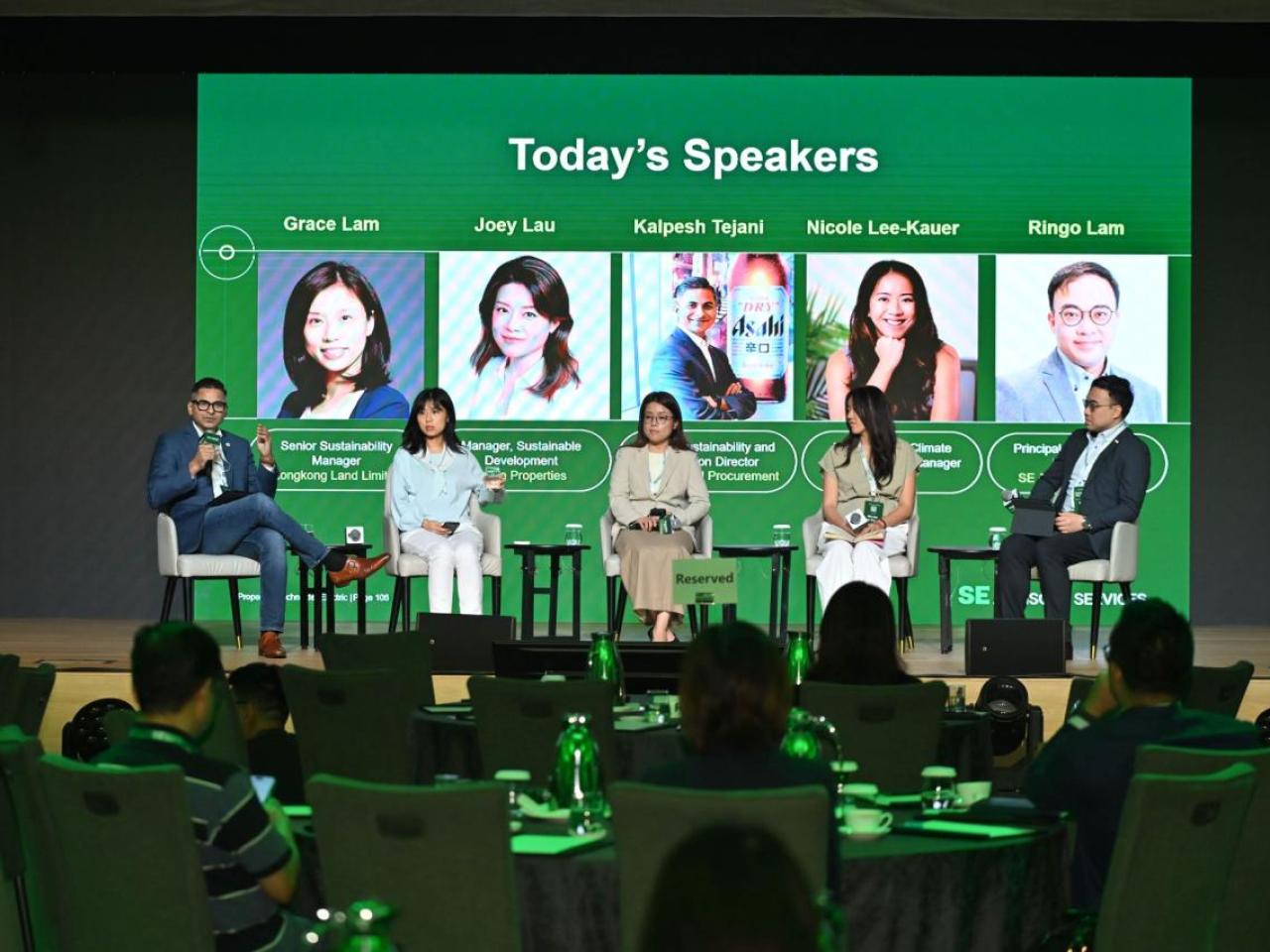
Cascale recently contributed to Schneider Electric Perspectives Day Asia in Hong Kong, convening 150 senior executives from across the consumer goods supply chain to explore practical pathways to net zero.
Look no further for a success story than MilliporeSigma, a global company with 65 manufacturing sites worldwide and more than 19,000 employees. One of their largest manufacturing facilities — located in our own backyard: Jaffrey, New Hampshire — produces precision filtration devices for use in the food and beverage, ultra-pure water and pharmaceutical manufacturing industry. The Jaffrey plant continuously implements energy efficiency measures targeted at reducing costs while working towards the company’s corporate goal of a 20 percent reduction in greenhouse gas emissions by 2020 versus 2006 levels.
The challenge: According to UN World Food Programme, one in three children in Myanmar is chronically malnourished.
The initiative: The Myanmar School Milk Programme was launched in 2013 by the government of the Republic of the Union of Myanmar, with technical support from Tetra Laval Food for Development.
Seventh Generation is a reference to a phrase from the Constitution of the Iroquois Nation, which stresses the need to consider impacts of actions on the seventh generation to come. In many respects, it’s the same message as Tomorrow’s Child.
Bacardi's commitment to being a responsible corporate citizen is guided by its values of Trust, Passion, Caring and Excellence. Check out the company’s corporate responsibility (CR) one-pager to see how the largest privately held spirits company in the world approaches CR.
After years of being "shy" about how it sources its coffee, Nespresso is putting its partnership with farmers at the center of a new campaign, the brand's CMO tells Campaign.
Over the last 30 years, Gildan has grown into a very different apparel company, with close to 90% of its revenues being generated from products manufactured in its company-owned and operated factories.
As our cities integrate technology into their infrastructure and become more intelligent, a clear pattern is starting to emerge. The benefits of connectivity are helping to improve people’s lives and protect the environment. From conserving water to solutions that alert us to rush-hour traffic delays, Smart Cities technology represents a vision of a healthier, safer future that is more attainable than ever.
A quartet of experts writing in the Harvard Business Review has responded to the short-term, bottom-line pressures that we hear so much about throughout much of Corporate America.
To develop their case, the authors (three academics and a consultant) looked at Brazil's giant beef industry, a challenge for studying considering the size and complexity of the industry and its long-term impact on the planet.
Bacardi focuses its award-winning CR efforts in five priority areas: 1) Marketplace (Alcohol Responsibility & Responsible Marketing); 2) Environment; 3) Responsible Sourcing; 4) People; and 5) Philanthropy & Community Investment. The 2017 CR Report details examples within these c
What is the difference between certified wood fiber and fiber from sustainably-managed forests? It depends on your perspective.
Ask small landowners in the U.S. Southeast and most will probably say they are responsible forest stewards; many don’t immediately see the value or the need for certification by a third party.
Entergy’s 2025 performance report, “Energy for a better future” presents an overview of our company’s 2025 achievements, future plans and strategies...
AEG embraces its responsibility to enrich the lives of people in the communities around the world where we do business, and to use business to create...