Wayne Balta, Vice President of Corporate Environmental Affairs and Product Safety at IBM Corp., describes next horizon in advancing corporate EHS management.
At the beginning of June, Cox Communications, in partnership with The Trust for Public Land, launched Louisiana’s 2017 Cox Conserves Heroes program to honor local environmental volunteers.
Nominations for volunteers who are creating, preserving or enhancing outdoor spaces are being accepted at CoxConservesHeroes.com through 5 p.m. EST on June 30. The program is seeking nominations from Acadiana, Baton Rouge and New Orleans.
FSG Managing Director Philippe Sion recently hosted a panel on the role companies can take in accelerating solutions to the refugee crisis, as part of the Everyone a Humanitarian series, hosted by swissnex in San Francisco.
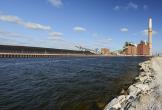
The company uses hundreds of billions of gallons of water each year, the vast majority related to producing power at its electric generating plants. But in 2016, Consumers Energy reduced water intensity — gallons used per megawatt-hour of electricity produced — by 17 percent at its electric generating plants. The energy provider is aiming for a 20 percent reduction by 2018. Reaching that goal would save more than 100 million gallons of water per year.
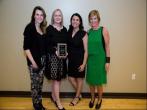
Communities in Schools of Nevada (CIS) recently honored Sands Cares, Las Vegas Sands’ corporate giving program, as the Corporate Partners of the Year. Since 2012, Las Vegas Sands and Sands Cares have donated over $270,000 to CIS and in 2017, Sands Cares donated $10,000 to CIS, offsetting the cost of college application fees and post-secondary interests for CIS seniors.
Cargill strengthened the water supply network for 1,200 farming households in Bannikodu village, Karnataka, India, by installing a 1,000-meter water supply pipeline. Demonstrating its commitment to strengthen agricultural communities, Cargill linked an existing bore well on the lower side of the village to the water tank on the upper side, making tap water available for nearby homes.
On the fifth floor, M Factory buzzes with the busy energy of an eyewear manufacturer. This type of space is rare to see in the U.S., for a very specific reason: Most eyewear manufacturing is done in Italy or China, and always has been. This is also one of the reasons why what M Factory is doing in Brooklyn is so exciting: Crafting quality, affordable eyewear is not something typically done in the United States.
O-Cedar has joined a new partnership with Habitat for Humanity, committing to donate products to help with on-site cleanup and post-construction deep cleans to get houses ready for Habitat homeowners.