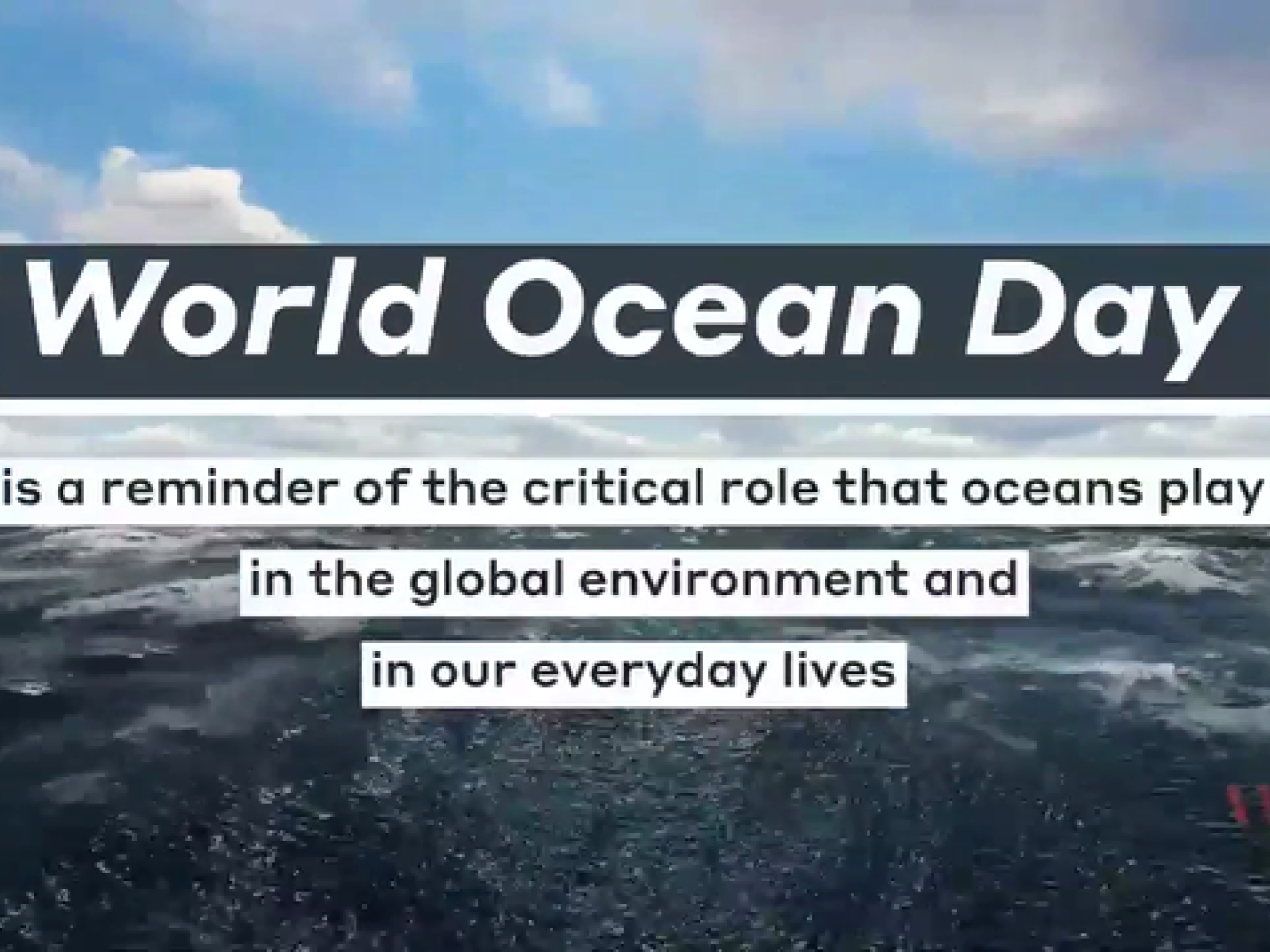
Last Friday was International Ocean Day -- a day that we celebrate the 71 percent of our planet that is covered with water. But, increasingly that water is filled with plastic, and it’s slowly killing us.
As part of the Global Climate Action Summit, WWF, together with a broad coalition of partners, today issued the 30X30 Forests, Food and Land Challenge: calling on businesses, states, city and local governments, and global citizens to take action for better forest and habitat conservation, food production and consumption, and land use, working together across all sectors of the economy to deliver up to 30% of the climate solutions needed by 2030.
Single-use plastics (including straws, cutlery and containers) are contributing to the overall threat our oceans are facing. Every year, more than 8 million tons of plastic enter the seas. And no, this is not plastic that fell off a boat. It came from the land via river systems. It was carelessly littered, improperly disposed of, or escaped from our global waste management systems.
When rival automakers come together it’s usually to brag about their latest engineering accomplishment or to re-imagine the future of mobility, but sometimes they garden. Yes, garden. Through our membership with the Wildlife Habitat Council (WHC), FCA US is now tracking and promoting healthy biodiversity at 12 facilities across North America.
The green iguana population there has dwindled significantly. Population growth, illegal hunting, and the mismanagement of resources – the environment’s usual enemies – had conspired to reduce their numbers to frightening levels. Thankfully, the people at Monsanto’s Research and Development site in Salama, a city in north-central Guatemala, helped come to the rescue in their community.
To address the critical need to increase pollinator habitat for beneficial insects, such as honey bees, monarch butterflies and others, The Scotts Miracle-Gro Foundation and the National Recreation and Park Association (NRPA) have teamed up on a new “Parks for Pollinators” campaign aimed at raising public awareness of pollinator health and encouraging local action through public parks and pollinator gardens.
To address the critical need to increase pollinator habitat for beneficial insects, such as honey bees, monarch butterflies and others, The Scotts Miracle-Gro Foundation and the National Recreation and Park Association (NRPA) have teamed up on a new “Parks for Pollinators” campaign aimed at raising public awareness of pollinator health and encouraging local action through public parks and pollinator gardens.
Representatives from the Michigan Department of Natural Resources and Consumers Energy climbed the JH Campbell Generating Complex in West Olive to band three peregrine falcon chicks.
Life-changing events can happen to any of us, often when we least expect them. Employees in need can turn to the Wesco Cares. Its mission is to be an...
AEG embraces its responsibility to enrich the lives of people in the communities around the world where we do business, and to use business to create...
The SCS Kingfisher certification mark is showing up on an increasing number of products around the world. It differentiates companies that are making...
Our Prescription for a Better World framework is organized around three key pillars: building healthy communities (Health in Action), protecting the...