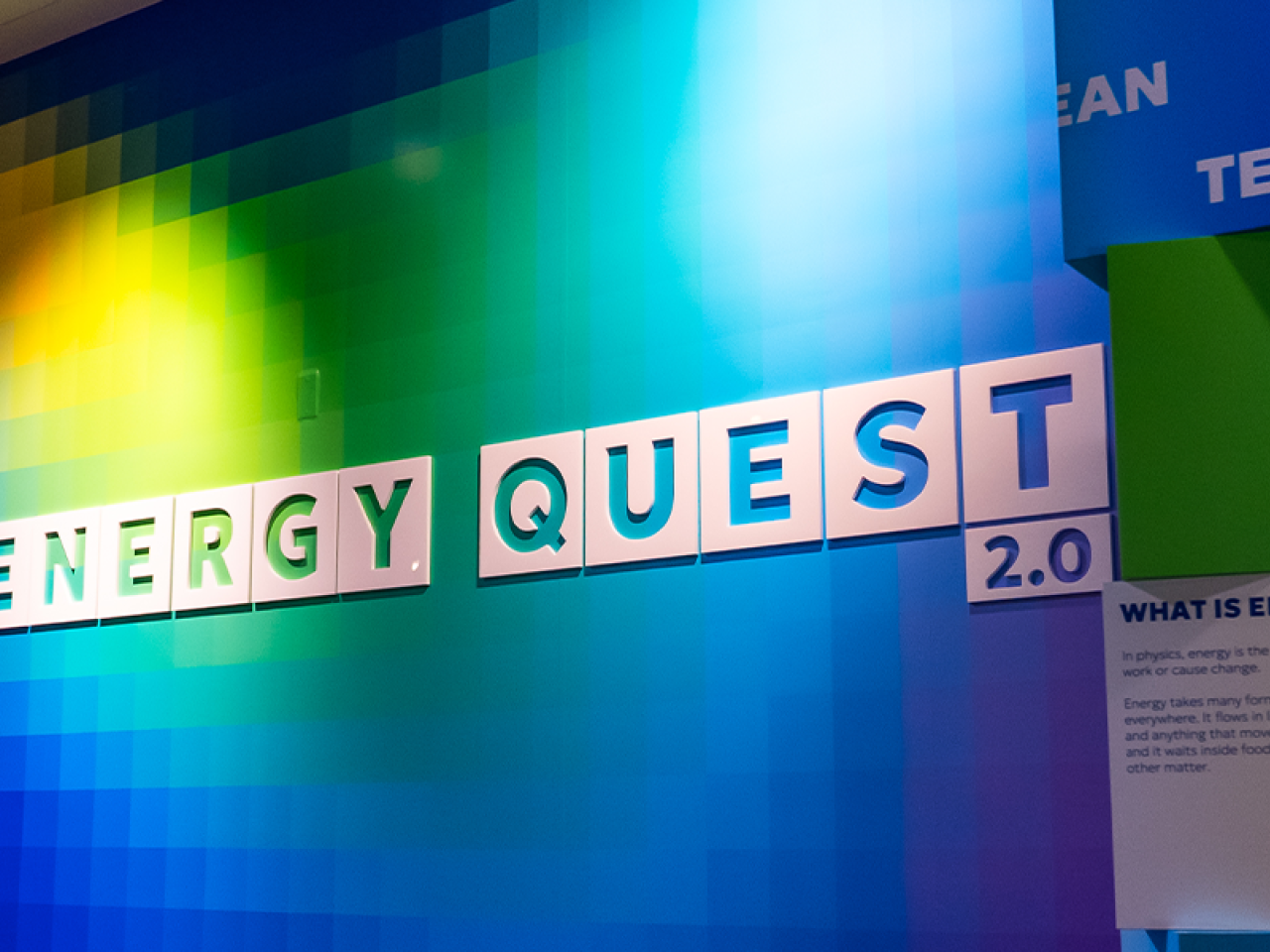
Liberty Science Center’s Energy Quest 2.0 exhibit welcomes exciting new experiences on renewable energy sources, including geothermal, wind, hydro, and solar energy.
Our pulp and paper products are derived from renewable resources, made with high levels of renewable energy, and are designed to be re-used or recycled.
There is a growing recognition among businesses and consumers that we must move away from a linear “take, make, waste” model of consumption where we extract materials, produce things and discard products to landfills. We are now embracing circular economy models, which by design are restorative and regenerative. Done properly, the final result is a system in which material streams are efficiently managed and recycled.
Paper is inherently circular by nature – made with renewable resources with high levels of renewable energy and is recyclable. And Sappi takes additional measure to further reduce impact at its operations.
As water and wastewater utilities are challenged to minimize rate increases while balancing limited budgets – complicated by deferred maintenance, chronic underinvestment, competing projects and compliance mandates – one solution to consider is the public-private partnership (PPP) model.
SCS Global Services (SCS), a leading third-party certifier of environmental, social, and quality performance claims, is pleased to announce that it has joined the Program Operator Consortium (POC). The Consortium is comprised of standards developers and certifiers specializing in the development of Product Category Rules (PCRs) and the certification of Environmental Product Declarations (EPDs), working together to advance environmental product transparency in the marketplace.
Today California-based Jackson Family Wines shared its first sustainability report, supported by a list of comprehensive 5-year goals. The family-owned wine company, known for its portfolio of premium wineries with such beloved household names as Kendall-Jackson, La Crema and Cambria, is a progressive leader in environmentally and socially responsible business practices.
Forced Labor, in its most contemporary form, affects over 21 million people and spans across some of the most globalized industries in the world. From electronics to automobile manufacturing, forced labor has taken an increasing presence in supply chains, and is becoming a serious issue that companies need to be aware of.
What keeps nonprofits from approaching corporate funders for support? Is there a difference in cultivating relationships with corporate funders vs private foundations and individual donors? What can a nonprofit do to break into this consistent yet, often elusive funding stream?
Cascale organizes and participates in a series of events, leveraging its position as a global convener of close to half the sector to bring together...
Cascale shares updates on its strategic partnerships with industry stakeholders geared toward shifting the industry into one that gives back more than...
Advanced security, fraud, and data protection, Keeping your accounts and information secure is a priority for us, and we know it’s a priority for you...
Diverse teams build better products — period. At GoDaddy, we make apps and services that our worldwide community of entrepreneurs can relate to. Our...
Our Prescription for a Better World framework is organized around three key pillars: building healthy communities (Health in Action), protecting the...