Energy & Infrastructure

Corporate stories about Energy & Infrastructure across 3BL's network.

Latest in Energy & Infrastructure
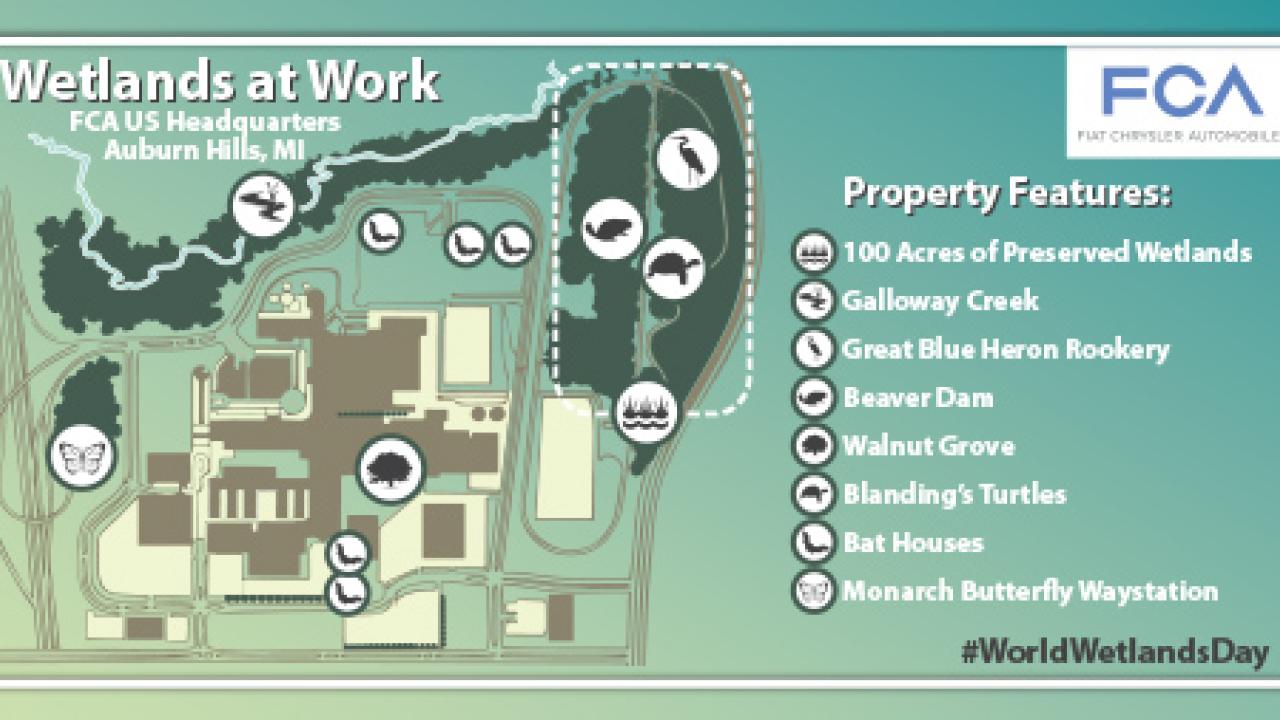
FCA US Prioritizes Wetlands Preservation at North American Headquarters
Today is World Wetlands Day – a day honoring a global treaty to conserve and sustain wetlands. So, what does that have to do with an automotive company?

The FCA US headquarters in Michigan boasts more than 100-acres of natural wetlands, and has since breaking ground 25 years ago.

Reimagining What’s Possible in Sustainability
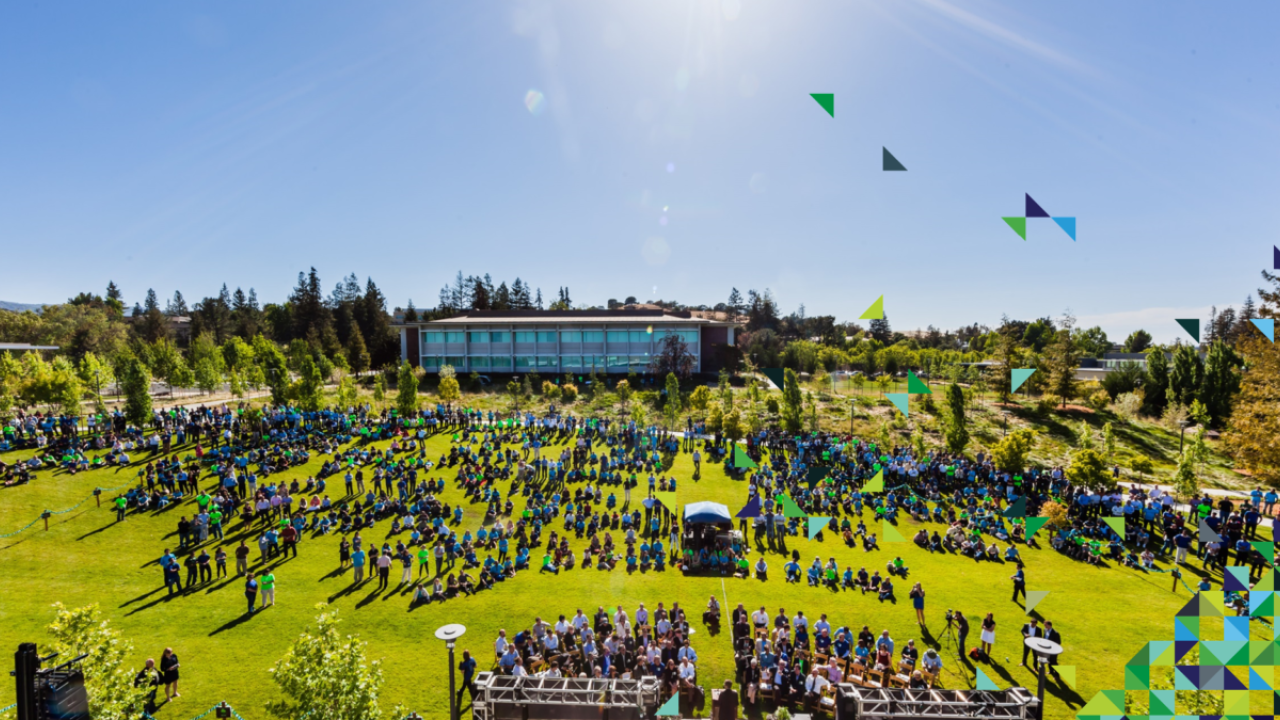
VMware is committed to having a net positive impact in the world and we are proud to report on the progress we are making. As we accelerate into the new year, we wanted to take a moment to reflect on our progress in 2016.
Public Safety LTE Integration with Smart City Initiatives
As the communication technologies leveraged by the public safety sector advance, the intersection with smart city initiatives becomes all the more inevitable. Technological advances afforded by broadband long-term evolution (LTE) networks have changed how first responders, city and county officials, public agencies and transportation fleets communicate and gather data to better serve their communities. Learn more in the Black & Veatch 2017 Strategic Directions: Smart City/Smart Utility Report.
Health and Sustainability: No Longer an Either/Or Equation
A new guidance document that compares and aligns the Green Star and WELL Building Standard™ (WELL) rating systems will support building owners looking to boost the sustainability of their assets and support the health and wellbeing of people inside the buildings.
BRE and IWBI Release Guidance to Streamline Joint Certification of BREEAM and WELL
BRE and the International WELL Building Institute™ pbc (IWBI™) have today published a briefing paper which outlines how Certified BREEAM credits may be used to demonstrate compliance with the WELL Building Standard™ (WELL) post-occupation.
Smart Cities Need Smart Master Planning Processes
As governments consider where to spend their smart city funding, they may initially center on the critical building blocks of a smart city but often become subject to short-term budget priorities. To this point, responses to the 2017 Strategic Directions: Smart City/ Smart Utility Report survey suggest a vexing conundrum: What comes first, the budget or the plan?
Quality of LifeHacks for Keeping Your Energy Costs Low in the Workplace
Winter brings long nights, cold temperatures—and high energy bills. All of that artificial heat and light uses up energy resources and costs a lot. While we’re often focused on not running up our heating bills at home, it’s just as important to be aware of skyrocketing costs at the office. Here are a few areas to focus on when cutting costs.
VMware: A Force for Good
Through the collective impact of our employees, customers and partners, VMware strives to be a FORCE FOR GOOD in the world. Our shared mission is to leave ahead a better future – to put back more into the environment, society and global economy than we take.
Smart Cities Will Depend on Smarter Movement of People and Goods
One of the challenges in smart city transportation is to be able to go from point A to point B, while reducing the number of cars on the market, and also being able to use existing public transportation.

Maryline Daviaud Lewett, Business Development Manager, Black & Veatch, discusses how cities are partnering with the private sector to optimize these services.
VMware Commits to Achieve Carbon Neutral Emissions by 2020
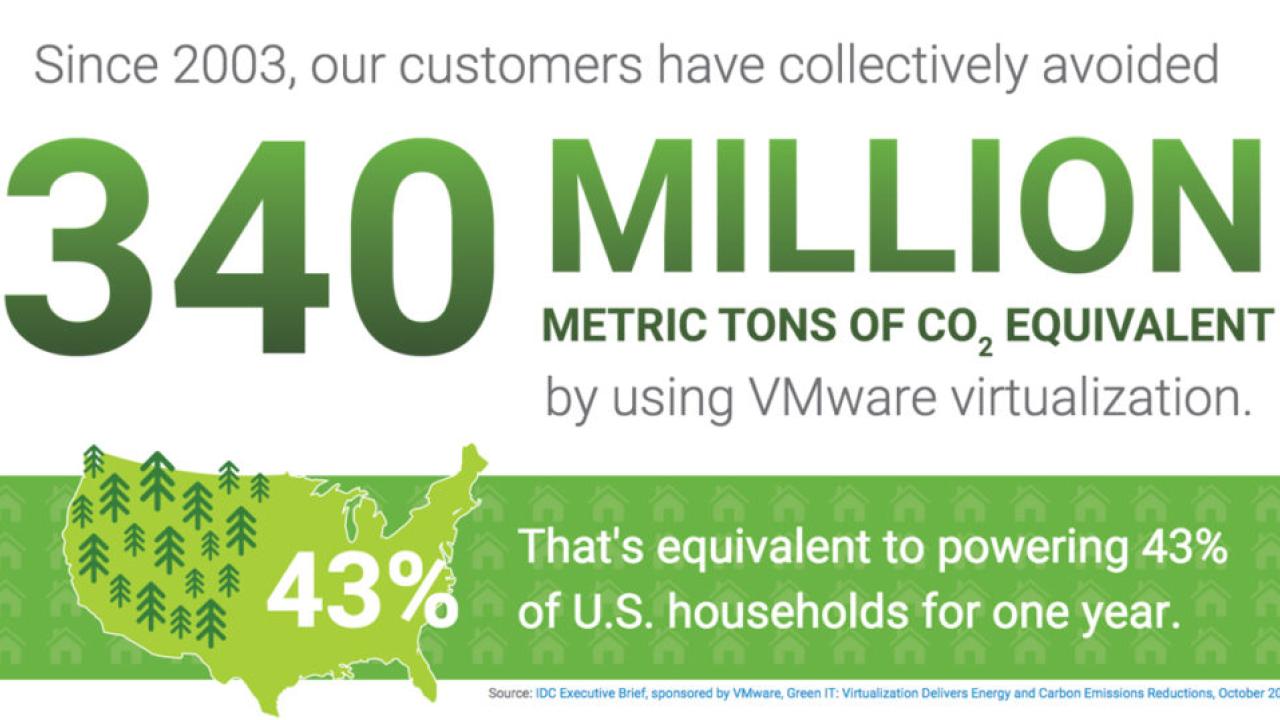
Thought leaders in the environmental sustainability world have long advanced the concept of resilience as a prerequisite to corporate or organizational sustainability. The concept of decoupling resource use from reliance on physical capacity is a concept very close to VMware’s DNA. VMware’s solutions have already enabled a level of “virtual decoupling” of physical IT infrastructure in the data center for its customers. The process of creating a software-based (or “virtual”) representation of something physical, which can apply to computers, data storage, and networks, is the single most effective way to reduce IT energy consumption while boosting efficiency and flexibility—core concepts in increasing resilience and hence sustainability.