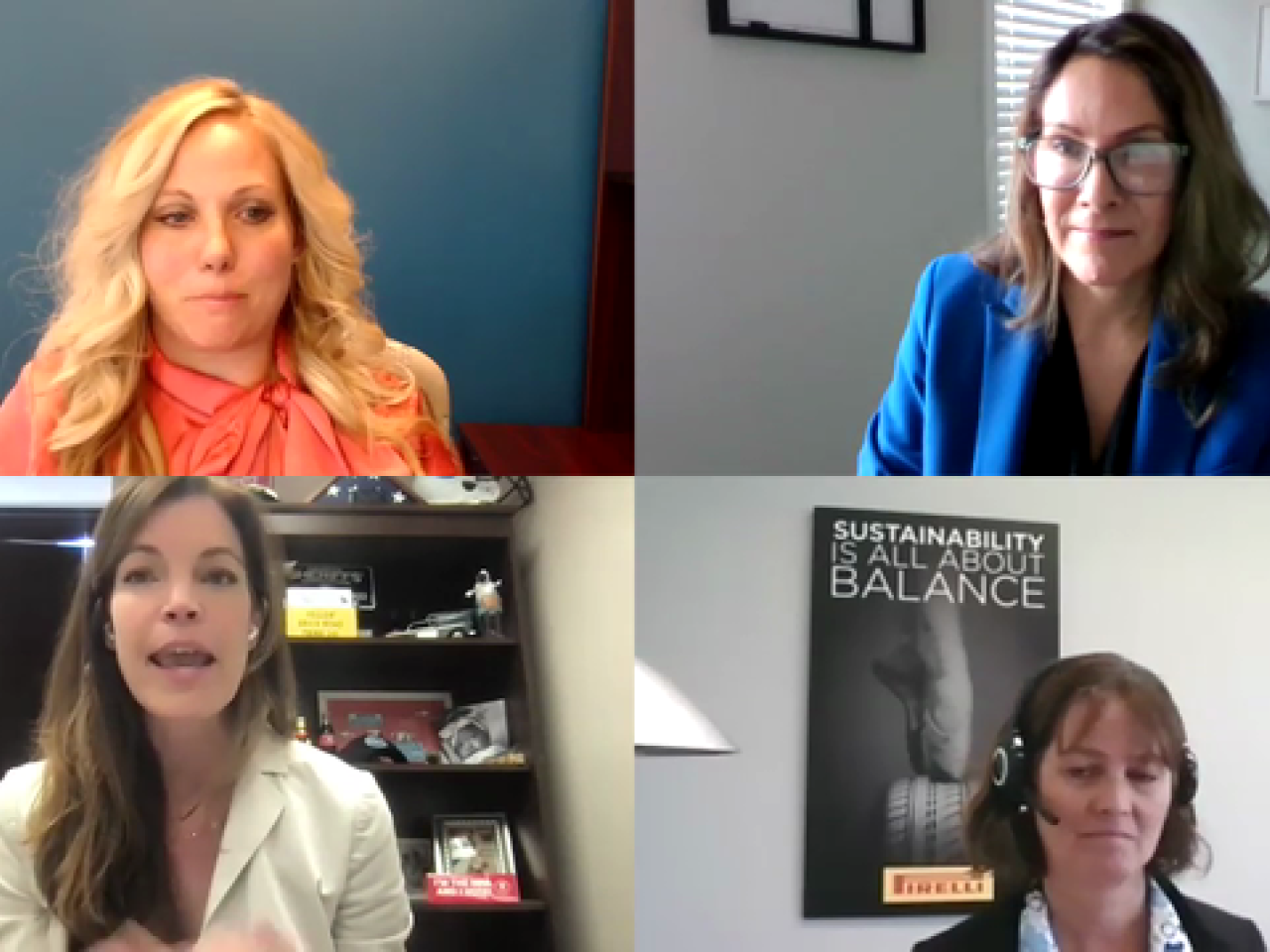
The Ray recently hosted a virtual panel to discuss the industry’s most innovative circular economy solutions in transportation with representatives from Georgia’s leading organizations in the industry: Pirelli Tire, Novelis and Cox Automotive.
Our highway system is the backbone of America. Highways connect our cities. They allow us to visit relatives, live and work in separate places and take that family vacation. But, it’s also a place where 40,000 American lives are lost every year, and it’s the part of our transportation system that contributes an outsized proportion of carbon pollution to our environment.
It’s not often that captains of industry have epiphanies about climate change. So it was remarkable when, after reading The Ecology of Commerce in 1994, carpet manufacturer Ray Anderson set out to clean up his petroleum-intensive operation and succeeded in cutting net carbon emissions by more than 80 percent.
The City of LaGrange, GA is looking to make a good first impression on the 500,000 plus visitors who are expected to drive through the city on The Ray starting this spring.
The Trustees of the Atlanta-based Ray C. Anderson Foundation have granted an additional $2 million to The Ray over the next two years, to fund important research, pilot projects and emerging technologies with the potential to shape the transportation infrastructure of the future.
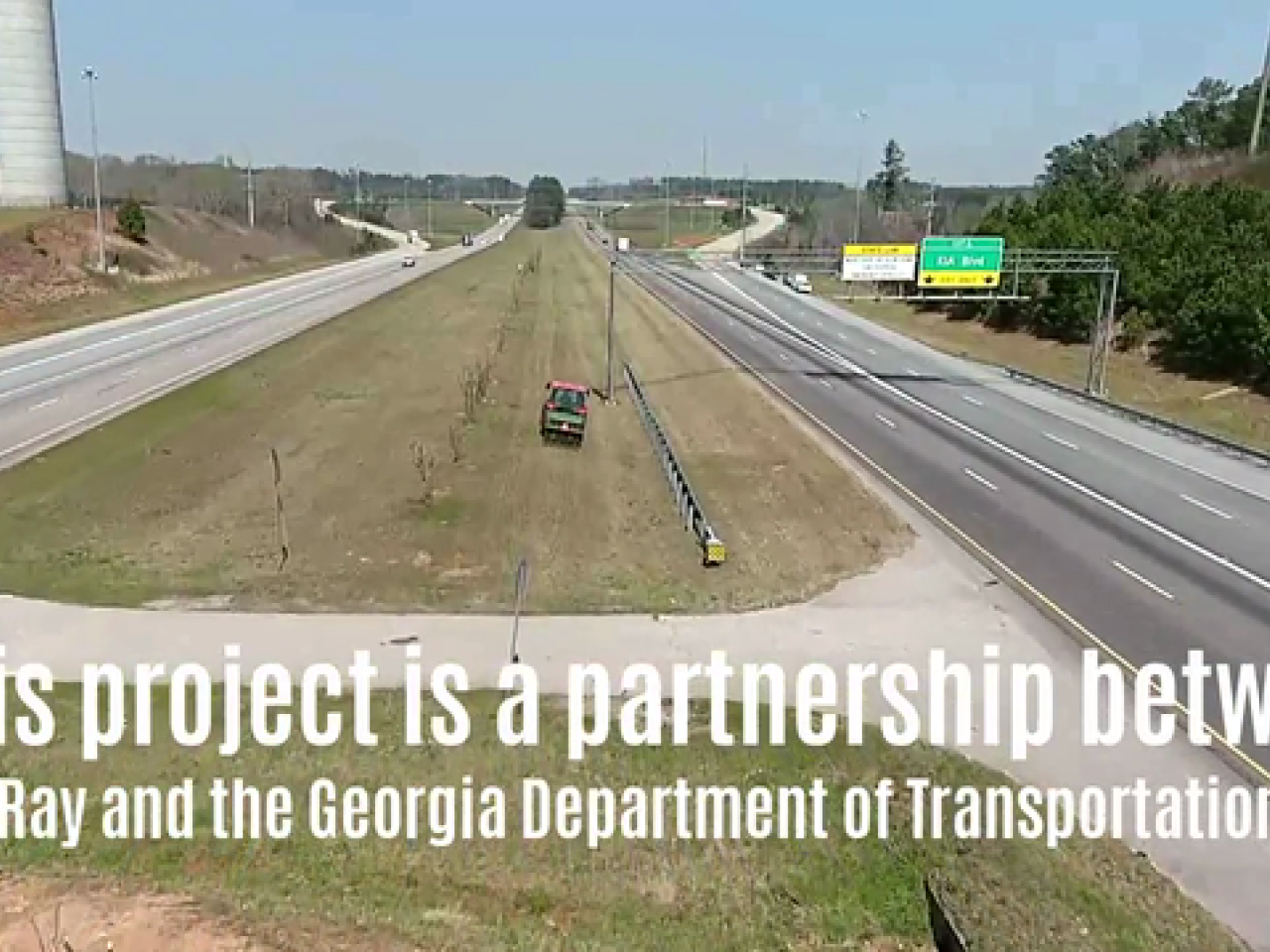
The Ray and the Georgia Department of Transportation (GDOT) have installed five to ten acres of native grasses and pollinator plant seeds in the median and northbound lane gore area of Exit 6 on I-85 near LaGrange, Georgia.
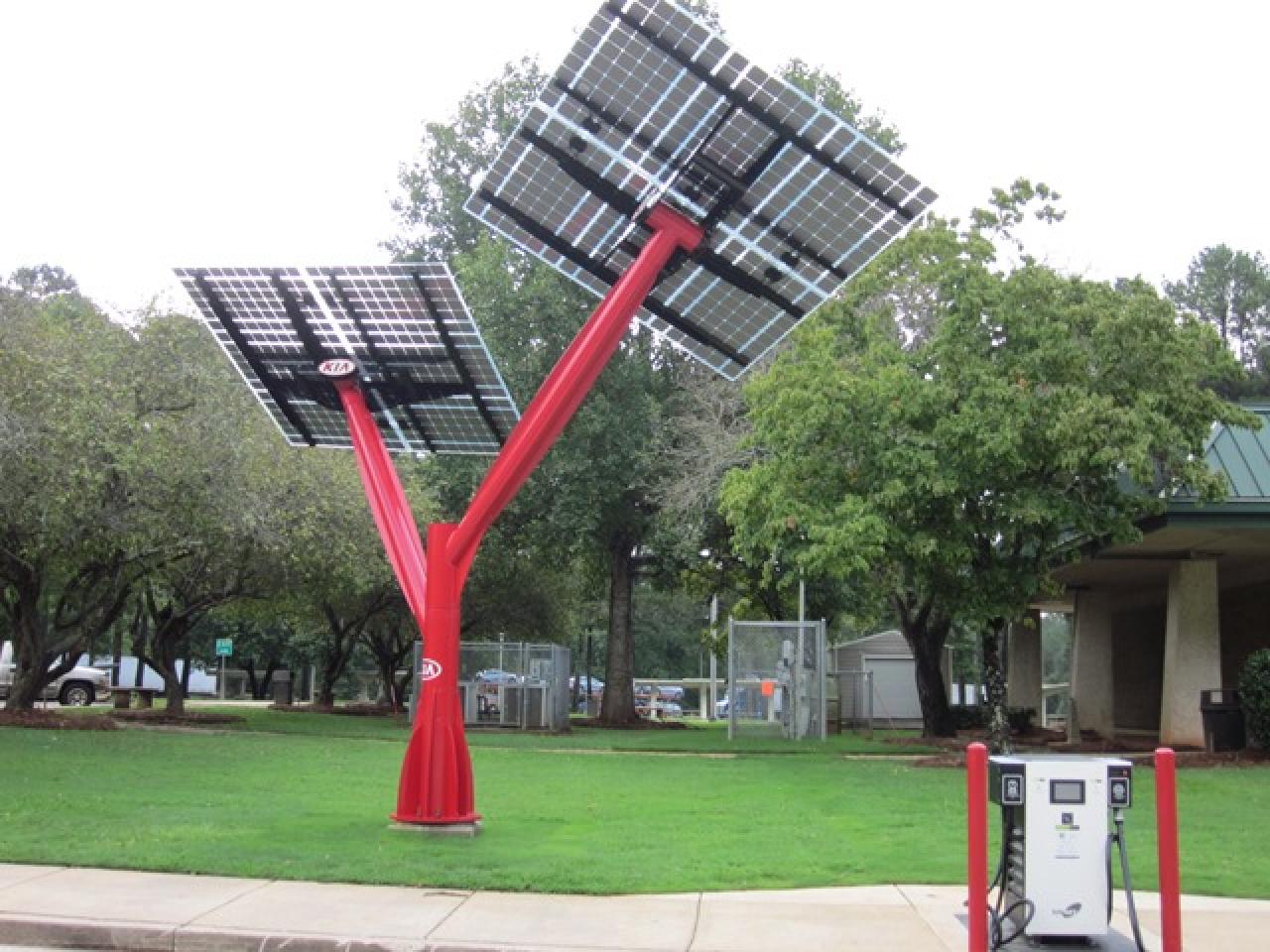
I was thrilled to see one of my great sci-fi dreams come true in West Point when Georgia unveiled its first solar-powered electric vehicle (EV) charging station. We’ve been rewarded by the convergence of public, private, local and global efforts.
The long-term goal of The Ray is to build the world’s first sustainable road, a highway that could create its own clean, renewable energy and generate income by selling power to utility companies, while producing no stormwater runoff or other pollution and eliminating traffic deaths.
Last week, The Ray and the Georgia Department of Transportation (GDOT) installed five to ten acres of native grasses and pollinator plant seeds in the median and northbound lane gore area of Exit 6 on I-85 near LaGrange, Georgia
Allie Kelly, executive director of The Ray will be one of the panelists for AIA New York Chapter's "Viral Voices VI - Virtual Displacement" on Thursday, March 30th at the AIA Center for Architecture.
Cars are getting smarter—can’t the road get smarter, too? That’s the question Harriet Langford is trying to answer along an 18-mile stretch of Interstate 85 in western Georgia.
Cars are getting smarter and more sophisticated all the time, but the roads they drive on are still pretty much pavement. That’s slowly starting to change. States are turning highways into technology laboratories for everything from traffic management to environmental sustainability.
Allie Kelly, executive Director of The Ray will speak at the Society for Marketing Professionals Services North Florida's Transportation Summit. The focus of the summit is: Urban Connectivity: How Transportation Technologies are Changing Infrastructure.
The Ray is a proving ground for the evolving ideas and technologies that will transform the transportation infrastructure of the future, and it starts on 18 miles of West Georgia's I-85, and the land and communities surrounding it.
Ray C. Anderson’s five grandchildren, along with their spouses, comprise the NextGen Committee of the Ray C. Anderson Foundation. The Committee makes...
A bi-monthly blog by John Lanier, director of the Ray C. Anderson Foundation and grandson of the late Ray C. Anderson. Musings from John as he manages...
Mid-Course Correction Revisited is both a how-to and a why-to on the future for green business, as seen through the lens of one of the most pioneering...