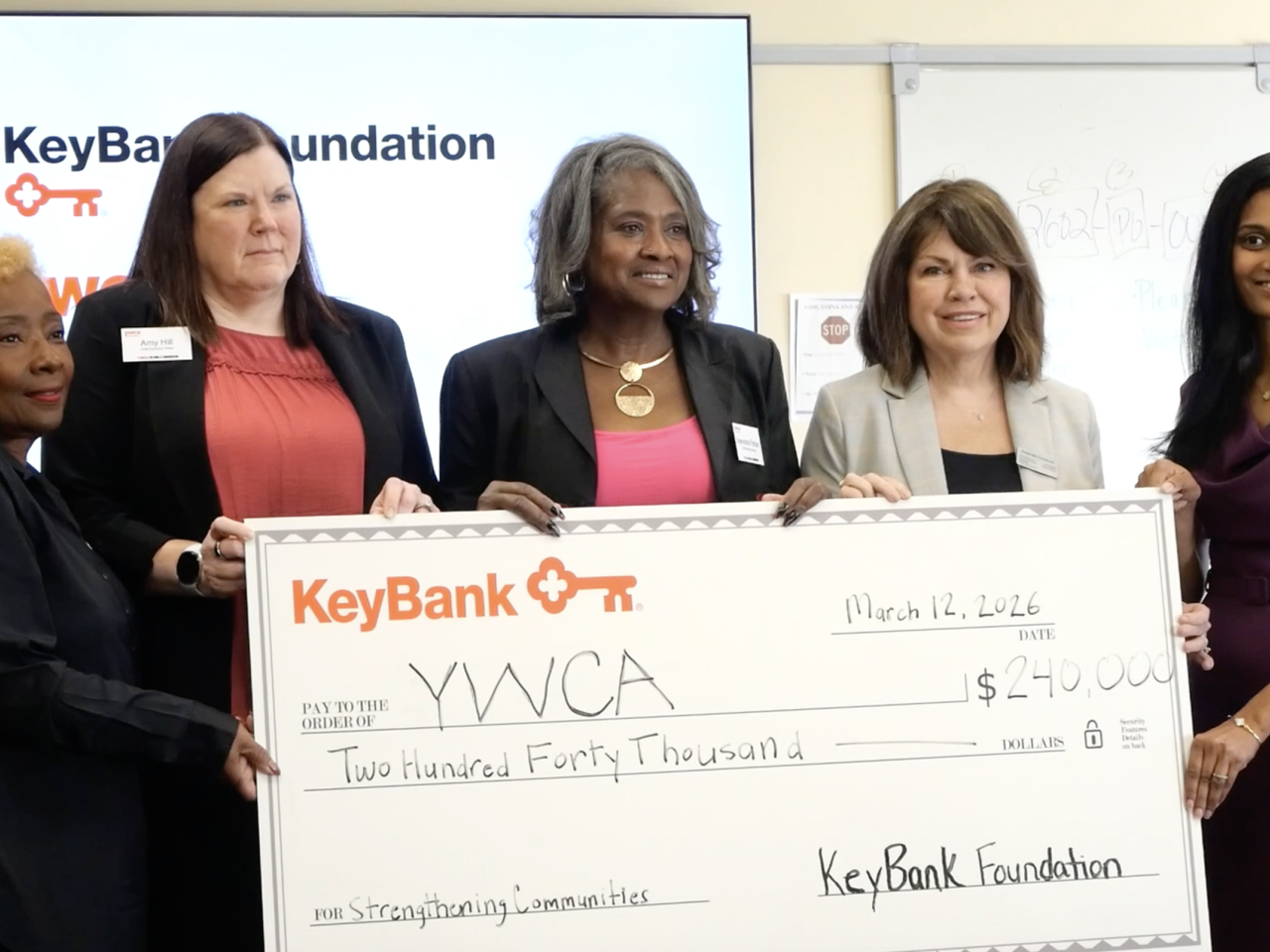
The KeyBank Foundation announced an investment of $240,000 in YWCA North Central Indiana’s Strengthening Communities Initiative, a comprehensive program designed to enhance the social and economic well-being of survivors of abuse.
Investing in Society, CECP’s recently launched and updated compendium of data, research, and case studies illustrates innovations in corporate efforts to solve the world’s most pressing problems.
It is easy to reach for your credit card for daily necessities when cash is scarce. However, good credit card management tells us to think twice before making that decision. According to WalletHub, the average U.S. household has $8,284 in credit card debt. One of the best ways to improve your credit score is to start reducing your credit card debt.
I rose to the podium, looked at Exxon CEO Rex Tillerson, and asked “Why does Exxon fund climate-denying organizations [like ALEC], when you publicly support a carbon tax?” Tillerson deflected the question saying “we would never impinge on ALEC’s free speech.” Two years later, Exxon ceased funding them.
Millennials see investment decisions as a way to express their social, political and environmental values. With CNote, we make investing simple and impactful. Our members’ money works towards revitalizing communities; building affordable housing; and getting women and minorities business loans.
HP LIFE is an important component of HP’s global $20 million investment in achieving better learning outcomes for more than 100 million people by 2025.
“Our success has always been inextricably linked to the progress of the people, communities and businesses that we serve,” said Group CEO, Jes Staley. “By publishing the ESG Report alongside our Annual Report, we’re demonstrating the importance that Barclays places on delivering sustainable value both to society and to our shareholders.”
At SCS Global Services, we take pride in conducting comprehensive assessments and offering best-in-class service. In this video, we follow SCS Forester Francis Eaton as he verifies a forest carbon offset project in Northern California.
A majority of U.S. asset managers are now practicing sustainable investing, viewing it as a strategic business imperative. In a new survey entitled Sustainable Signals: Growth and Opportunity in Asset Management, from the Morgan Stanley Institute for Sustainable Investing and Bloomberg, 75% of respondents reported that their firms have adopted sustainable investing, up from 65% in 2016.
Advancing women and minority-owned small businesses and entrepreneurs around the world. Small to mid-sized businesses power their local economies and...
Cascale shares insights regarding policy and regulation impacting the consumer goods industry, and highlights how it's supporting members prepare for...