by Jason Hartke, Ph.D.
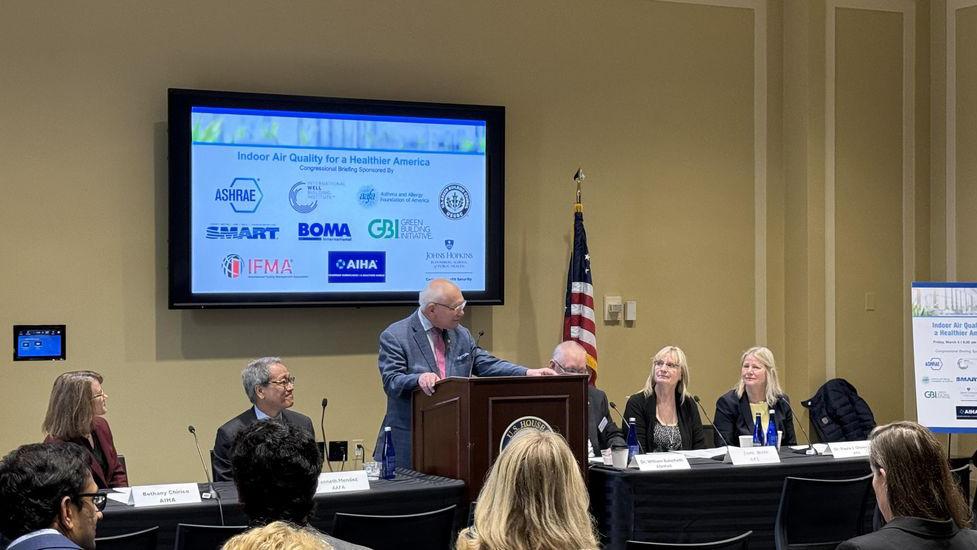
You know it’s a healthy building crowd when the “we spend 90% of our lives indoors” stat comes up multiple times. While we’re all hearing that statistic more often, it bears repeating. What happens inside our buildings has a huge impact on our health, perhaps most notably the air we breathe. Poor indoor air quality is now recognized as one of the world’s leading (yet largely preventable) environmental health risks. That’s why last Friday’s congressional briefing on Indoor Air Quality for a Healthier America focused on elevating indoor air quality as a central advocacy priority and a key focus of public policy action.
That theme came to life throughout the briefing, a standing-room-only event where national policymakers and leading experts across public health, building science, facility management and business made the case that healthier indoor environments are essential to healthier people.
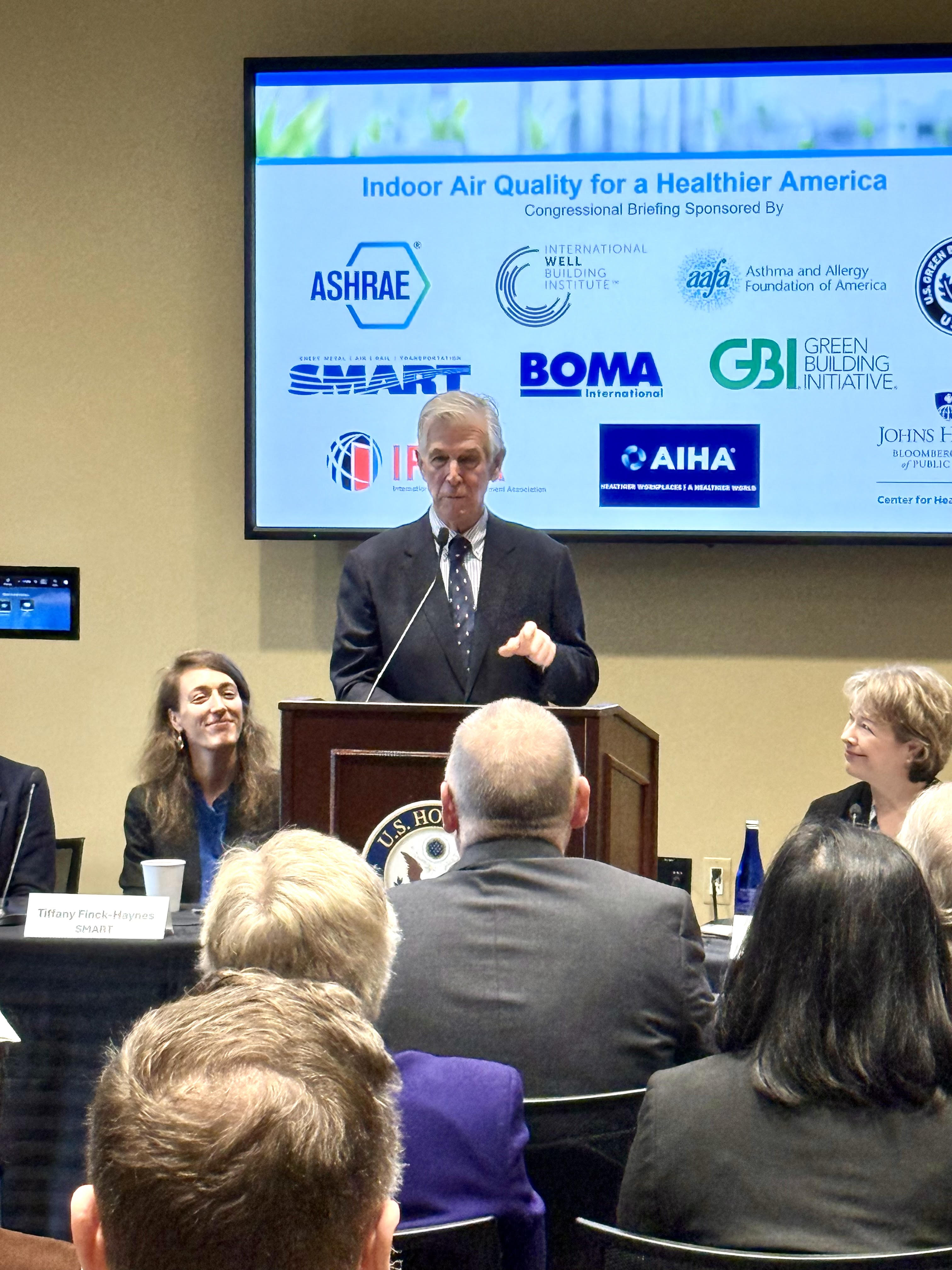
Opening the briefing in the Gold Room of the Rayburn House Office Building, Congressman Paul Tonko (D-NY), pictured above, underscored the growing momentum behind efforts to improve indoor air quality, noting that despite decades of progress addressing outdoor pollution under the Clean Air Act, indoor air quality remains largely unregulated and underfunded. He pointed to bipartisan legislation he has reintroduced called The Indoor Air Quality and Healthy Schools Act, which would drive federal resources and action to protect Americans from poor indoor air quality.
Another national lawmaker who spoke at the briefing, Congressman Don Beyer (D-VA), pictured left, noted his reintroduction of The Airborne Act, important bipartisan legislation that would create critical incentives for commercial building owners to conduct IAQ assessments, specifically a $1 per square foot tax credit not to exceed the cost of conducting the assessment.
Tonko closed his remarks with a nod to the leaders assembled in the room. “We are a powerful compact of organizations to speak forcefully to this issue.” The briefing itself reflected a diverse group of hosting organizations brought together by ASHRAE, including the International WELL Building Institute (IWBI), American Industrial Hygiene Association (AIHA), Asthma and Allergy Foundation of America (AAFA), Building Owners and Managers Association (BOMA),Green Building Initiative (GBI), Johns Hopkins School of Public Health, International Facility Management Association (IFMA), SMART, and U.S. Green Building Council.
Several clear themes emerged during the briefing. Here are five main takeaways:
1. Indoor air quality is a foundational public health issue
Dr. Whitney Austin Gray, SVP of Research at IWBI, pictured left, emphasized that improving buildings is ultimately about improving human health. “If we do not invest in our children and secure healthy environments for the future, we are already behind — and healthy air is going to be a critical component of that.”
Gray highlighted research showing that healthier buildings can produce measurable gains in workplace satisfaction, well-being, mental health and performance. “We’ve documented improvements including a 30% increase in environmental satisfaction, 26% improvements in well-being, and even significant gains in cognitive function when indoor environments are improved.” She noted that in addition to significant health benefits, investing in healthy buildings pays back in terms of increased productivity, real estate performance and talent retention and recruitment.
Looking ahead, Dr. Gray emphasized that brain health will be an important frontier in the conversation around healthy buildings. “Right now, our lifespan is longer than our brain span. If we want to close the gap, we have to start thinking about everything we put into our brains, including the air we breathe.”
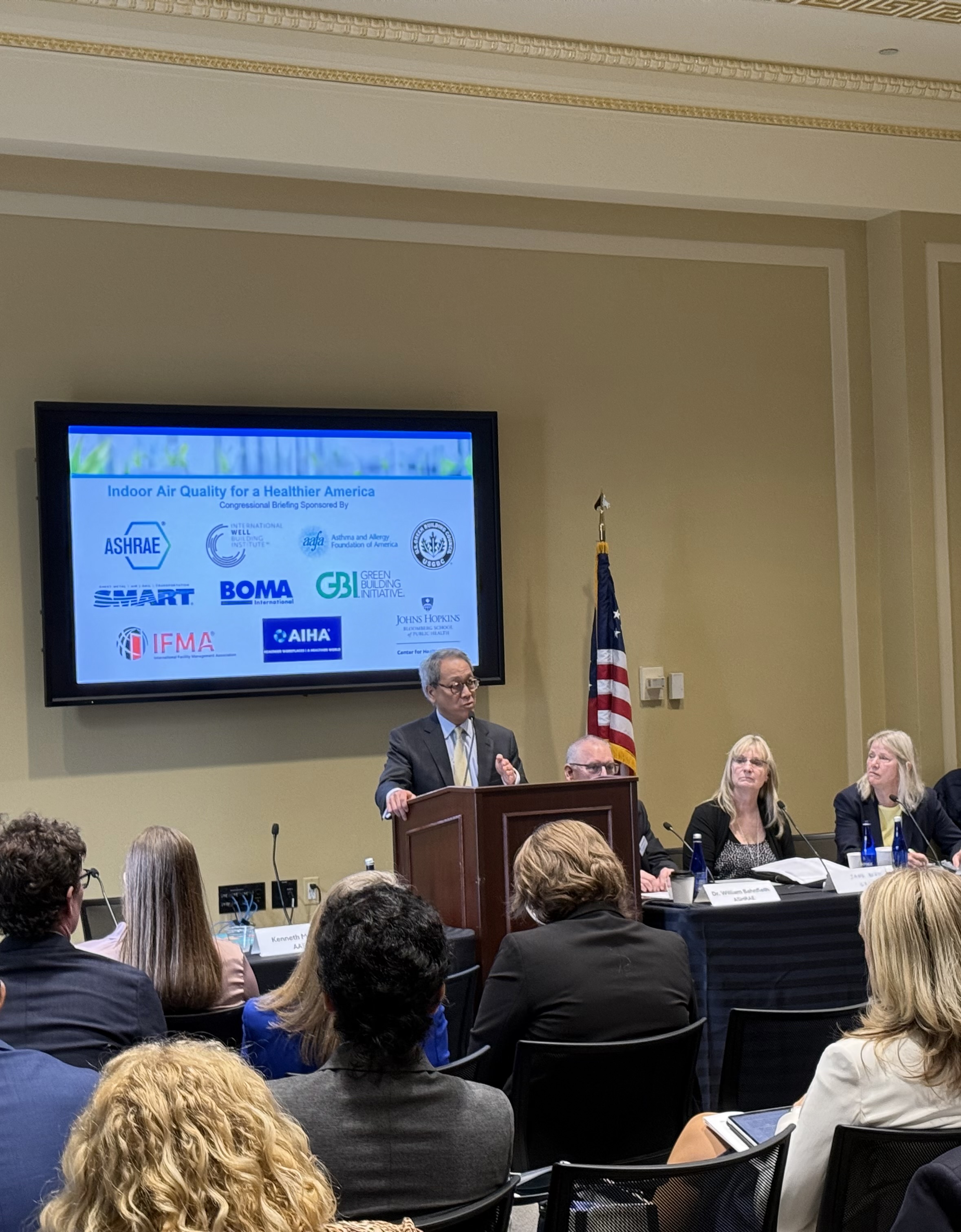
2. Indoor air pollution affects millions of Americans every day
Kenneth Mendez, President and CEO of AAFA, pictured left, connected the science of indoor air with the lived experience of millions of patients. “One in four Americans has allergies, and 28 million Americans have asthma, including six million children,” he said.
Mendez also explained that people are often told to stay indoors when outdoor air quality is poor, yet we now know that, according to the EPA, indoor environments are three to five times more polluted than outdoor air and lack any protective regulations.
“When you come indoors, we don’t have those same standards. That’s why we need greater attention to indoor air quality,” he said. He also explained how improving indoor building environments, particularly in our schools and workplaces, could significantly reduce asthma attacks, missed school days and lost productivity.
3. The science of indoor air pollution is clear, and the health risks are significant
Bethany Chirico, Chief Experience Officer at AIHA, detailed the pollutants commonly found in indoor environments and their health impacts. “Indoor air often contains particulate matter, volatile organic compounds, carbon monoxide, mold, bacteria and viruses — all of which can affect people’s health and well-being,” she said. And often these pollutants can accumulate in our indoor spaces.
She added that while our indoor air is often worse that outdoor air, “people cannot opt out of breathing it.”
Chirico pointed out that exposure to poor indoor air quality is linked to a variety of health problems, from short-term impacts such as headaches or asthma attacks to long-term risks including respiratory illnesses, heart disease and cancer.
4. Proven solutions already exist
Bill Bahnfleth, a Fellow and Presidential Member of ASHRAE, explained that several ASHRAE standards are available to help improve indoor air quality, but need more support to ensure they are more widely implemented.
“The science is very clear that we need to do something about indoor air quality, and we have the tools to move forward if we have the will to put them into action,” he said. ASHRAE has developed baseline standards for ventilation and indoor air quality, as well as newer guidance for controlling infectious aerosols. However, Bahnfleth said, adoption remains uneven across states and jurisdictions.
The takeaway: more policy alignment is needed to better translate existing science into more widespread adoption of these minimum baseline standards.
5. Implementation requires action from building professionals and policymakers
Laurie Gilmer, a Fellow with IFMA, highlighted the critical role of facility managers in maintaining healthy buildings, saying, “The people who operate buildings are on the front lines of keeping occupants safe, healthy and productive.” She also acknowledged how indoor air quality can affect far more than just physical health. “The air we breathe indoors affects cognitive performance, creativity, focus and decision-making,” she said. She referenced several strategies that leading organizations are deploying to help improve indoor air quality, such as source control, improved ventilation, filtration and better maintenance.
Also on the implementation front, schools emerged as one of the most urgent priorities during the briefing. As noted by Anisa Heming, Director of the Center for Green Schools at the US Green Building Council, improving school buildings represents both a key sector of focus and a tremendous opportunity to safeguard children’s health. The latest 2025 State of Our Schools report — led by IWBI, the 21st Century School Fund, and the National Council on School Facilities — found that schools face an annual investment shortfall of nearly $90 billion. This massive funding gap clearly represents the worsening condition of school facilities, which in turn jeopardizes indoor air quality and the health of the more than 50 million students who attend school every day.
A Final Takeaway
The congressional briefing demonstrated that momentum is building across science, academia, industry and policy. As Dr. Gray noted, progress will require collaboration across disciplines. “If you do not partner, if you do not operationalize these solutions, then we won’t be successful,” she said. . “At IWBI, we partnered with more than 200 global leaders to form the Global Commission on Healthy Indoor Air. We have the science globally. Now it will be a question of who will implement it first to lead investment in the future of children and workforces.”
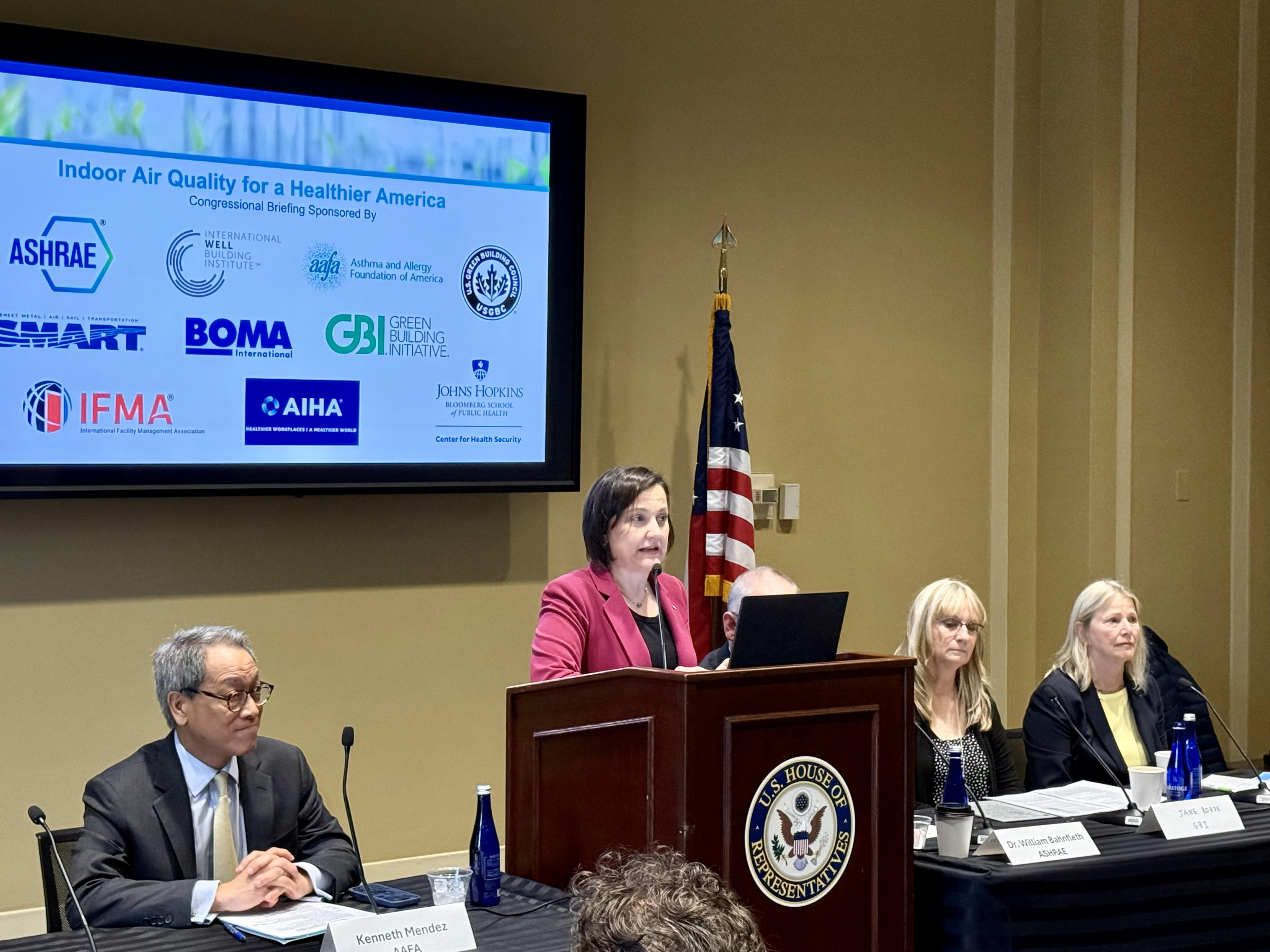
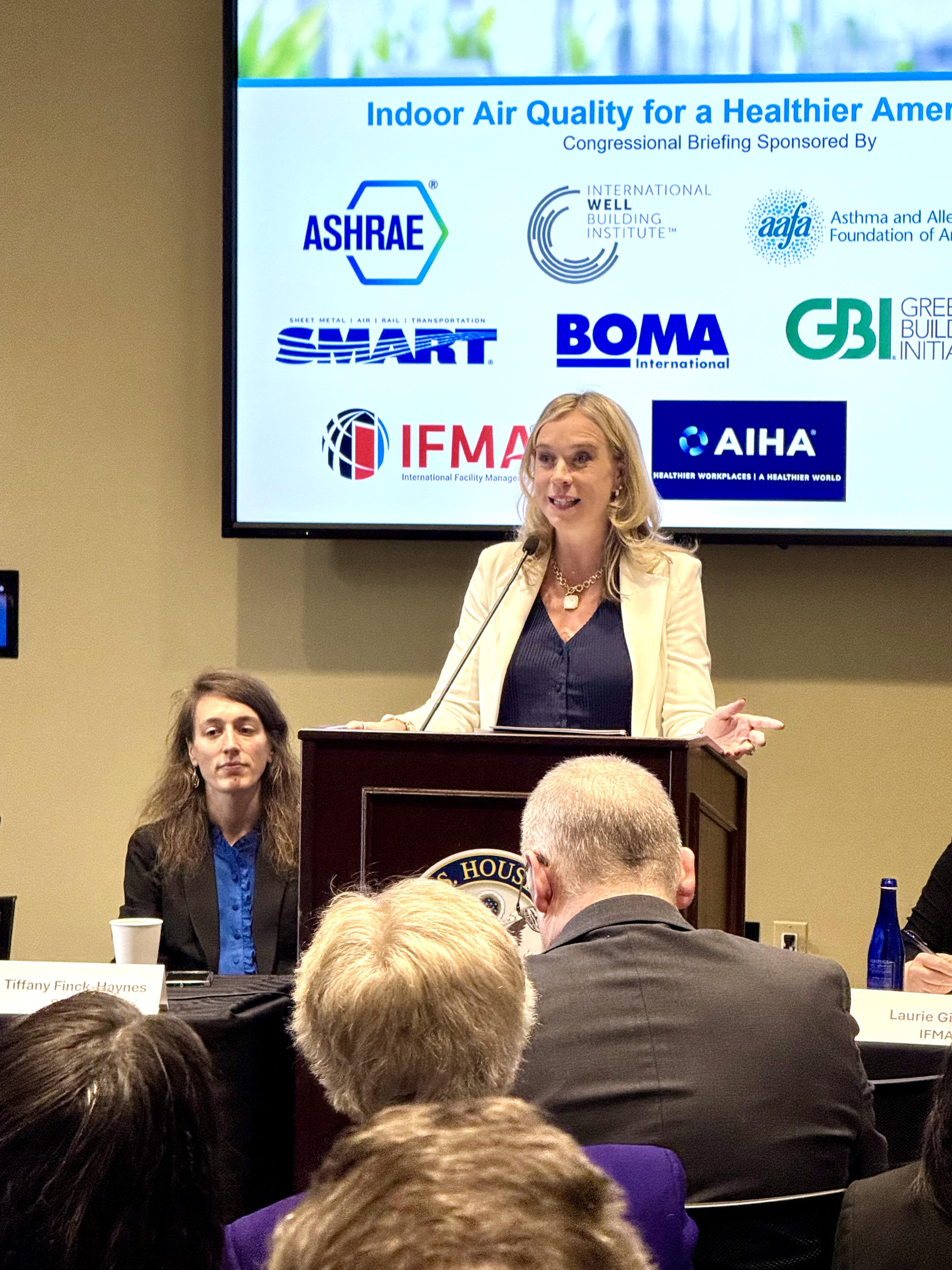
The briefing also underscored the importance of collaboration. Thanks to ASHRAE (with key leadership from its Director of Government Affairs, Alice Yates, pictured above), the briefing brought together these leading nine organizations for an impactful discussion on Capitol Hill that elevated indoor air quality as a central issue linking public health, building performance and national resilience.
An obligatory selfie at the U.S. Capitol by the author.