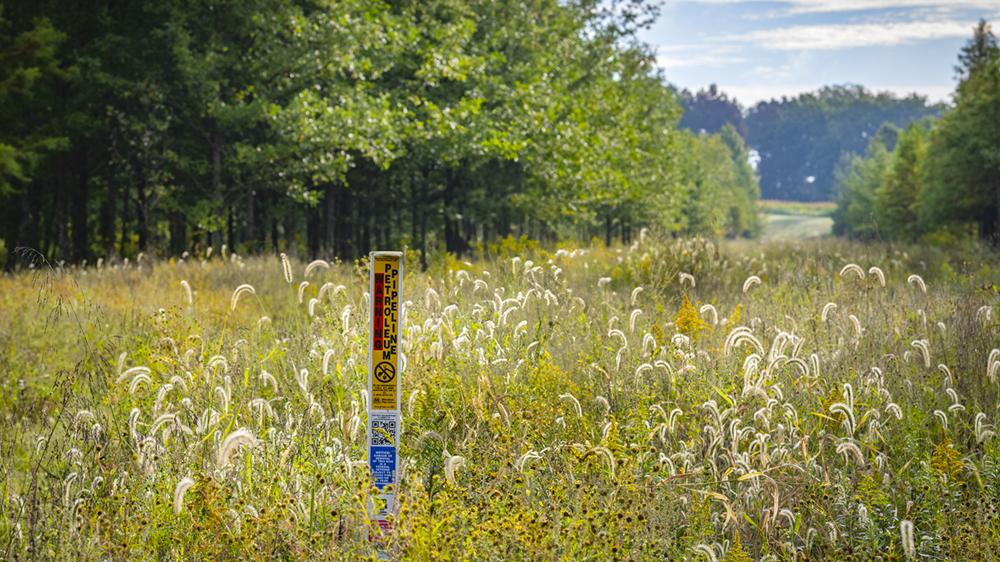
Key Points
- The Marathon Pipe Line LLC (MPL) Sustainable Landscapes Program reached its goal of applying nature-based solutions to 10,000 acres of pipeline rights of way ahead of schedule, benefiting both operations and the environment.
- The program uses a circular process of site assessment, tailored vegetation management, and ongoing monitoring, involving collaboration with contractors, landowners, and conservation groups.
- Building trust with local stakeholders and adapting to their needs has been crucial to the program’s success and future expansion plans.
For years the solution to maintaining Marathon Pipe Line LLC (MPL) pipeline rights of way across the United States was simply to mow existing vegetation. It was not until Scott Sharpe, a natural resource manager by trade, joined the team that MPL began considering how investing in sustainable landscaping could protect its operations, benefit the local environment, drive cost-efficiency, and improve MPL’s relationships with landowners.
“We recognized that maintaining the status quo was not sustainable. Costs were going up, vegetation growth was not slowing down, and regulations were increasing across the country,” said MPL’s Right of Way and Public Engagement Manager Aron Velasquez, whose team is responsible for rights-of-way maintenance. “Something needed to change with our approach. Not just on the cost side but also from the nature side of things, too.”
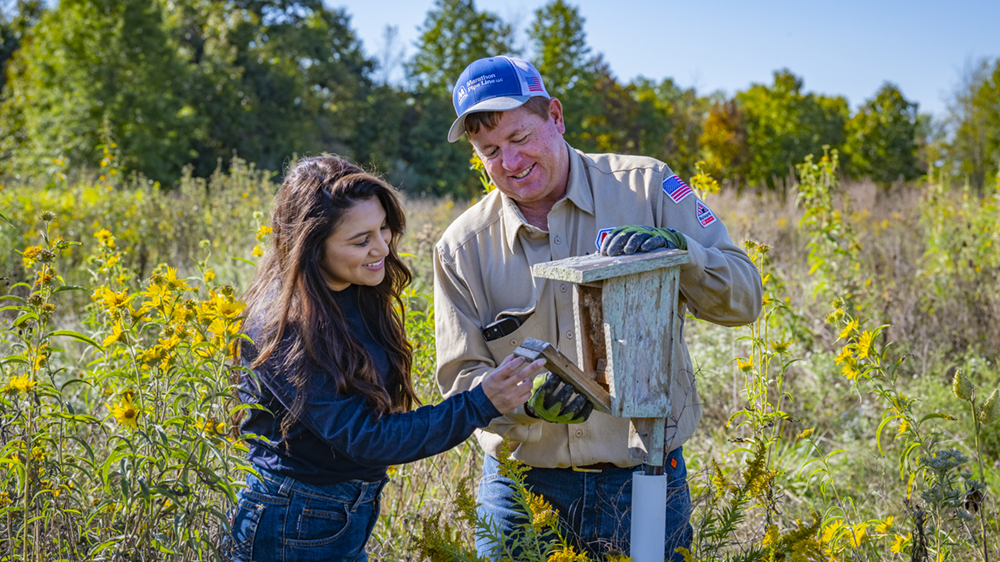
Lessy Mehler, administrative assistant, and Seth Hesler, operations technician, check a birdhouse along a right of way at a Wildlife Habitat Council site in the Illinois Wabash Valley area.
Sharpe, MPL senior environmental specialist, and Austin Bussard, MPL operations supervisor, explored the Sustainable Landscapes Program in 2021 and eventually launched it in 2023 with the goal of applying nature-based solutions to 10,000 acres of compatible rights of way by the end of 2025. These 10,000 acres represent approximately 50% of MPL’s compatible rights of way nationwide. The team hit their goal in September, months ahead of schedule.
“The rights of way are valuable from a wildlife perspective because houses will never be built on them,” Scott said. “We can help native plants and wildlife survive and thrive by creating sustainable habitats that help improve the local environment while protecting our assets and saving money.”
The new approach is saving MPL more than $2 million per year while also improving the company’s impact on biodiversity and its relationships with regulators and permitting agencies.
Circular process
The team follows a circular process to evaluate each land parcel, Sharpe said. Following a site assessment, the team develops a plan based on where it’s located, who owns it, what it’s used for, and the type of vegetation currently growing there. Then they execute and continuously monitor the site to see what works and what does not.
“For a majority of our rights of way, this is not a one-time process,” said Sharpe. “We remove invasive species to provide room for native plants to thrive. We also remove trees and shrubs with roots that may disrupt our pipelines and sometimes seed the area. In every case, we then monitor the response and make adjustments as needed.”
Last year the team seeded 1,000 acres of rights of way with integrated vegetation management (IVM) compliant seeds provided by Pheasants Forever, a wildlife conservation group.
“Each location required a different mix,” said Sharpe. “West Texas looks different from northern Utah or Ohio, so we adjust according to the local vegetation.”
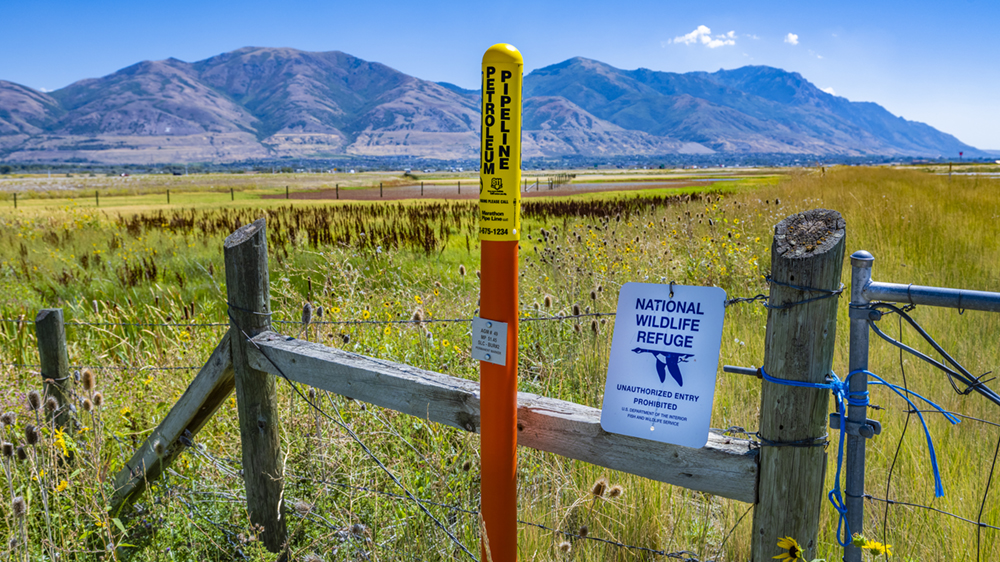
Our landscaped right of way in one of Utah’s national wildlife refuges.
The process requires constant communication and collaboration with contractors who perform the work and local stakeholders like landowners, the federal Bureau of Land Management (BLM), and even nearby beekeepers. Julie Beaschler, MPL senior right-of-way specialist who joined the team in 2022, previously worked in robotics automation and oversees the tracking and execution of the program. She built a real-time dashboard with an interactive, color-coded map of our U.S. pipeline assets to provide in-depth details on the status of each acreage parcel and which contractor services it.
“It started as an Excel spreadsheet and evolved into a more sophisticated tracking system,” she said. “It’s necessary so we know where we need to apply herbicide, where we should mow, what areas are forested, and where someone else is managing the land with crops.”
The system also helps Beaschler track the work and progress of the handful of skilled contractors used across the United States who perform specialized work with custom-built, industrial equipment.
“The contractors have to be licensed individuals to perform the work,” she said. “We train our contractors to make sure the work is performed to our expectations while ensuring safety and to help them earn the trust of landowners.”
Building trust
The duo’s work has helped build inroads with landowners who were initially uncertain and skeptical about what MPL was doing and how contractors were tending to their property in a new way. In several cases, Sharpe met face-to-face with landowners explaining the program and its methods and completely changed the relationship. A prime example is the Umatilla Reservation in Pendleton, Oregon.
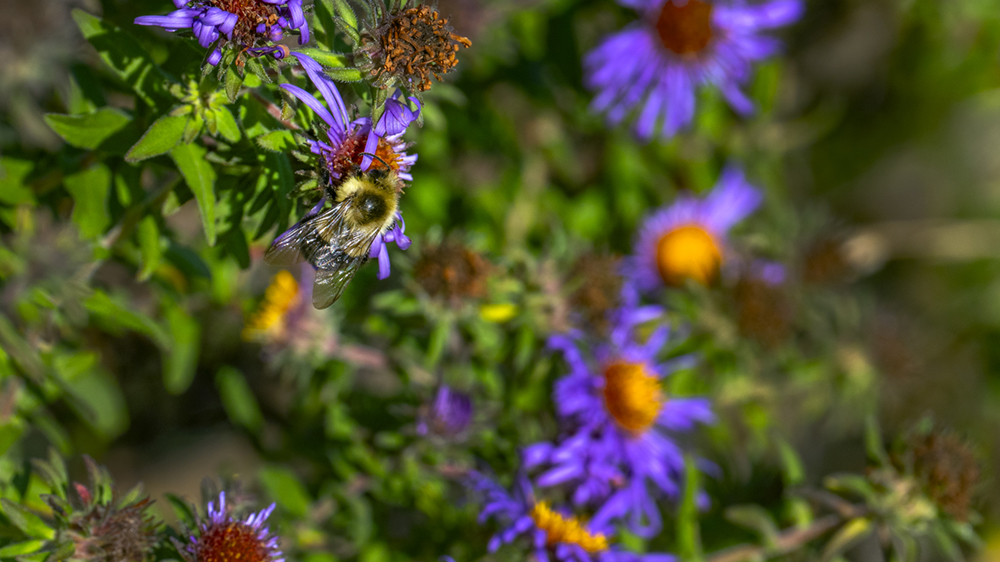
A bee visits native wildflowers along a right of way in Louisiana.
“We had a strained relationship initially, so Julie and I went out to meet with their cultural resources and natural wildlife contacts and just listened,” Sharpe said. “We learned what was important to them and what they’re trying to accomplish on their land. We spent the day in the field identifying plants and listening to the history of why it meant something to their people.”
“If they didn’t have this plant, the community struggled to make it through the winter; this one was for weddings and funerals; this one was for seasoning a favorite dish,” Sharpe said. “They explained the challenges of preserving these important plants, so we used it as an opportunity to go after invasive species and support their native plants. We slowly built the relationship through accountability and follow through and now we have their trust.”
Planning for the future
While the team achieved their initial 10,000 acres goal, they are already deep into planning for 2026 and beyond.
“Even though we hit the goal, there is still more work to be done and more opportunities at our fingertips to expand the program,” Beaschler said. “Vegetation doesn’t stop growing, and there’s always something to assess and improve on.”
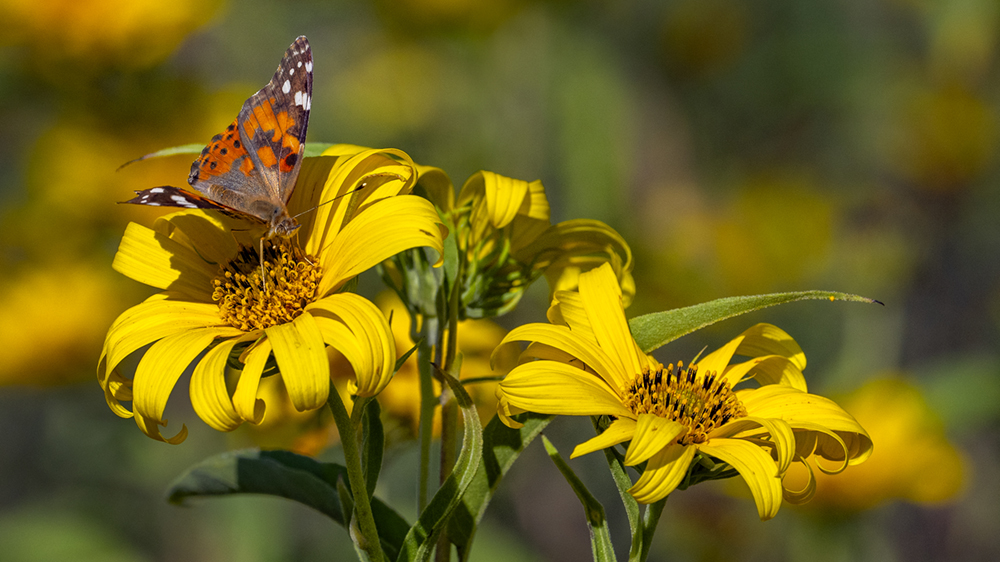
A butterfly lands on blooming flowers on a right of way in Louisiana.