Global supply chains are entering a new phase. In his latest Forbes Business Council article, “Why Capability—Not Geography—Will Define the Next Decade of Trade,” Morten Johansen, COO of DP World in the Americas, explains why the next era of trade will be shaped less by where production happens and more by the capabilities that support it.
As companies continue to rethink global supply chains amid geopolitical shifts, tariff uncertainty, and growing demand for resilience, nearshoring has emerged as a key strategy. But Johansen argues that simply moving production closer to end markets does not automatically solve supply chain challenges.
Nearshoring’s Next Phase
The initial promise of nearshoring was straightforward: shorter supply chains, faster delivery times, and lower transportation costs. Yet in practice, companies relocating production have often discovered that proximity alone cannot guarantee efficiency or reliability.
Without strong logistics networks, efficient customs systems, digital visibility, and skilled labor pools, nearshored operations can still face costly delays and bottlenecks.
This is why Johansen describes the next phase as “Nearshoring 2.0”—a shift toward building integrated supply chain ecosystems that prioritize capability alongside location.
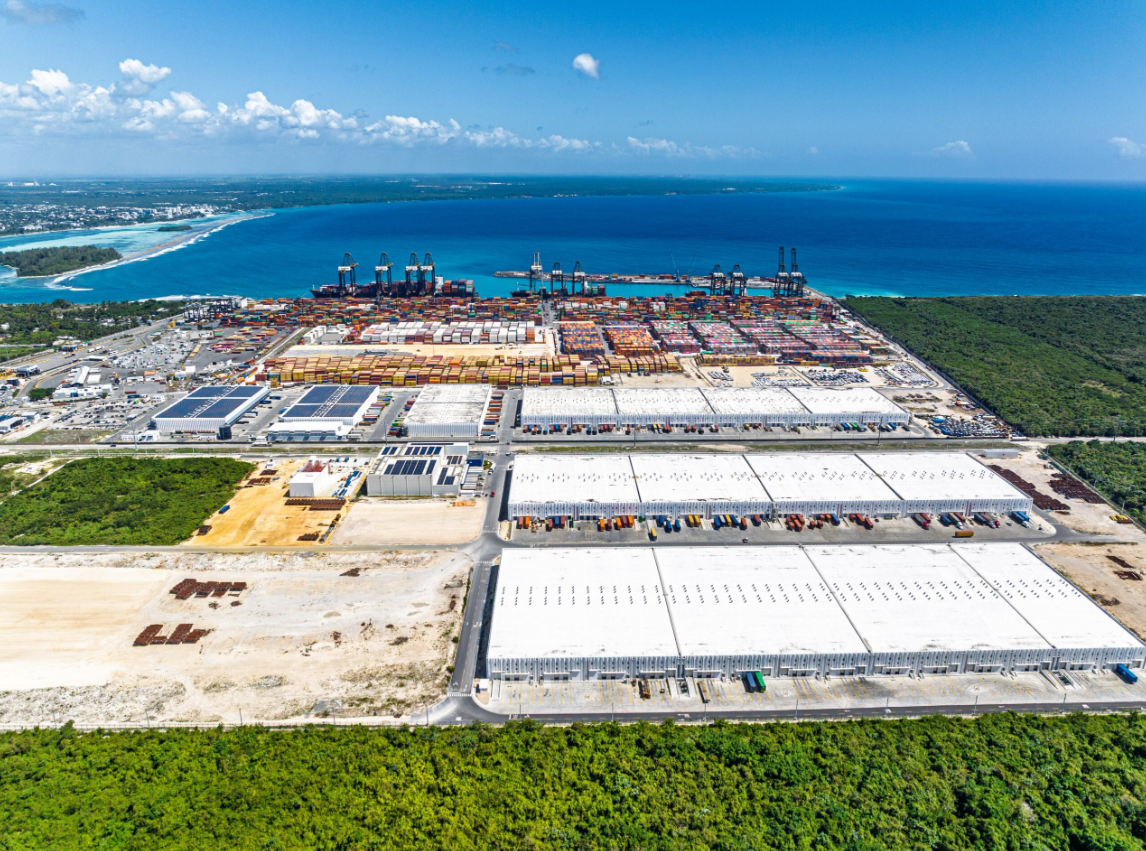
Building Trade Ecosystems That Work
In the article, Johansen outlines the capabilities businesses should evaluate when choosing supply chain locations. These include:
- Reliable infrastructure and multimodal transport connectivity
- Efficient regulatory and customs frameworks
- Digital tools that provide real-time supply chain visibility
- Skilled workforces that support advanced logistics and manufacturing
- Sustainable operations that reduce environmental impact
When these elements are aligned, supply chains become more resilient and adaptable—able to move goods, data, and capital seamlessly across borders.
Digitalization and Sustainability Shape Trade Decisions
Johansen also highlights how technology and sustainability are increasingly influencing where companies invest and build supply chains.
Digital platforms now allow businesses to monitor shipments in real time, predict disruptions, and optimize routes — capabilities that are quickly becoming essential in modern logistics.
At the same time, companies are placing greater emphasis on environmental performance, looking for partners and locations that support renewable energy use, lower emissions, and more sustainable logistics operations.
Capability Is the New Competitive Advantage
As Johansen explains, the next decade of global trade will not simply be defined by geography. Instead, companies that invest in capability-driven supply chain ecosystems —combining infrastructure, technology, sustainability, and talent — will be best positioned to compete in an increasingly complex global marketplace.