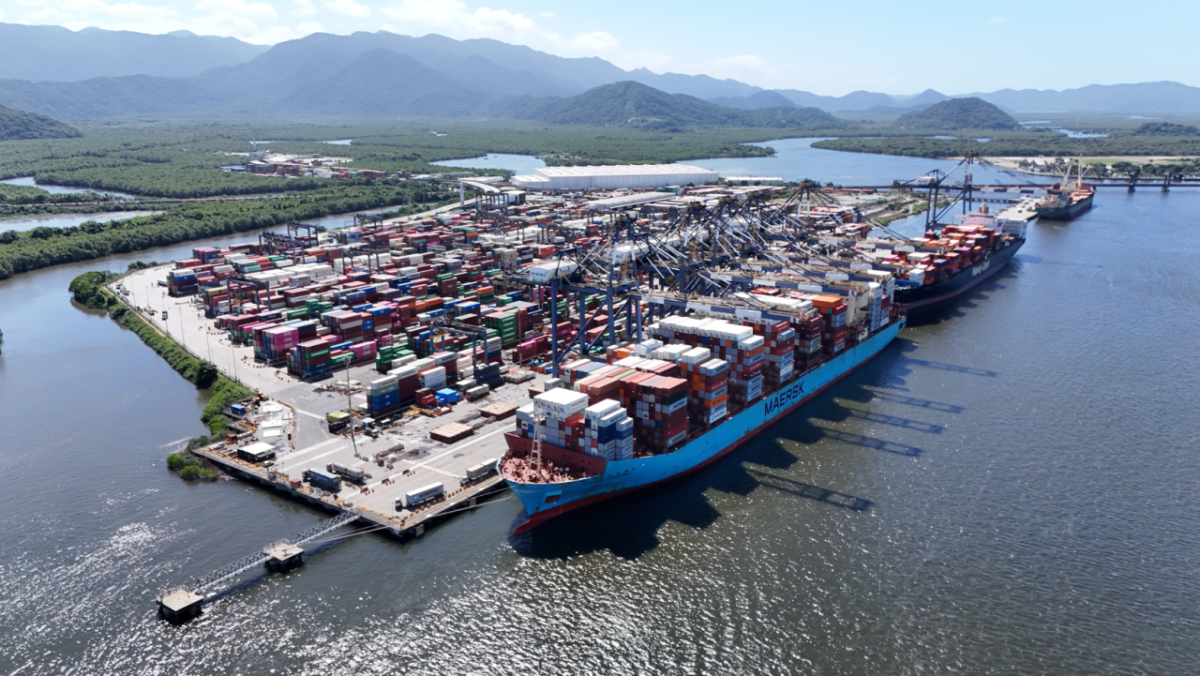
Brazil’s container port sector is entering a defining moment. In a recent article published by Container Management - “Brazil's Port Investment Boom: From Santos to Suape and Beyond”, a wave of more than R$9 billion in investment is unfolding across the country, reshaping not only capacity, but the structure of Brazil’s logistics landscape.
Investment surge reflects a deeper transformation driven by sustained trade growth and increasing pressure on existing infrastructure, accelerating investment across key port terminals, including:
- Santos
- Suape in northeastern Brazil
- Porto Itapoá and Portonave in southern Brazil
At the same time, supply chains are becoming more distributed. The rise of alternative corridors is reducing reliance on a single dominant port and introducing greater flexibility across regions.
As Fabio Siccherino, CEO of DP World in Brazil, explains: “DP World sees the recent acceleration in Brazil's container volumes as part of a sustained long-term growth trend, underpinned by the strength and diversification of the country's export base, continued expansion in sectors such as agribusiness and cellulose, and deeper integration into global value chains."
From Port Infrastructure to Integrated Supply Chains
As investment accelerates in Brazil, the focus is expanding beyond terminal capacity to end-to-end logistics. At Santos, DP World’s R$1.6 billion expansion is strengthening both capacity and connectivity through:
- Quay extensions
- Yard expansion
- Enhanced gate and landside infrastructure
More broadly, ports are evolving into integrated logistics hubs by connecting:
- Inland transport networks
- Warehousing capabilities
- Freight forwarding solutions
Why It Matters: Competitiveness, Resilience and Sustainability
The implications extend beyond capacity. Greater geographic diversification is strengthening resilience and reducing dependency on a single gateway.
At the same time, increased competition is driving, higher efficiency and improved service standards.
Yet Santos remains central to this equation—and under increasing pressure. Throughput has reached record levels, with the port surpassing 5.5 million TEU and operating close to its limits, as existing terminals run above optimal utilisation levels.
Planned expansions could add roughly 2 million TEU of additional capacity, while the proposed STS10 project could contribute a further 3.25 million TEU. However, the timing, structure, and delivery of this new capacity remain under debate, raising questions about whether supply can keep pace with sustained demand growth.
Electrification is also emerging as a defining theme, positioning Brazil at the forefront of lower-emission port operations.
However, infrastructure by itself will not determine success. As Siccherino notes, “port capacity alone will not be sufficient to support this growth. Efficient road, rail and inland logistics networks are essential to ensure seamless cargo flows."
Explore the Full Analysis
As Brazil’s container sector continues to expand, the role of integrated logistics in enabling efficient, resilient, and scalable trade will only become more critical.
For a deeper look at how this investment cycle is reshaping the country’s competitive landscape, explore the full Container Management feature: “Brazil’s Port Investment Boom: From Santos to Suape and Beyond.”