Boeing's 2017 Environment Report
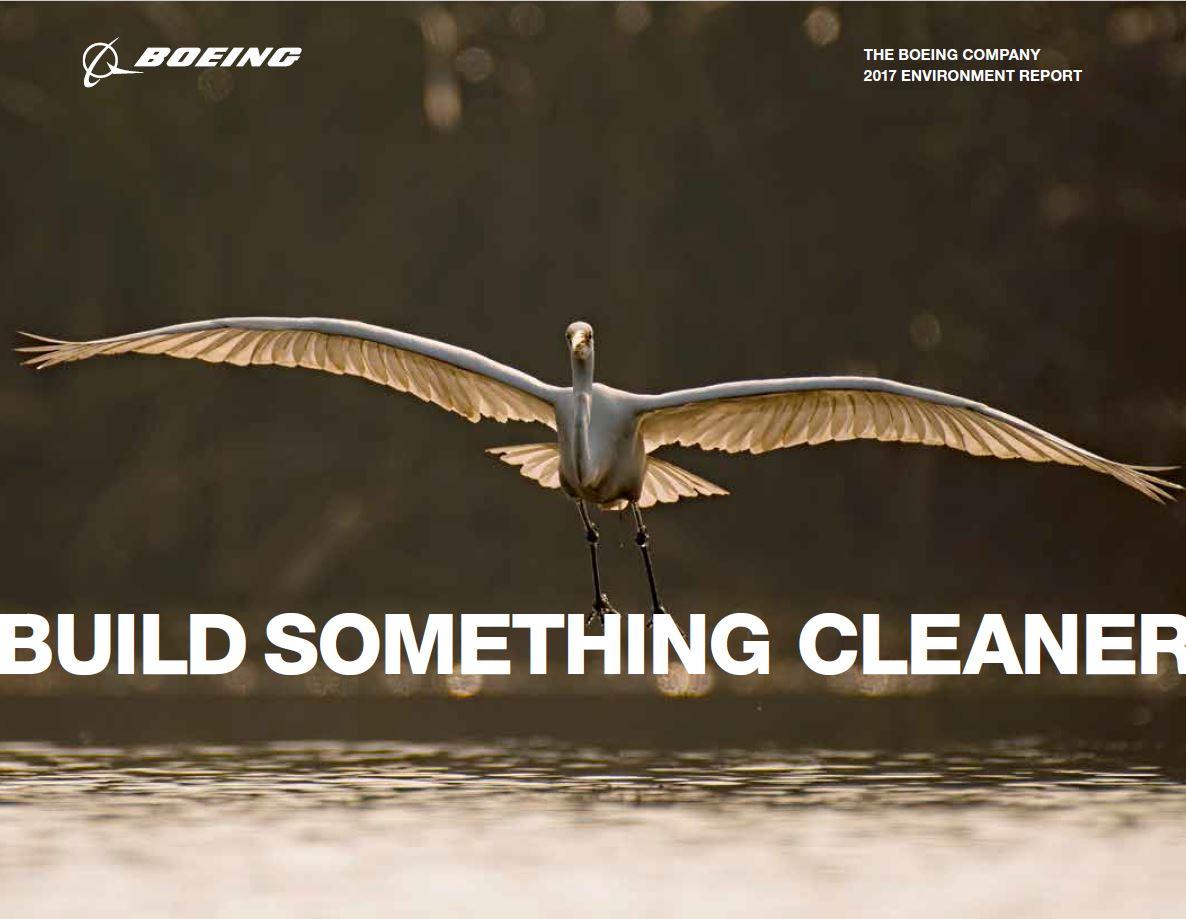
Boeing is building and delivering new jetliners that will reduce fuel use and emissions by up to 25 percent, reducing solid waste sent to landfills by almost 20 percent, and advancing promising environmental technologies through a first-ever collaboration with Brazil-based Embraer.

These and other improvements to Boeing’s environmental performance are highlighted in the company’s 2017 Environment Report, released today.

“Our unwavering commitment to innovation and environmental performance is reflected across our products, services and operations,” said Ursula English, vice president of Environment, Health & Safety. “Today, on World Environment Day, we acknowledge the progress we’re making, and we look forward to raising the bar as we work toward a sustainable future.”

The 2017 Environment Report highlights include:

  • Boeing operations reduced green-house gas emissions, solid waste to landfill, water intake and hazardous waste generation by between 5 and 19 percent in 2016. Five production facilities sent zero waste to landfills.
  • The ecoDemonstrator program’s 2016 testbed was an Embraer E170 regional jet, and marked the first such collaboration with another airplane manufacturer. Overall, the program has tested 60 new technologies that show promise in reducing fuel use, emissions and noise.
  • The new 737 MAX, which entered service in May, is 20 percent more fuel efficient than the original Next-Generation 737 and has a 40 percent smaller noise footprint than today’s single-aisle aircraft.
  • The new 787-10, which began flight testing earlier this year, will be approximately 25 percent more fuel efficient than the airplanes it replaces.

To read the full 2017 Environment Report, visit Boeing.com.

Content from this campaign

Environment
Boeing Reduces Solid Waste Sent to Landfills
Today’s major manufacturers can be measured by their commitment to optimal management and reduction of solid waste produced by their operations. Boeing is no exception.
Environment
Water Intake, Quality a Vital Issue at Boeing
Boeing is a careful steward of one of the planet’s most precious natural resources: water. In our operations, we focus on innovative ways to protect and improve water quality for the benefit of the environment and the communities where we live and work.
Energy & Infrastructure
Energy Conservation & Emissions in Boeing Operations
Boeing takes a life cycle approach to our environmental footprint, which means we look at more than the effects of our products on the planet. We also carefully review how our products are manufactured and the effects of our operations. Reducing factory and facility emissions is a core part of our strategy and focus of innovation.
AI & Technology
Collaboration on Sustainable Aviation Fuel
Boeing is an industry leader in fostering sustainable aviation fuel development around the world. Biofuel represents a significant, untapped opportunity to reduce aviation emissions, meet the industry’s environmental goals and support long-term sustainable growth.
AI & Technology
Boeing Delivers Operational Efficiency
To help airlines fly as efficiently as possible, Boeing offers a variety of products and services to improve the operational performance of our airplanes.
AI & Technology
Airplane Technology & Emissions
Boeing's products connect people, protect nations, explore space and sea and inspire the world. We are committed to making the world’s best airplanes with the smallest environmental footprint and working with industry stakeholders on climate protection.
Environment
Boeing's Mesa, AZ, site says 'environmental stewardship is fundamental'
Kim Smith is vice president of Attack Helicopter Programs and leads the Boeing site in Mesa, Arizona, which produces the AH-64 Apache and AH-6i Little Bird helicopters for the U.S. Army and allied defense forces around the globe.
AI & Technology
Boeing, Embraer Collaborate for a Sustainable Future
Boeing began the ecoDemonstrator program to speed up development of new technologies that enhance safety and reduce fuel use, emissions and noise. The program has tested 60 technologies in the past five years on a variety of aircraft.
Energy & Infrastructure
Boeing Fabrication Site Leader Eyes Net-Zero Energy Consumption
Adi Singh leads Boeing’s Frederickson, Washington, site, one of the company’s 12 major facilities that fabricate parts and structural components for Boeing commercial and military aircraft.
Responsible Production & the Circular Economy
Environmental Challenges and Opportunities in the Supply Chain
As a supply chain leader for Boeing’s Defense, Space & Security business unit, Dana Hullinger helps drive the effort to improve performance and use data analytics to gain new insights into Boeing’s complex and diverse network of suppliers.

More from Boeing

Boeing Global Engagement

Through purposeful investments, employee engagement and thoughtful advocacy efforts, Boeing and its employees support innovative partnerships and...

Boeing & the Environment

When it comes to the environment, Boeing leads with technology and innovation. Learn more about our environmental commitment at www.boeing.com...

Boeing's 2017 Environment Report

Boeing is building and delivering new jetliners that will reduce fuel use and emissions by up to 25 percent, reducing solid waste sent to landfills by...

Boeing 2019 Global Environment Report

Boeing's annual environment report aimed at demonstrating the company's commitment to environmental stewardship by sharing the year's key initiatives...

Boeing’s 100 Days of Learning

Boeing’s centennial may be in part to celebrate how much the business has achieved in the past 100 years, but it is also a means to focus on how to...

Inspiring Global Collaboration

Boeing is leading global collaboration, finding solutions for complex environmental challenges. More in our 2014 Environment Report, Building a Better...