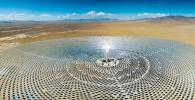
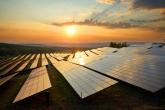
To help address growing demand for solar energy generation in the southwestern U.S., Diode Ventures (Diode) announced today that has reached financial close on the Grizzly Ridge Solar Project
Duke Energy Carolinas, a subsidiary of Duke Energy (NYSE: DUK), has completed its inaugural issuance of $1 billion in green bonds that will finance eligible green energy projects – including zero-carbon solar and energy storage – in North and South Carolina. This represents one of the largest green bond transactions issued by a utility.
Emerging industries depend on government support to grow, but they may be seen as threats to an incumbent industry, and they need to prove their technical feasibility and market promise. So how do emerging industries garner government support? A group of researchers led by former Erb Institute Postdoctoral Fellow Panikos Georgallis set out to demystify the conditions under which emerging industries get government support.
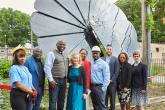
In this one-hour pre-recorded webcast, George Bandy Jr. of Mohawk Industries and Michelle Moore of Groundswell discuss their unique partnership in aligning environmental stewardship with social equity. You’ll discover how solar energy-focused, community-building initiatives can be implemented into a corporate social responsibility framework, empowering inclusion and transformation while addressing global concerns.
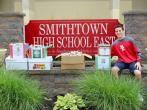
Smithtown has gotten just a little bit "greener" thanks to one local student.
Recently, 17-year-old Justin McArdle, a soon-to-be a senior at Smithtown High School East started a recycling project involving several schools in the district.
It seems that with or without federal-level support, market forces will continue to promote growth in low-carbon technologies. Customers large and small are voicing—with their wallets—that renewables continue to be economically and environmentally attractive and the power sector is responding.
UPS has been recognized with the EPA SmartWay Excellence Award for exceptional achievement in supply chain sustainability and freight transportation efficiency
Global institutions today face what is known as the energy “trilemma”—the need to balance energy security with energy that is both affordable and environmentally responsible. The U.S. Energy Information Administration (EIA) currently projects that world energy consumption will increase 28% by 2040. Simultaneously, the energy delivery system around the world is expected to undergo massive disruption in the forms of decentralization, digitization, and decarbonization.
Futureproofing energy supply has become a predominant goal for managing risk and resilience for a majority of companies.
An enormous opportunity exists for organizations with distributed energy load to act by acquiring renewables.
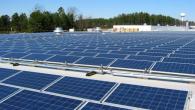
Duke Energy wants non-residential customers to have another option to install solar power on their premises. The company recently filed to be a certified solar lessor with the North Carolina Utilities Commission (NCUC). Duke Energy Clean Energy Resources (DECER), a non-regulated affiliate of Duke Energy, will build, own and operate on-site solar facilities that will allow customers to access renewable energy without a large upfront investment. DECER is not financially supported by either Duke Energy Carolinas or Duke Energy Progress, Duke Energy's operating companies in the Carolinas.
Smithfield Foods, Inc. is pleased to announce, through the nationwide expansion of Smithfield Renewables, innovative projects designed to help meet its goal to reduce the company’s greenhouse gas (GHG) emissions 25 percent by 2025, which it set in concert with the Environmental Defense Fund (EDF). This month marks the one-year anniversary of Smithfield Renewables.
Join us as we travel the world to uncover real stories of impact—from landfills and energy transition to workplace safety, emerging contaminants, and...
Subaru is dedicated to supporting those who need it the most in our communities. From donating food to Feeding America, providing essential items to...