DP World's new EcoRoute solution reflects a growing reality: resilience and sustainability are no longer separate business priorities.
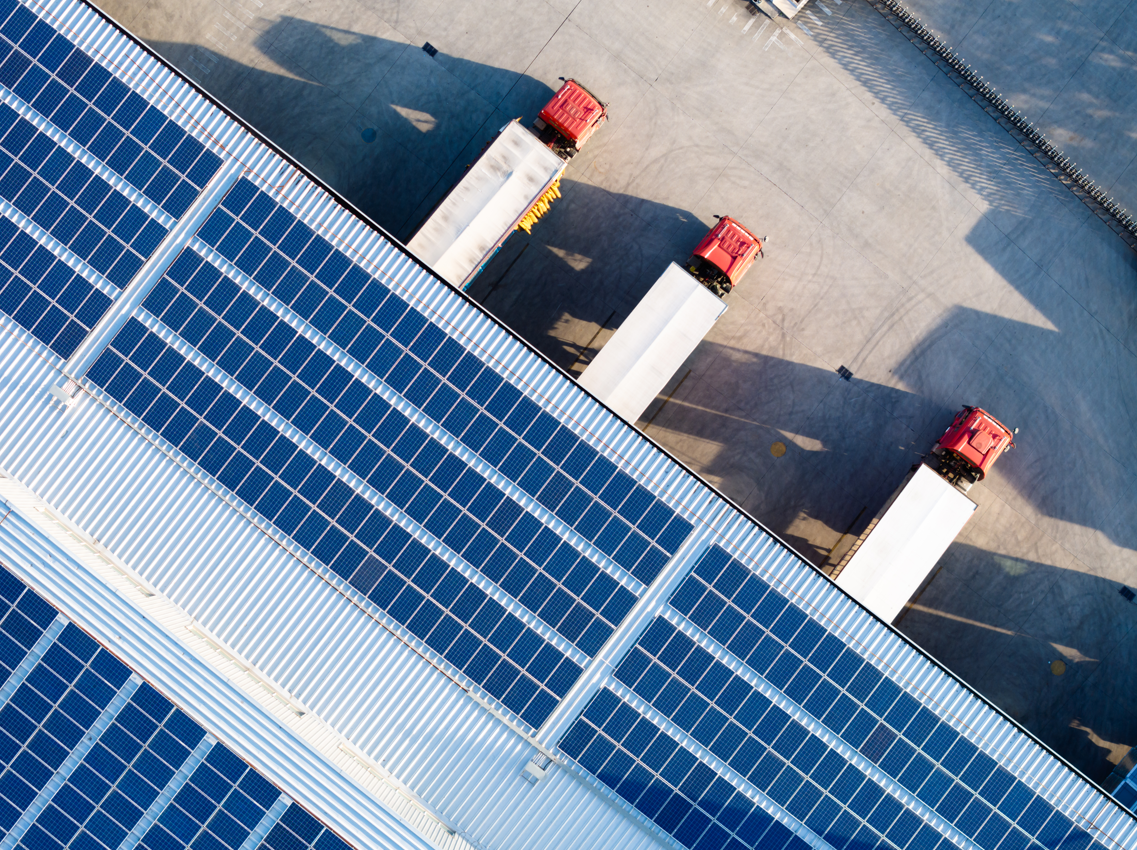
For years, companies approached supply chain resilience and sustainability as two distinct objectives. One focused on ensuring goods arrived on time and on budget. The other centered on reducing environmental impact.
Today's business environment is changing that equation.
From geopolitical disruptions and evolving trade patterns to growing customer expectations and climate reporting requirements, organizations are under increasing pressure to build supply chains that are both more resilient and more sustainable. Freight and logistics account for approximately 10% of global energy-related CO₂ emissions, making supply chains one of the biggest opportunities for businesses looking to reduce their environmental footprint while strengthening operational performance.
Recognizing this shift, DP World recently launched EcoRoute, a suite of integrated supply chain solutions designed to help businesses optimize logistics networks, reduce emissions, and improve supply chain resilience. By combining network optimization, lower-carbon transportation, emissions measurement, carbon insetting, and strategic partnerships, EcoRoute helps customers address sustainability without compromising operational performance.
Better Networks Create Better Outcomes
For many organizations, the greatest opportunity to reduce emissions isn't a single new technology; it's designing smarter supply chains.
Reducing unnecessary transportation miles, improving modal choices, increasing asset utilization, and integrating logistics services can lower both costs and carbon emissions while making supply chains more resilient to disruption.
DP World has been putting this philosophy into practice across its global network.
The company has built an integrated logistics ecosystem in the Dominican Republic that connects marine terminals, free trade zones, inland logistics, warehousing, and transportation services. By bringing these capabilities together, customers gain greater efficiency, streamline cargo movements, and reduce unnecessary carbon-intensive activities that can occur when logistics services are geographically spread out. The company continues advancing sustainable electrification, habitat restoration, and waste management practices across its Latin American terminal network.
Across Canada, DP World continues investing in terminal electrification and energy efficiency initiatives that reduce operational emissions while enhancing port performance. Both DP World's Vancouver and Fraser Surrey terminals recently received the 2026 Blue Circle Award from the Vancouver Fraser Port Authority for excellence in energy management. Four of the company’s Canadian terminals recently achieved Green Marine recertification, marking their continued success in meeting rigorous performance benchmarks across air emissions, community impacts, waste management, and spill prevention.
These investments reflect a broader industry trend: the most effective sustainability strategies increasingly strengthen business performance at the same time.
Visibility Is Becoming a Business Imperative
Building a lower-emission supply chain starts with understanding where emissions occur.
As organizations face growing expectations around Scope 3 emissions reporting, many are discovering that measuring supply chain emissions can be just as challenging as reducing them. Without reliable data, it becomes difficult to identify opportunities for improvement or demonstrate progress to customers, investors, and regulators.
One of EcoRoute's core capabilities addresses this challenge through a Carbon Emissions Calculator powered by EcoTransIT World and aligned with ISO 14083. The platform provides end-to-end emissions visibility across transport modes, helping businesses compare logistics options and make more informed operational decisions.
Better data doesn't just support sustainability reporting, it enables smarter supply chain planning.
Collaboration Drives Lasting Progress
No company can decarbonize global supply chains alone.
Meaningful progress requires collaboration among logistics providers, customers, technology partners and local communities.
Across the Americas and beyond, DP World continues to invest in partnerships that extend sustainability beyond its own operations.
The company's ongoing collaboration with Boomitra, first established in 2023 and expanded in 2025, supports regenerative agriculture projects that improve soil health while generating high-quality carbon credits. These initiatives create additional opportunities for customers seeking credible ways to address hard-to-abate supply chain emissions while delivering positive environmental and social outcomes.
This collaborative approach is reflected in EcoRoute itself. In addition to lower-carbon logistics and emissions measurement, the solution incorporates carbon insetting programs and strategic partnerships that help customers reduce emissions within their own logistics value chains while supporting broader sustainability goals.
Building Supply Chains for the Future
The future of logistics won't be defined by choosing between operational performance and sustainability.
It will be shaped by organizations that recognize these priorities are increasingly interconnected.
As customer expectations evolve and supply chain complexity grows, companies that design smarter logistics networks, embrace greater emissions transparency, and collaborate across the value chain will be better positioned to navigate future challenges.
EcoRoute reflects this evolution – bringing together the tools, insights, and partnerships businesses need to strengthen supply chain resilience while advancing their sustainability goals.
Learn more about DP World's EcoRoute solution and how it's helping businesses build more resilient, lower-emission supply chains.