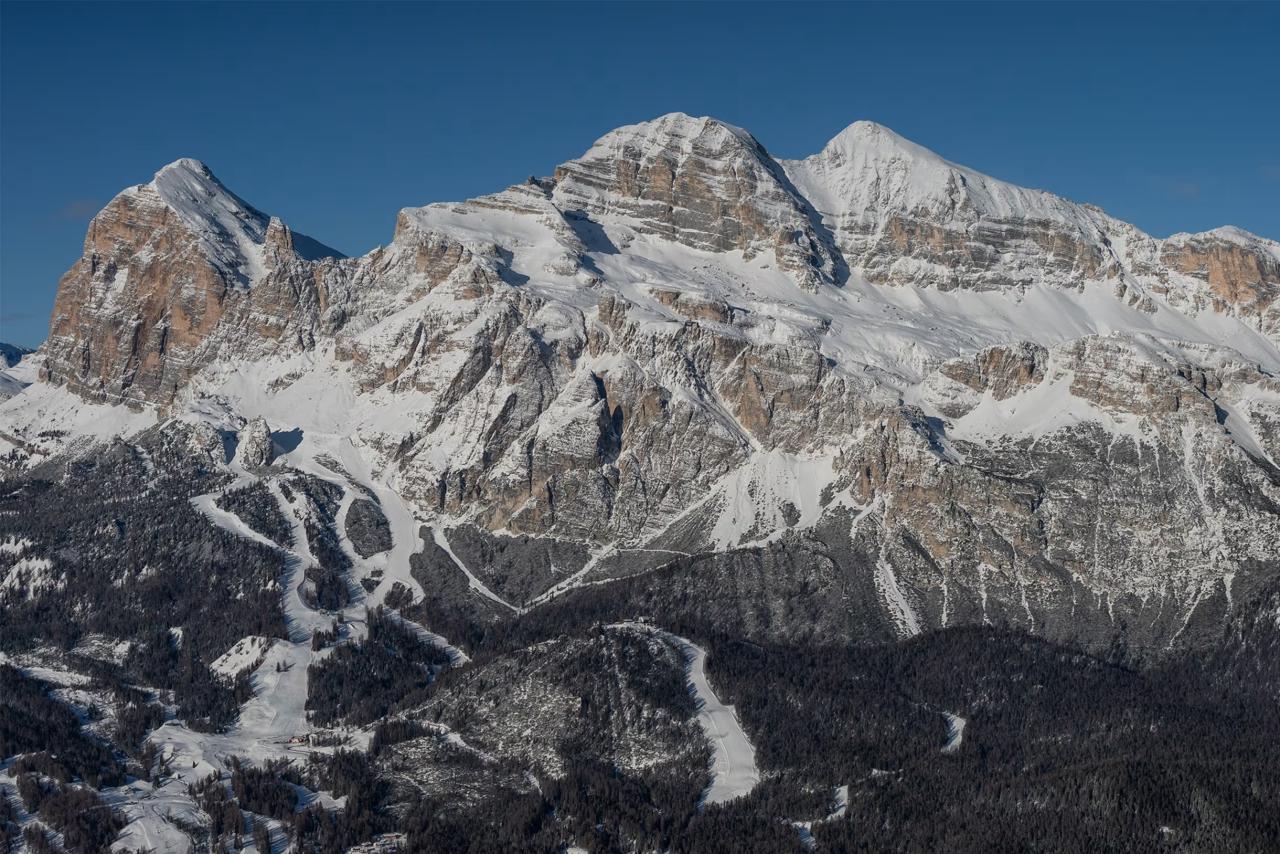
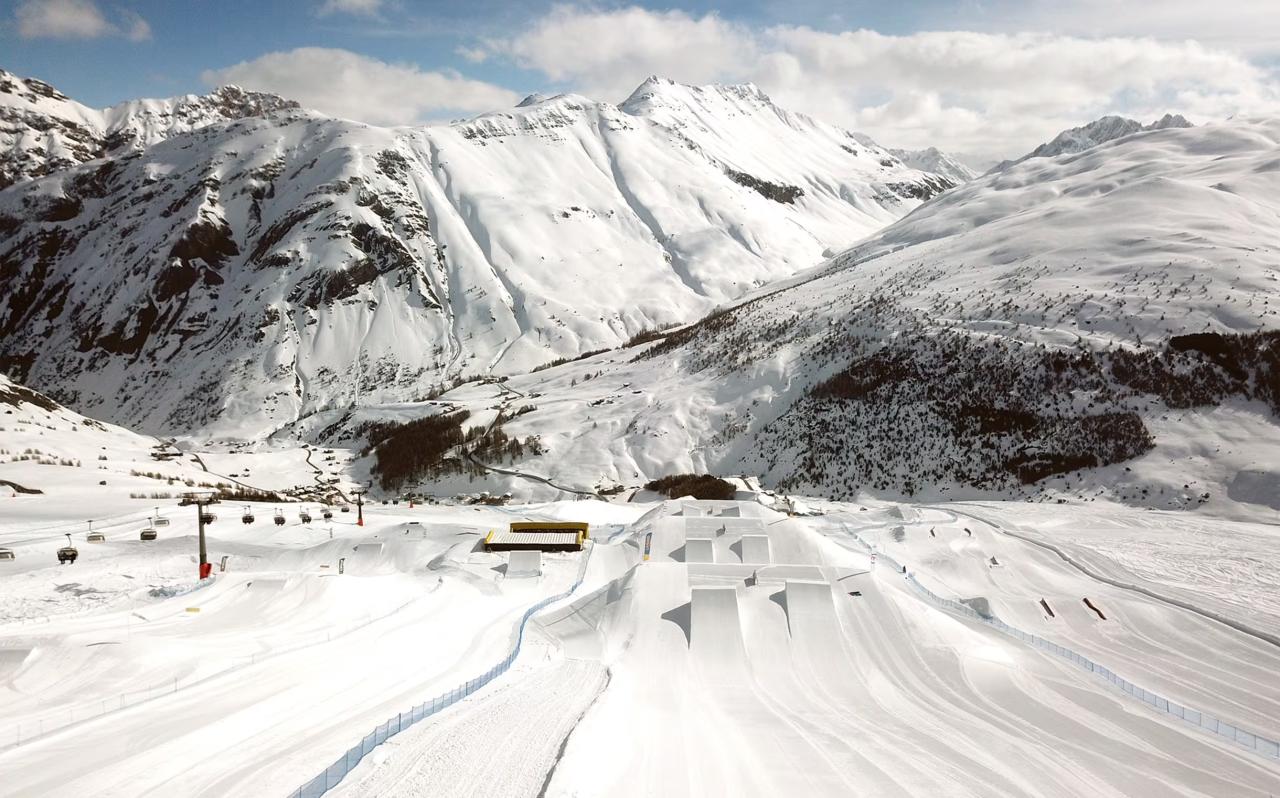
The Milano Cortina 2026 Olympic Winter Games will unite Italy’s mountainous regions like never before.
International Olympic Committee news
By Marco Bonarrigo
It’s something we’ve known since childhood: that which history and geography separate, the Olympics unite. The Games bring opponents together on the podium; athletes of different languages, religions and ethnicities rub shoulders in competition; nations divided by ancient rivalries mingle in the opening and closing ceremonies. And this miracle takes place every two years, in summer and winter.
In 2026, a planet torn apart by conflict will be in real need of some miracles. But a minor miracle has already taken place here in Italy: the Games are uniting Italy’s mountainous regions like never before. These are regions that differ hugely in history and tradition in ways that are hard to believe given their proximity to each other.
The 1956 Olympic Winter Games were extremely brief (just 11 days of competition), taking place in a small area around the historic centre of beautiful Cortina d’Ampezzo. The 2006 Winter Olympics lasted 16 days and spanned an entire province – that of Turin – but went no further. The 2026 Olympic Winter Games will be the first in history to embrace the entirety of the Italian Alps, transcending ancient divisions that have become embedded in the country’s complex modern history.
The mountains around Cortina, one of the Games’ focal points – as well as Val di Fiemme, renowned for Nordic skiing and skating, and Anterselva/Antholz, the capital of biathlon – have only been part of Italian territory for just over 100 years (annexed in 1920 after the Paris Peace Conference).
The history of these areas is steeped in European traditions, and they bear the marks of the Great War when they served as border territories and endured bloody battles.
In brief, those who know our Alps understand that the notion of the “Italian mountains” is purely geographical, referring to regions enclosed within the national border. However, the reality is more complex.
Just look at the languages specific to where the Games will be held: in the mountains, Italian is always the second or third language. Ladin, Mòcheno, Cimbrian, Romansh, Camuno (almost extinct), Badiotto, Fodom, Sappadino, Sautano, Timavese and other languages are spoken in schools, public buildings and at home. These languages are still used in local newspapers and news broadcasts, and are rightly considered a source of pride by their speakers.
The languages of the Italian mountains (not dialects – that’s another story) are the wonderful legacy of around 1,000 years of history and embody ingrained traditions, secrets, rules and cultures. Local communities zealously preserve and pass on their languages. There have always been administrative rivalries between the different venues of the 2026 Games (special bylaws, differential privileges, imbalanced state investments), something that has also affected summer and winter sports tourism offerings, often creating disparities.
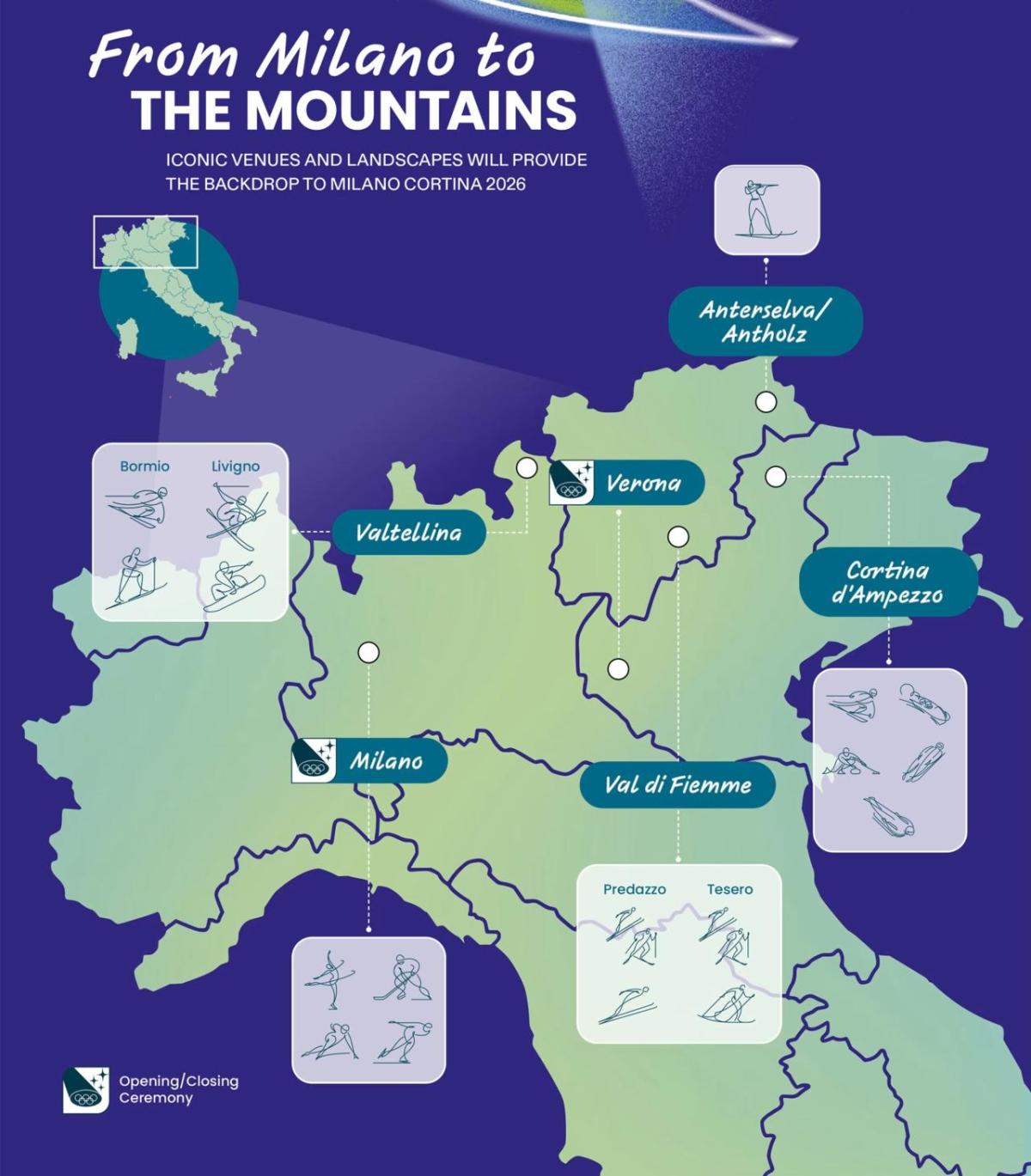
The Milano Cortina 2026 Olympic Winter Games are the result of a long, intricate mediation process, culminating in a significant achievement: each of the six Italian Olympic sites has been recognised for its natural sporting vocation. From Val di Fiemme, which first adopted the tradition of Nordic skiing and ski jumping from Scandinavia in the 1950s; to Cortina, the cradle of bobsleigh and home to some of Europe’s most renowned Alpine ski slopes; to Anterselva/Antholz, an enduring centre of biathlon excellence; and to Bormio and Livigno, Alpine skiing paradises. And finally, to the arenas of Milan, making it the perfect venue for ice skating and ice hockey. The city also offers its temple of football, the San Siro, for the Opening Ceremony.
Italy is a nation where implementing large-scale sports projects, such as the Olympic Games, is extremely arduous due to the pervasive (and sometimes justified, given past experiences) fear of being unable to meet the challenges. Milano Cortina 2026 aims to be the first truly sustainable Winter Olympics in the Games’ long history, the first to leave a permanent, environmentally responsible legacy on fragile territories. That alone is already a huge achievement.
Additional Media
Images