How DP World Is Helping Automakers Navigate a Defining Decade
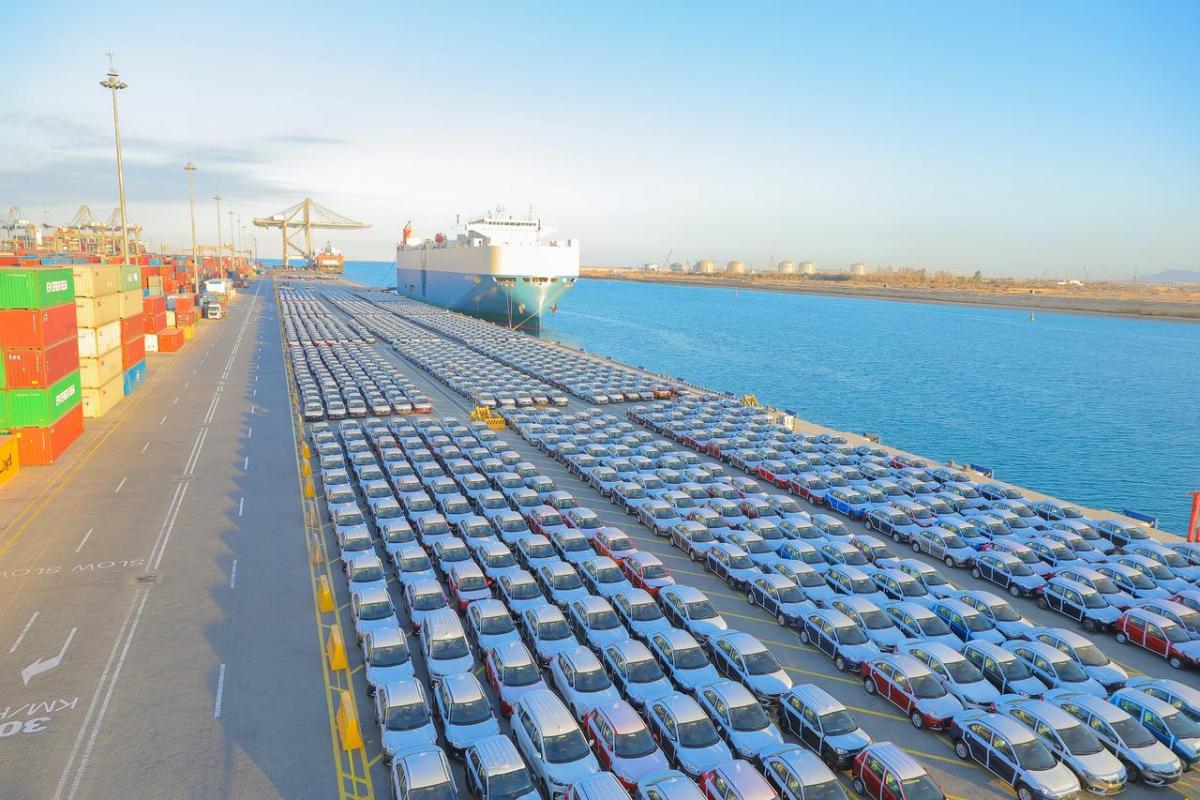
The automotive industry is entering a pivotal era. Electrification, evolving manufacturing footprints, and rising customer expectations are fundamentally reshaping how vehicles are produced, moved, and supported across global markets. At the same time, familiar pressures — cost containment, labor shortages, and fragmented supply chains — are intensifying, even as EV infrastructure and aftermarket ecosystems continue to lag behind demand.
For automakers and suppliers alike, the next decade will be defined by one central question: how to build supply chains that are resilient, integrated, and competitive in an environment of constant change.
This transformation is unfolding every day across the Americas and beyond. And one conclusion is becoming increasingly clear: end-to-end logistics integration is no longer a differentiator — it is a requirement.
Cost and Competition Are Reshaping Automotive Strategy
Despite rapid innovation, cost pressure remains the automotive industry’s most persistent challenge. Original Equipment Manufacturer (OEM) operating margins have declined more than 40% from their 2021 peak, even as competition intensifies from new global entrants and low-cost manufacturing regions. Automakers are being forced to rethink everything from plant location strategies to how finished vehicles and parts move across borders.
Many OEMs are responding by investing in new manufacturing facilities closer to end markets. While nearshoring and regionalization can reduce transit times and exposure to geopolitical risk, they also introduce new challenges — particularly around labor availability, infrastructure readiness, and logistics coordination in greenfield locations.
Compounding these pressures is the continued fragmentation of automotive supply chains. Even within the same corporate groups, brands often operate separate logistics networks, warehouses, and distribution strategies. This duplication drives up costs, reduces visibility, and limits the ability to scale efficiently.
EV Supply Chains Are Being Built in Real Time
The shift to electric vehicles (EVs) is accelerating — but the logistics ecosystems that support EV production, distribution, and aftermarket service are still catching up.
Battery logistics, in particular, represent one of the most complex challenges facing the industry. EV batteries are heavy, hazardous, and high-value, requiring specialized handling, storage, and transportation solutions. Reverse logistics and recycling networks are also becoming increasingly critical as circular economy principles gain traction.
At the same time, charging infrastructure across North America remains uneven. While the number of EV charging stations continues to grow, gaps in charging availability (i.e., “charging deserts”) create downstream challenges for vehicle distribution, dealer networks, and customer confidence. These infrastructure constraints are not just an energy issue—they are a supply chain issue.
For automakers, this means developing EV logistics strategies while vehicles are already on the road. Increasingly, OEMs are turning to logistics partners to co-design solutions that address battery transport, multimodal distribution, and integrated aftermarket support from day one.
Fragmentation vs. Integration: Unlocking Hidden Value
One of the greatest opportunities in automotive logistics lies in breaking down silos.
Procurement may be centralized, but supply chain execution often remains fragmented across regions, brands, and business units. This lack of integration limits visibility, increases cost, and slows response times when disruptions occur.
An integrated, end-to-end approach enables automakers to consolidate warehousing, streamline transport flows, and gain real-time insight across the entire value chain. Shared infrastructure and unified logistics strategies can unlock efficiencies that are otherwise impossible in siloed models.
DP World’s end-to-end capabilities — spanning ports and terminals, freight forwarding, contract logistics, customs brokerage, and inland transportation — allow automotive customers to simplify complexity under one global partner. The result is greater agility, resilience, and control from factory floor to dealer and beyond.
Sustainability: Balancing Ambition With Reality
Sustainability has become a defining priority for the automotive sector — but it brings its own set of challenges.
On one level, sustainability means continuity. Automotive supply chains are unforgiving; even brief disruptions can result in significant financial penalties and production delays. Resilient logistics networks are essential to keeping factories running and customers supplied.
On another level, sustainability means decarbonization. OEMs and logistics providers alike have set ambitious net-zero targets, driving demand for electric fleets, low-emission warehouses, and alternative fuels. Yet adoption often slows when cost premiums and infrastructure limitations come into play.
The path forward requires collaboration. Pilot projects — such as electrified terminals, renewable-powered warehouses, and low-carbon transport corridors — demonstrate what is possible. Scaling those solutions, however, requires shared investment and clear alignment between environmental goals and commercial value.
Technology, Visibility, and the Role of AI
Automotive supply chains are among the most complex in the world, and visibility remains a persistent challenge. Disruptions can cascade quickly across global networks, making real-time insight essential.
Digital platforms and AI-driven analytics are increasingly being deployed to improve forecasting, optimize routing, and anticipate bottlenecks before they escalate. When integrated across ports, warehouses, and transport networks, these tools enable automakers to move from reactive problem-solving to proactive risk management.
For logistics providers, end-to-end visibility is no longer optional. It is a prerequisite for serving an industry where precision, timing, and reliability are non-negotiable.
Why End-to-End Logistics Matters More Than Ever
What differentiates DP World is not just scale, but integration.
Through decades of automotive logistics expertise — strengthened by strategic investments in contract logistics and freight forwarding — DP World offers automakers a single, coordinated partner across the full supply chain. This reduces fragmentation, simplifies procurement, and ensures alignment from inbound materials to finished vehicle distribution and aftermarket support.
Equally important is long-term stability. In an industry experiencing rapid consolidation and disruption, automakers value partners with the financial strength, infrastructure investment, and global footprint to support growth over decades — not just quarters.
Logistics as a Strategic Enabler for the Next Century
The automotive industry’s transformation is far from over. EV adoption will continue to accelerate, sustainability expectations will intensify, and competition will only grow more complex.
In this environment, logistics is no longer a back-office function — it is a strategic enabler of growth, resilience, and competitiveness.
By breaking down silos, integrating end-to-end solutions, and aligning cost efficiency with sustainability, automakers can turn supply chains into a source of advantage rather than risk.
The future of automotive logistics is not just about moving vehicles. It is about building the resilient, sustainable, and intelligent supply chains that will carry the industry into its next century.
Learn more about DP World’s Automotive Logistics solutions.