By Lesley Lammers
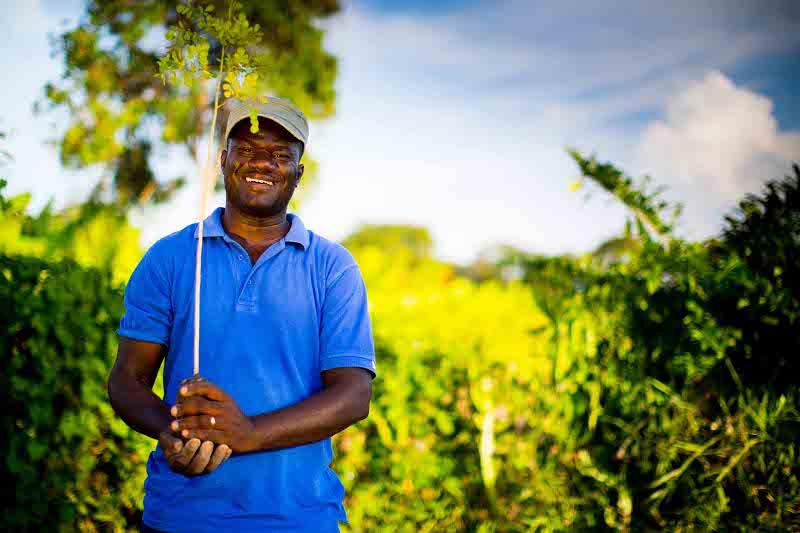
Timote Georges, co-founder of Smallholder Farmers Alliance (SFA), holds a seedling from a SFA tree nursery, which is ready to be planted. The SFA worked with Timberland to create a self-sustaining agroforestry program owned and operated by smallholder farmers, creating lasting value well beyond the trees themselves. Photo Credit: Sebastian Petion
Traditional corporate philanthropy, as the average consumer has come to know it over the past several decades, consists of making donations to charities in order to create positive societal impact, while engendering goodwill among key stakeholders like consumers, shareholders, advocacy groups and employees.
While such contributions are well-intended and not to be dismissed, this approach brings with it certain risks — namely that a promising project relying upon a company’s donation can go by the wayside if and when the funding runs out and there are no resources or people left on the ground to maintain it.
To continue reading this article on Triple Pundit, please click here.