On Earth Day numerous heads of state and other dignitaries will come together in New York for a signing ceremony for the historic COP21 agreement, formally turning the page to implementation.
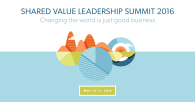
In just 3 short weeks, thought leaders, practitioners and intrapreneurs from around the world will gather for the 2016 Shared Value Leadership Summit at the Conrad New York on May 10-11, 2016 to discuss how global companies are driving and enabling solutions to some of the world's most pressing problems.
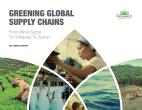
The Sustainability Consortium (TSC) announced today the release of its first Impact Report, marking a significant collaboration between leading multi-national corporations, civil society, and academia, combining science and metrics with practical guidance on implementation to accelerate the rise of more sustainable supply chains, and more sustainable consumer products.
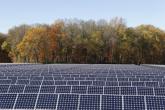
SunPower exists to help change the way our world is powered and leave the planet better off for future generations. That’s our purpose. It’s why we’re here. So when you choose SunPower, every day is Earth Day and not just because your home or business is making clean renewable energy using our solar panels.
As world leaders gather in New York on Friday to sign the Paris Agreement on climate change, some have expressed concern that as they implement their commitments, the U.S. Supreme Court has put on hold the Obama administration’s Clean Power Plan. Their concern is understandable, but it’s important to recognize: The federal government is not the primary force in the U.S. fight against climate change, and even if the court ultimately strikes down certain parts of the plan, the U.S. will meet and probably exceed its commitment to reduce emissions by 26 to 28 percent by 2025. Here’s why.
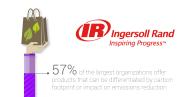
Many companies offer products that can be differentiated by carbon footprint or impact on emissions reduction. Industries leading the way include utilities, industrial goods manufacturers and those supplying basic materials.
The effects of human-caused climate change are both predictable and unknown, but we do know that healthy ecosystems are more resilient to these effects. As individuals, we have an ethical responsibility to incrementally shift our behaviors to support ecosystem health; however, no one person can do this alone.