Educators—both seasoned and new—reignite their passion for teaching thanks to professional development.
By Stacy Morrison
At a glance
- Professional development: Teachers are utilizing research-backed strategies and free online courses from Verizon Innovative Learning HQ to increase student engagement.
- Shift in pedagogy: The program moves away from passive lecturing toward a collaborative culture where students direct their own learning and creative projects.
- Digital citizenship: Educators are balancing high-tech tools with analog skills to help students develop intentionality and curiosity in a digital-first environment.
When Dove Science Academy High School in Oklahoma City, Oklahoma, joined Verizon Innovative Learning Schools in fall 2025, its teachers embraced not just the infusion of technology, but also the novel ways they could inspire their students. “Being part of the Verizon Innovative Learning Schools program has completely elevated the way we teach and the way our students learn,” says M. Atay, Principal of Dove Science Academy High School. “Our students are no longer just receiving information, they are creating, collaborating and solving real-world problems.”
As part of their Verizon Innovative Learning Schools professional development, each Dove educator learned research-backed strategies and explored tools to help them get more out of a technology-supported classroom. The training features teaching approaches that support student choice and collaboration, reach all learners and increase student engagement with the material. Professional development opportunities—and courses such as Creating a Collaborative Classroom Culture, Leveraging Flexible Learning Formats and Design Better Learning Experiences with Learner Variability—are available freely for all educators online through Verizon Innovative Learning HQ.
“I’m really encouraged to see how much autonomy we’re providing the students,” says Verizon Innovative Learning Schools Coach Casey Lawrence. Instead of a “chalk and talk” teaching style, where students passively listen as the teacher lectures, Lawrence sees students collaborating and directing their own learning. “Now they are talking with each other and working with each other and that sets them up for success in the real world,” she says.
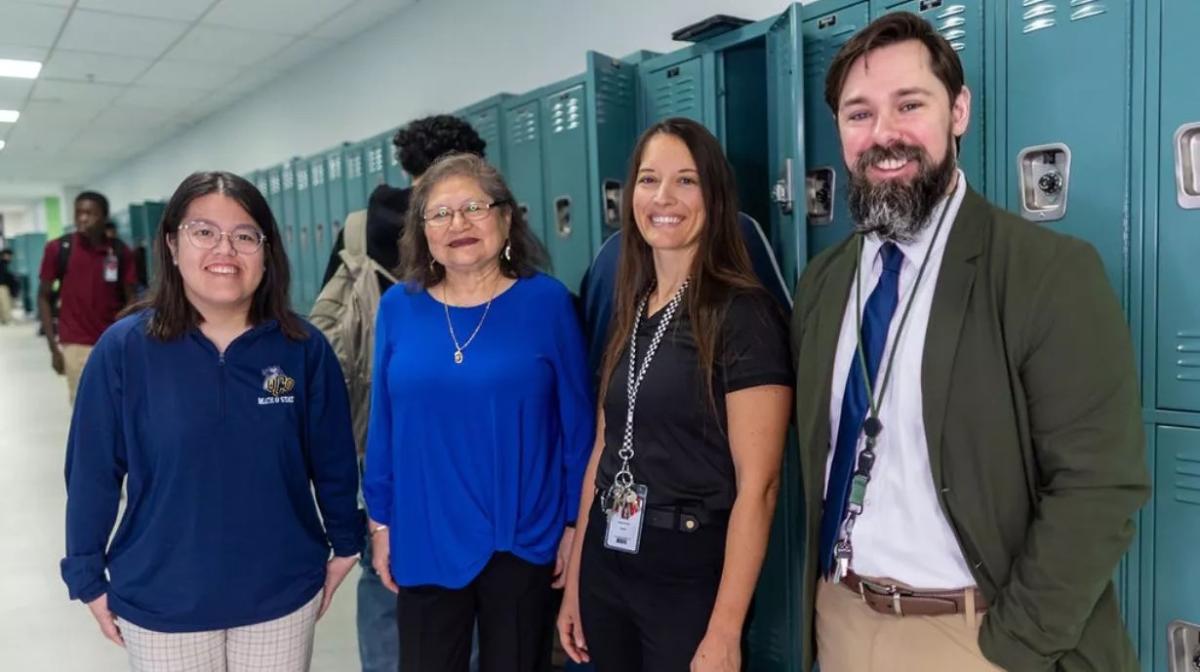
Here, four Dove Science Academy High School educators share how their fresh teaching approaches are making an impact.
“Students have new ways to share.”
Although she has taught English language arts for decades, Amber Harrison still embraces every chance to expand her skills. “Even with 20 years in education, I have the mindset that there’s always going to be something new I can learn,” she says.
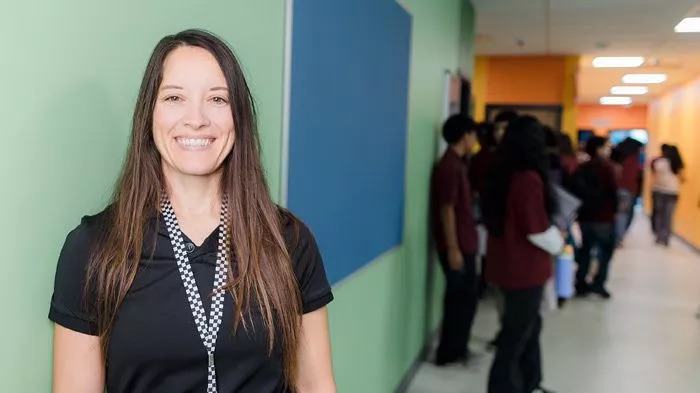
As part of the Verizon Innovative Learning Schools professional development, Harrison was introduced to imaginative ways to engage students and connect them with the material. “It’s nice to have this fresh, new information,” Harrison says of the Verizon resources. “I liked getting to hear about tested and proven strategies that are actually working.”
Harrison learned a new prompt to use for exit tickets—short exercises that check for student understanding—that she applied after a poetry lesson. The responses revealed a shift in how her students viewed poetry. One student wrote: “When it comes to poetry, I used to think about boring words. But now I think that it is such a better way for people to express themselves.”
“Out of a class of 20 students, 16 of them are feeling more inspired to read and write poetry as a way to express feelings and connect with other humans,” Harrison says. “That is a win.”
She took the lesson further: She had students write their own poems, with some choosing to share their work on a hallway bulletin board. Harrison also anonymously shared poetry written by some of the quieter students in the digital classroom, an online space where the students and Harrison collaborate on assignments. “Those students got the shout out that what they’re doing is working,” Harrison says. “And now they are even speaking up in class more. They are feeling confident enough to share themselves out loud.”
“I see that the students are much more curious now.”
Daisy Colindres readily admits that before this year—her twenty-fourth as a teacher—she used a computer only to take attendance. “I was not using technology much,” she says. “But now, after learning all of the advantages [for the students] and how important technology is to their future, I realized I had to be updated.”
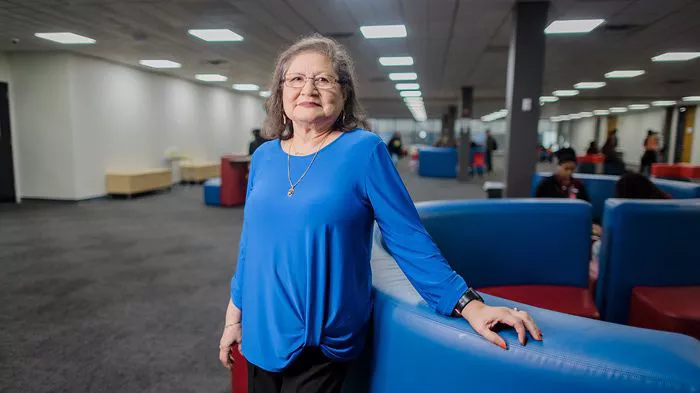
Once she started integrating technology in the classroom, she saw an immediate shift in how students communicated with her and with each other. One of her first tablet-based assignments asked students to research a Spanish-speaking country and make a presentation based on their findings. “They were very engaged, just in looking up this information,” she says. “They were excited and finding new ways to look for what they needed.”
As they worked, students began asking more questions than usual—even messaging her in the evenings through the digital classroom when ideas came to them. “I feel like the tools have helped extend their world a little bit more,” says Colindres. “And I’m more involved with them because they are bringing me their ideas and asking questions. I can see they are much more curious now.”
“It’s my goal to help them find the balance.”
Adam Jester is no stranger to using technology in the classroom: He came to Dove Science Academy High School in fall 2025 from a district where 98 percent of learning was virtual. But through the Verizon Innovative Learning Schools professional development, Jester has learned strategies to help students stay engaged and practice strong digital citizenship, while balancing technology with traditional learning skills.
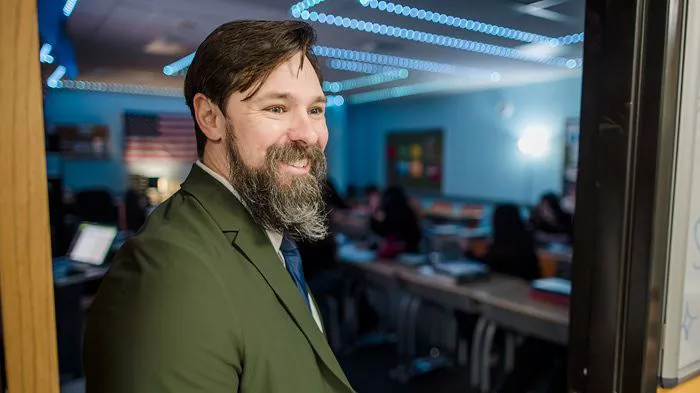
Students have access to devices during class time, so Jester uses a tool he learned about in professional development to monitor and moderate which websites they can visit when doing research. At the same time, he wants to ensure students keep critical thinking at the center of their learning. He regularly switches between tech-based activities and analog approaches.
“It definitely helps to have a monitoring tool,” he says. “You can set it up on a schedule, so that it opens automatically at class time, or you can set it up to exclude certain websites or only allow certain websites.”
Jester’s priority is teaching students intentionality: choosing the right tool for the task and staying engaged in the learning process. The training reinforced strategies for building focus and supporting independent work, whether students are using devices or taking notes by hand. “It’s my goal to help them find the balance,” he says.
“I try to connect the topic closer to them.”
As a math teacher, Tam Hua knows that the conceptual nature of math can create an obstacle to learning for some students. During professional development, she picked up a simple, easy-to-apply tip that helps students stay engaged: “We were taught to make the topic, whatever it is, more related to the students,” Hua says. “We need to make the connection. Otherwise they will not be interested.”
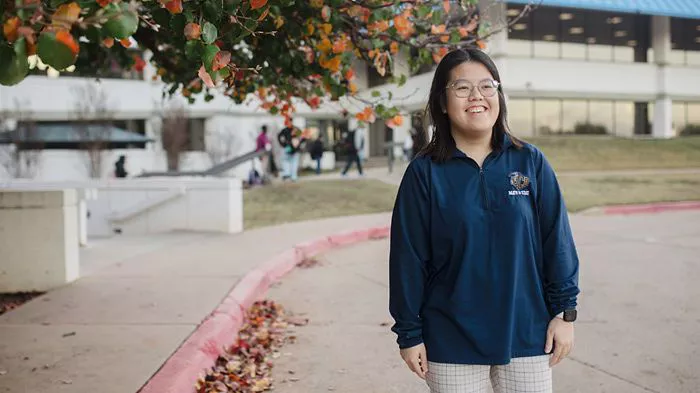
Her real life example? Instead of using world population as a data set for a math problem, which can feel remote to the students, “I now will bring in sports data collected from a sporting event,” she says. “So that is helping a lot.”
Hua was already using digital tools to help her students master complex graphing problems. But she sees that the presence of additional tech in the classroom, such as the interactive worksheets she now creates, makes learning “very accessible for the student,” she says.
“I have learned a lot from [professional development], such as how to make fun activities where I can engage the students in class and not just be lecturing every day,” she says. “It takes time to create those exercises, but it’s worth it.”
Verizon Innovative Learning is a key part of the company’s responsible business plan to help move the world forward for all. As part of the plan, Verizon has an ambitious goal of providing 10 million youth with digital skills training by 2030. Educators can access free lessons, professional development, and immersive learning experiences to help bring new ways of learning into the classroom by visiting Verizon Innovative Learning HQ.