Emerging contaminants are rapidly becoming one of the most important environmental challenges facing organizations, regulators, and communities around the world. While PFAS have dominated headlines in recent years, growing attention is also being directed toward microplastics and newer contaminants such as 6PPD-quinone, a tire-derived chemical linked to significant impacts on aquatic ecosystems.
In Episode 2 of Season 3 of Rethinking EHS, host Beatrice Bizarro (Inogen Alliance Leadership Team Member / HPC, Italy) sat down with Ivy Niu (Terrapex, Canada) and Jack Sheldon (Antea Group USA) to discuss why these contaminants are attracting global attention, how regulations are evolving, and what organizations should be doing today to better understand and manage risk.
Key Takeaways
- Emerging contaminants such as PFAS, microplastics, and 6PPD-quinone are receiving increased global attention as scientific understanding continues to evolve.
- PFAS regulations continue to expand globally, creating a complex compliance landscape for multinational organizations.
- 6PPD-quinone has been linked to significant impacts on aquatic ecosystems, particularly salmon populations in urban watersheds.
- Microplastics are becoming a growing focus for regulators, particularly in relation to drinking water quality.
- Organizations that proactively assess emerging contaminant risks are generally better positioned than those waiting for regulatory certainty.
- Future management strategies will likely combine multiple technologies, including treatment systems, nature-based solutions, and innovative destruction technologies.
Listen to the full episode here
Why are PFAS, microplastics, and 6PPD-quinone considered emerging contaminants?
Beatrice Bizarro: There is currently a lot of global attention and momentum around manmade substances such as microplastics and chemicals such as PFAS and 6PPD. Why are these being labeled as emerging contaminants, and what issues are they creating?
Ivy Niu: Advances in science are revealing environmental and human health risks that were not previously understood. In the case of 6PPD, a chemical used in tires since the 1970s, researchers discovered that it transforms in the environment into a previously unknown compound called 6PPD-quinone. This transformation product has been linked to significant impacts on aquatic life, particularly in urban watersheds.
Jack Sheldon: PFAS followed a similar trajectory. High-profile litigation, increasing media coverage, and expanding scientific research have elevated PFAS into the public spotlight. As public awareness grows, science, regulation, and policy tend to follow. We are now seeing a similar pattern emerge for microplastics and, increasingly, for 6PPD-quinone.
What is 6PPD-quinone and why is it attracting attention?
Beatrice Bizarro: Can you explain what 6PPD and 6PPD-quinone are, where they are found, and why they are relevant today?
Ivy Niu: 6PPD is an anti-degradation chemical widely used in tires to prevent cracking and extend tire life. As tires wear down, particles containing 6PPD are released into the environment. When exposed to ozone, the chemical transforms into 6PPD-quinone.
A major breakthrough came in 2020 when researchers identified 6PPD-quinone as the likely cause of a phenomenon known as urban runoff mortality syndrome, which has been responsible for large-scale die-offs of coho salmon before spawning in urban streams.
This issue is particularly significant because salmon are considered both keystone and indicator species. Their decline signals broader ecosystem health concerns and can have ecological, cultural, and economic consequences for communities that rely on healthy fisheries.
How are microplastics being addressed today?
Beatrice Bizarro: While PFAS dominate much of the global conversation, microplastics are gaining attention rapidly. How are they currently being addressed in the United States?
Jack Sheldon: PFAS have benefited from a tremendous amount of public attention, partly because they are often referred to as "forever chemicals." That term has made the issue highly visible and understandable to the general public.
Microplastics are now beginning to follow a similar path. Unlike many chemical contaminants, people can easily understand what plastic is and how plastic particles might enter the environment. As awareness grows, regulators are focusing on understanding how microplastics enter drinking water systems.
Although regulation of microplastics is not yet as mature as PFAS regulation in the United States, several states are working together to develop monitoring programs and better understand the extent of contamination in drinking water supplies.
What do we know about the health impacts of 6PPD-quinone?
Beatrice Bizarro: What can you tell us about the known impacts of 6PPD-quinone on human health?
Ivy Niu: Research is still emerging, but early studies suggest both 6PPD and 6PPD-quinone may be associated with skin allergies, respiratory effects, and reproductive impacts. These compounds have also been detected in human biological samples, including breast milk and cord blood.
While the risks to humans are not yet fully understood, the widespread presence of these compounds and their demonstrated toxicity to aquatic species raise important concerns. The uncertainty itself is one of the reasons regulators and researchers are paying close attention.
How are organizations responding to PFAS risk?
Beatrice Bizarro: PFAS regulation, treatment technologies, and product restrictions continue to evolve. Where are organizations finding success in managing this risk?
Jack Sheldon: Organizations generally fall into one of two categories.
Some are waiting for regulatory certainty before taking action. Others are proactively assessing their environmental, worker exposure, supply chain, and brand risks today.
The organizations that are making the most progress are those taking proactive steps to understand their legitimate risks before regulations require action. This is especially important because PFAS-related information continues to evolve rapidly. New regulations, treatment technologies, and scientific findings are emerging every week.
Companies that begin evaluating their risks now are better positioned to adapt as the regulatory landscape develops.
Why is global regulatory visibility becoming so important?
Beatrice Bizarro: One challenge with PFAS is the pace and complexity of regulatory developments around the world. How can organizations keep up?
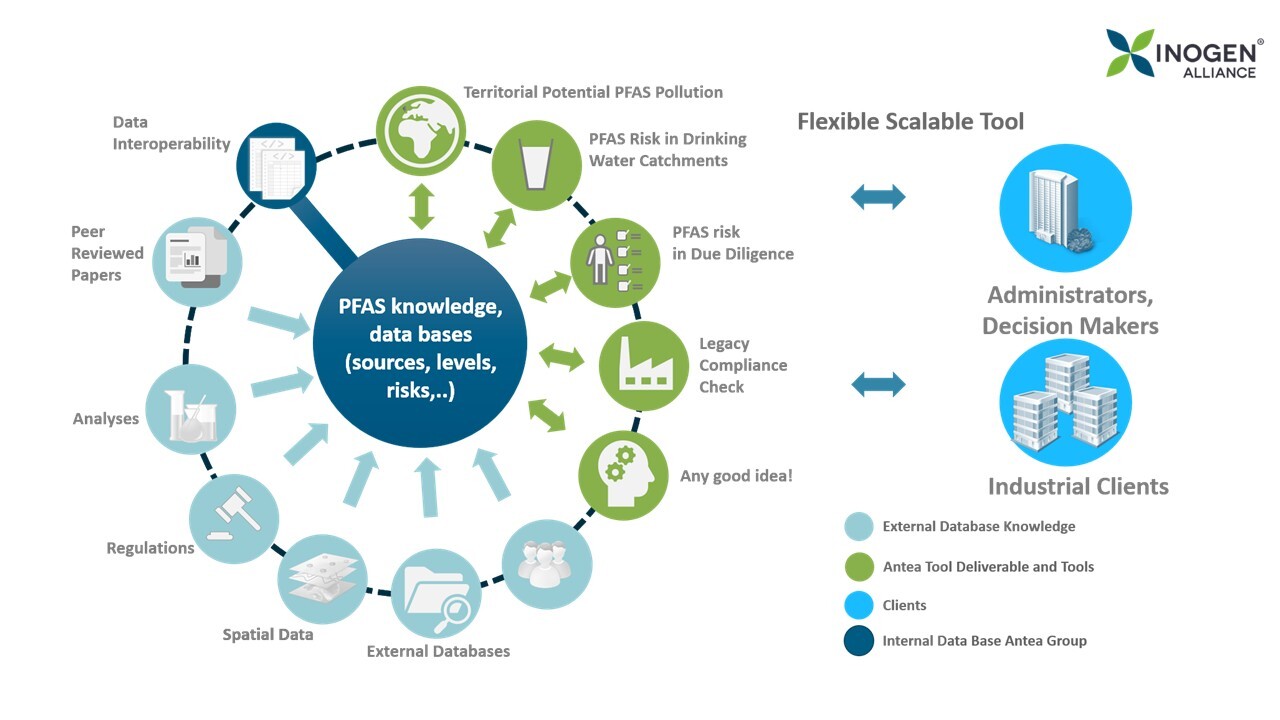
Jack Sheldon: The volume of information is overwhelming for most organizations to manage on their own. Regulations differ by country, state, and even municipality.
That is why collaborative efforts are becoming increasingly valuable. Through the Inogen Alliance network, environmental experts across more than 70 countries contribute local knowledge that helps organizations track evolving PFAS requirements and identify emerging risks before they become significant compliance challenges.
Having access to both global visibility and local expertise allows companies to make more informed risk management decisions.
What solutions are emerging for 6PPD-quinone?
Beatrice Bizarro: What does mitigation look like in practice?
Ivy Niu: Current approaches generally fall into three categories:
- Source control – reducing tire particle accumulation through measures such as street sweeping.
- Flow control – slowing stormwater movement to reduce pollutant transport.
- Treatment systems – using engineered stormwater infrastructure to remove contaminants before they enter waterways.
One promising area involves bioretention systems that combine organic matter, mineral additives, and filtration media to capture tire-derived contaminants. Researchers are also exploring floating wetlands and phytoremediation approaches that use plants to help manage contamination.
What might the future of PFAS management look like?
Beatrice Bizarro: Looking ahead five to ten years, what does successful PFAS management look like?
Jack Sheldon: There is growing optimism around destructive technologies that can break down PFAS compounds rather than simply contain them. Many of these technologies have shown promise in laboratory settings and are beginning to move toward larger-scale demonstrations.
At the same time, the future will likely involve combinations of technologies rather than a single solution. Managing PFAS, microplastics, and other emerging contaminants will require flexible approaches that combine treatment, containment, monitoring, and risk-based decision-making.
Continued advances in microbial degradation, phytoremediation, and nature-based solutions may also create new opportunities for managing these contaminants more effectively.
What should organizations do today?
Beatrice Bizarro: If there is one action organizations should take right now, what would it be?
Jack Sheldon: Understand your risk.
Whether the concern is PFAS, microplastics, 6PPD-quinone, or another emerging contaminant, organizations should begin assessing how these substances may affect their operations, supply chains, products, workers, and stakeholders.
Waiting for complete regulatory certainty often means falling behind.
Ivy Niu: I would add that organizations should stay informed about scientific developments and emerging alternatives. Innovation is moving quickly, particularly around safer replacements for chemicals such as 6PPD. Companies that monitor these developments early will be better positioned to adapt as regulations and expectations evolve.
Explore the Global PFAS Regulatory Dashboard
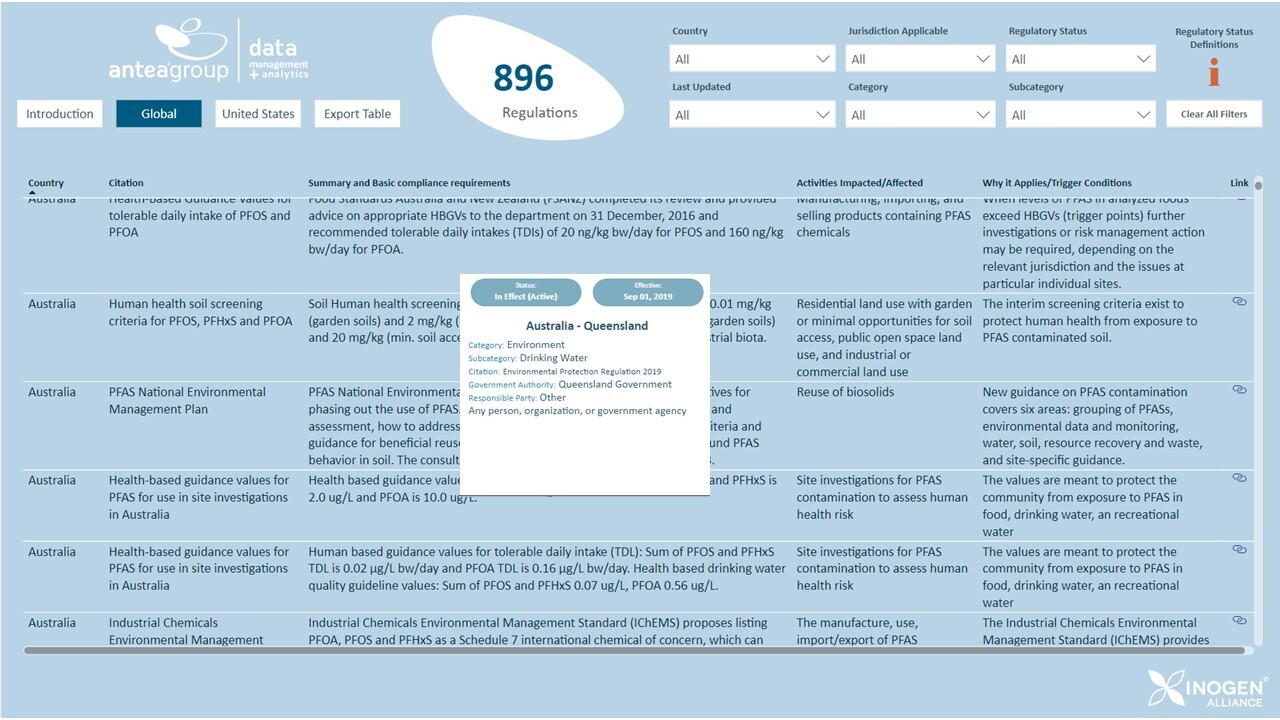
For organizations working to understand their PFAS risk, keeping pace with regulatory change is one of the biggest challenges. To help, the Inogen Alliance and Antea Group have developed the Global PFAS Regulatory Dashboard, an interactive tool that consolidates more than 1,200 up-to-date PFAS regulatory requirements across 50 countries and 48 U.S. states.
This free resource gives organizations a clear, actionable view of their compliance obligations, helping them make smarter decisions, reduce compliance risk, and stay ahead of global PFAS trends. For companies ready to go further, deeper insights are available, including region-specific compliance guidance and site-level contamination assessments.
Access the dashboard here.
Inogen Alliance
Inogen Alliance is a global network made up of over 70 of independent local businesses and over 6,000 consultants around the world who can help make your project a success. Our Associates collaborate closely to serve multinational corporations, government agencies, and nonprofit organizations, and we share knowledge and industry experience to provide the highest quality service to our clients. If you want to learn more about how you can work with Inogen Alliance, you can explore our Associates or Contact Us. Watch for more News & Blog updates, listen to our podcast and follow us on LinkedIn.
Additional Media
Images