A single step can stop everything. In South Korea, employees and community partners are confronting mobility barriers firsthand—and removing them, one ramp at a time. What begins as awareness is becoming action, and action is reshaping how communities think about access for people with disabilities.
In the narrow alleys of Seoul’s Jung-gu district, a curb just a few inches high can become an immovable wall.
During a recent volunteer activity, employees from Boehringer Ingelheim Korea attempted to navigate the Seoul office in wheelchairs—pushing up inclines and jolting over uneven surfaces. “I never realized how hard this was until a single step brought everything to a halt,” one volunteer admitted after the simulation.
Beyond the office, teams then went into the field on foot to investigate stores and document real accessibility barriers. For millions of people in South Korea with limited mobility, this is not a simulation. It is daily life.
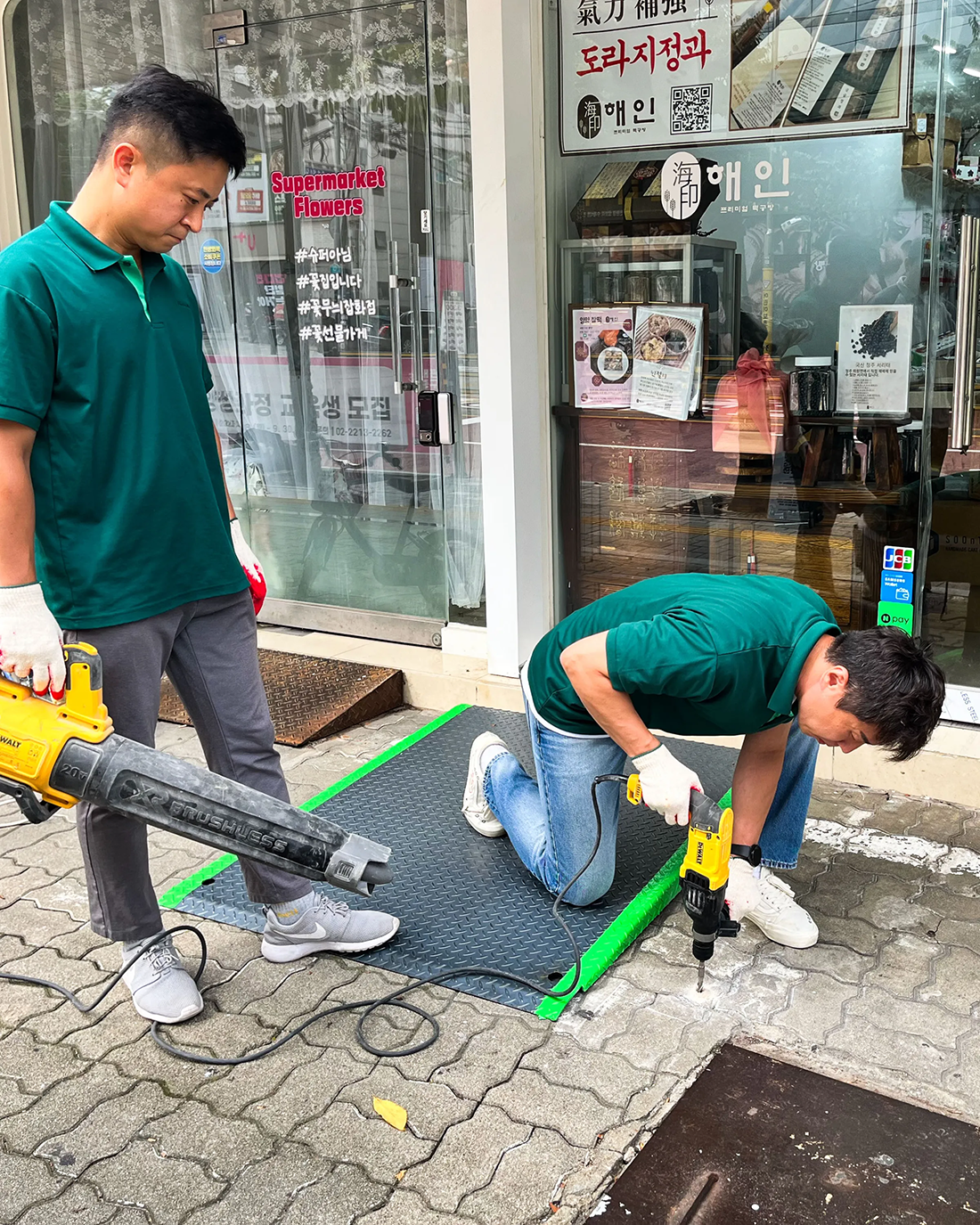
South Korea has a rapidly aging population. Today, nearly 15 million people (around 30% of the population) experience mobility challenges, including older adults, people with disabilities, pregnant women, and parents with strollers.
While ramp installation standards were expanded in 2022, 98.2% of retail stores remain exempt, leaving essential places such as pharmacies, clinics, and neighborhood shops difficult or impossible to access.
In December 2024, South Korea’s Supreme Court formally recognized accessibility as a constitutional fundamental right, reinforcing that mobility is not a convenience, but a matter of dignity, participation, and equity. Quickly following the ruling, Boehringer Ingelheim Korea became the first private company to install ramps in a local community. Yet policy change alone does not remove physical barriers already built into everyday environments.
From awareness to action
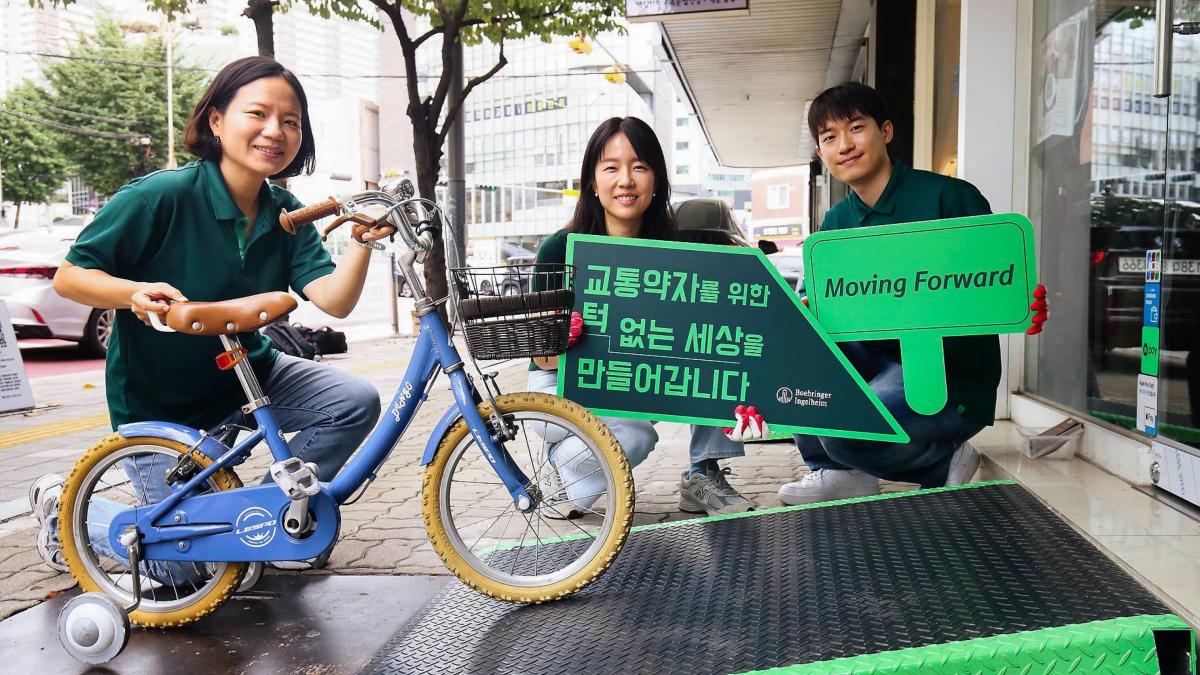
That gap is where the “Moving Forward” campaign begins. Guided by the message “Everyone’s life must move forward,” the initiative is a long-term collaboration between Boehringer Ingelheim Korea and MUUI, a social enterprise founded in 2016 to advance accessibility rights for people with limited mobility.
Rather than focusing on awareness alone, the campaign takes a practical approach: identifying real-world barriers and removing them—one ramp at a time. Key to achieving this was the thoughtful coordination with administrative offices such as the Jung-gu Administration Office and the Jung-gu Welfare Centre for Disabled People.
From April to October 2025, the initiative focused on Yaksu-dong, a neighborhood in Jung-gu with one of Seoul’s highest concentrations of residents with mobility challenges. Employees walked the same routes as residents, assessed street-level barriers, and experienced firsthand where everyday movement becomes restricted.
Through on-site surveys and accessibility training including wheelchair simulations, the team identified 33 potential wheelchair ramp installation points, prioritizing locations where steep slopes, aging infrastructure, and frequent foot traffic intersected. “A single curb can feel like a mountain,” one participant reflected after the exercise.
Building access, together
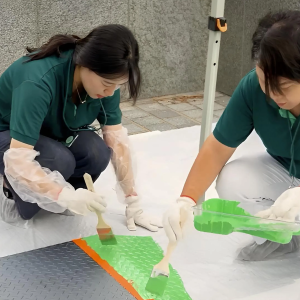
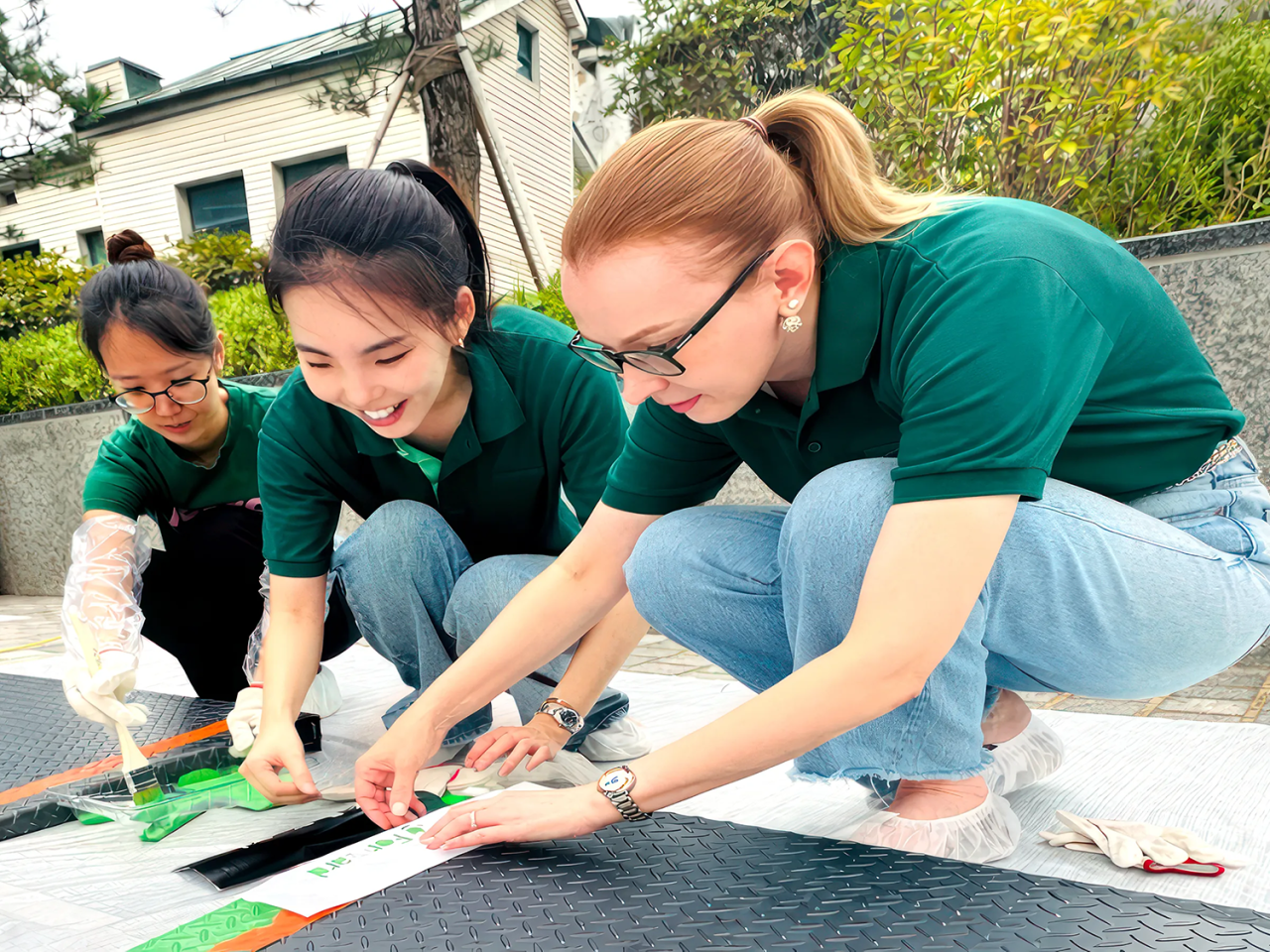
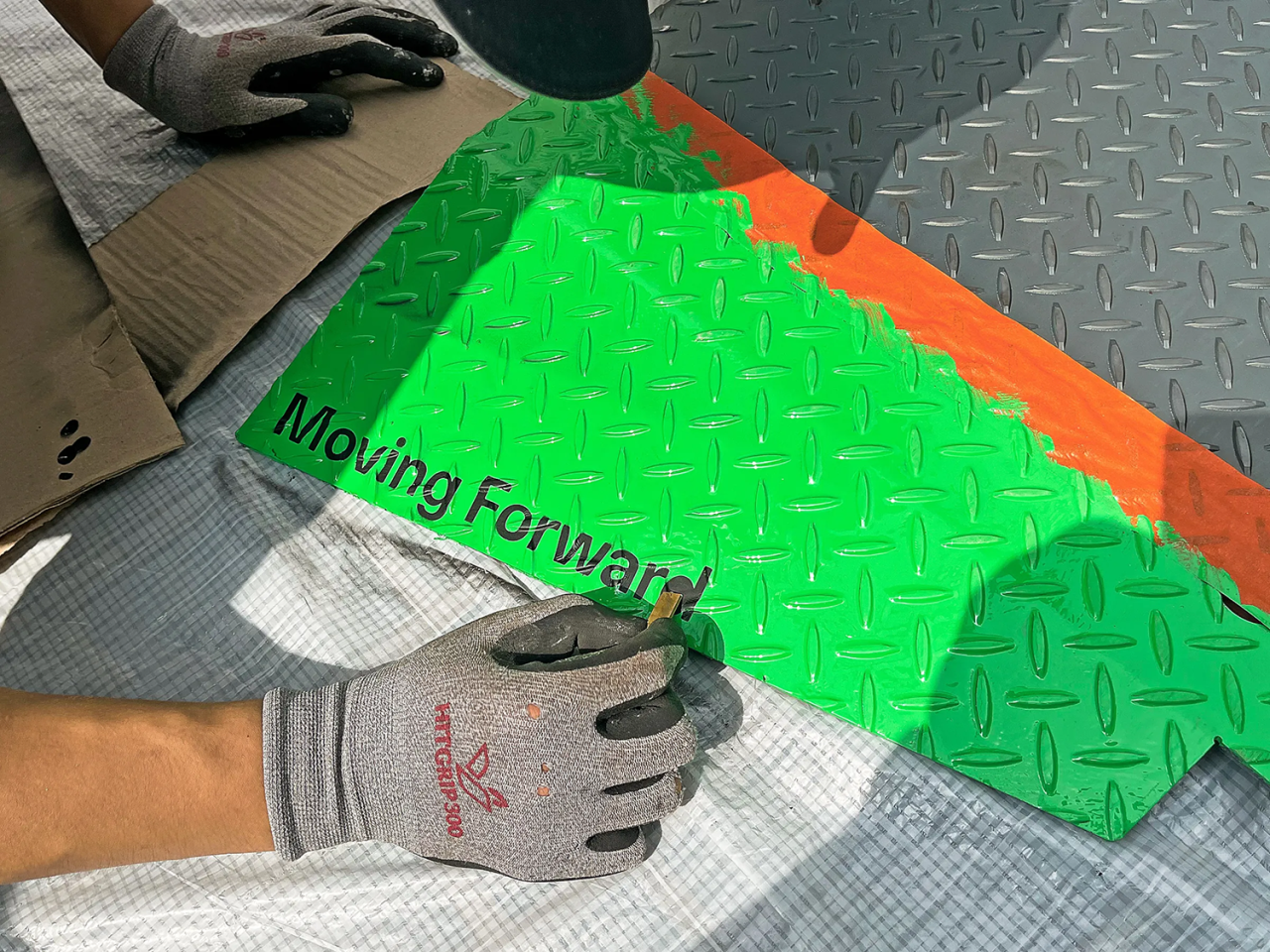
From these assessments, 10 key facilities and storefronts were selected to receive customized ramps. Twenty employees participated in every step—measuring entrances, preparing surfaces, and installing ramps alongside MUUI experts.
This hands-on model was intentional. “Awareness comes first,” said Dongho Park, a participating employee. “Once you are aware, you gain the ability to act. That’s what this experience taught me.”
For MUUI, the collaboration reflects a broader shift from isolated accessibility improvements to shared responsibility.
Accessibility is a right everyone should naturally enjoy in daily life. Through this partnership, I hope awareness grows and communities move closer to guaranteeing mobility as a right, not a restriction.
Yun-hui Hong, Chairperson of MUUI
Beyond a volunteer day
What distinguishes the Moving Forward campaign is its commitment to continuity. “This agreement is not a one-off activity,” says Ana-Maria Boie, General Manager of Boehringer Ingelheim Korea. “With our rapidly aging population, accessibility has become a critical social issue. We are committed to working with communities to create environments where everyone can move safely and freely—today and in the future.”
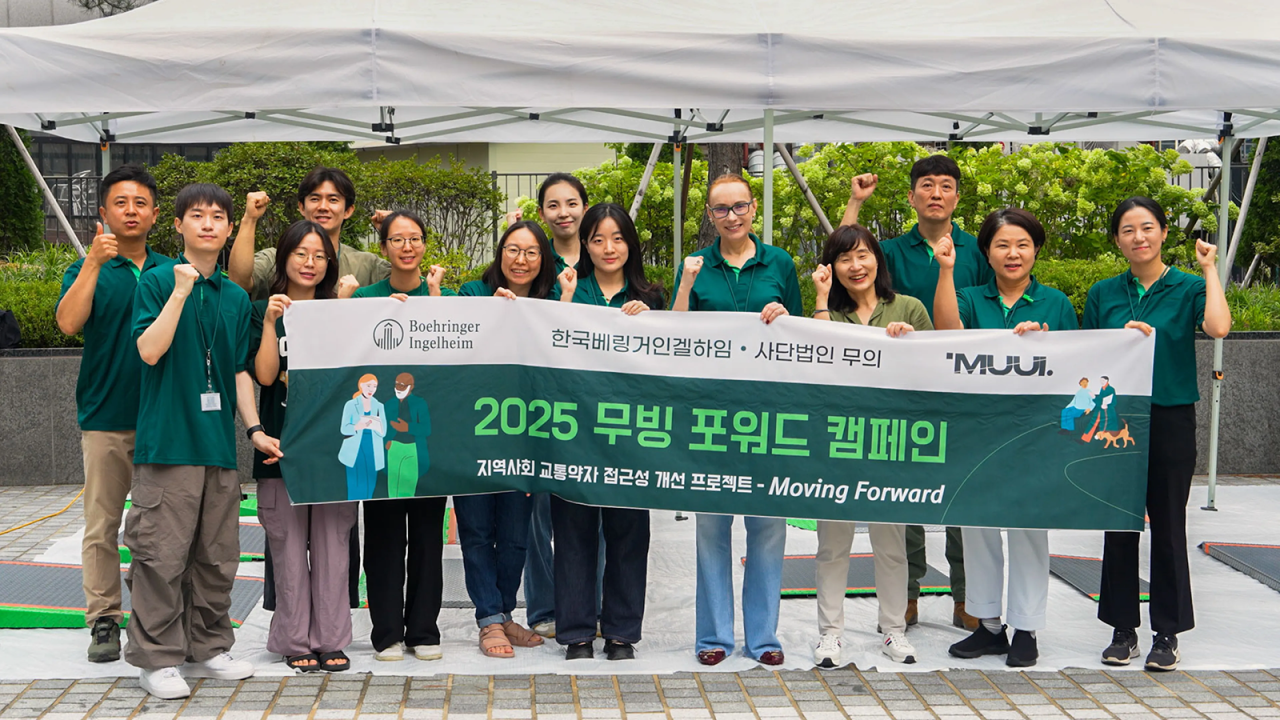
By pairing infrastructure improvements with local insight and employee engagement, the campaign moves beyond volunteering towards sustainable, community-embedded change. As a result of the campaign’s success, Moving Forward is now one of Boehringer Ingelheim Korea’s strategic sustainability initiatives.
Looking ahead, the initiative aims to enhance social accessibility and participation for people with limited mobility. By fostering closer collaboration between corporate and community stakeholders, the initiative seeks to strengthen shared responsibility, while also serving as a model for other organizations seeking to address social challenges through sustainable development.
Why accessibility matters to everyone
Mobility challenges are not limited to one group. Life can change in unexpected ways: a twisted ankle, a stroller for a newborn, caring for an aging parent. In those moments, accessibility becomes more than a policy issue. It becomes freedom.
Each ramp installed through the Moving Forward campaign represents more than concrete and paint. It is a doorway to healthcare, employment, and community life.
Accessibility is not for a few. It is for all of us. And when barriers are removed, life—quite literally—moves forward.
Read more on Imagine – Boehringer Ingelheim’s sustainability story hub.
*Image credits: Header, content pictures and video: Boehringer Ingelheim
Additional Media
Videos