This year, the Cascale Annual Meeting 2026 focuses intentionally on value chain transformation – guided by one question.
by Christina Mašánová
Every Annual Meeting starts with the same challenge. How do we at Cascale design a program that reflects where our industry is today, while also helping move it forward?
This year’s theme, “Value Chain Transformation: Who Pays, Who Profits and What Changes?,” captures the current reality we’re hearing from members across the value chain. Organizations are under increasing pressure to decarbonize, strengthen supply chains, prepare for new regulation, and improve outcomes for workers. At the same time, they’re navigating economic uncertainty, changing trade dynamics, and increasing pressure to remain competitive. The ambition is there, but many are trying to deliver it within commercial models that were never designed to support this kind of transformation.
Yet we must sustain the momentum in the movement that Cascale – and the Higg Index – were founded upon.
That led us to one question that became the foundation for this year’s program:
What commercial and partnership models will help brands and manufacturers prioritize, finance, and scale solutions for decarbonization, resilient supply chains, and decent work?
Every keynote, panel discussion, workshop, debate, and roundtable were developed with that original question in mind. We wanted the conversations to build on one another rather than exist as standalone topics. Whether we’re talking about financing decarbonization, responsible purchasing practices, artificial intelligence, digital product passports, sourcing relationships, or executive leadership, every session explores a different piece of the same challenge.
Once we had our problem statement, one thing became obvious. We couldn’t build another program that talked about sustainability in isolation. Many of the decisions that determine whether sustainability initiatives succeed are made outside sustainability teams. They happen in sourcing meetings, procurement discussions, finance reviews, executive boardrooms, and in conversations between brands and manufacturers every day.
One of the biggest shifts you’ll see this year is that we’ve intentionally brought those perspectives into the conversation. You’ll hear from leaders in sourcing, manufacturing, finance, innovation, technology, economics, and business. Sustainability remains at the heart of the discussion, but this year we’re exploring it through the broader business decisions that ultimately determine whether progress happens.
A Three-Day Journey
The program has been designed to build over three days, with each conversation building on the one before it.
On Day One, we’ll confront the tensions. We’ll explore the commercial realities, competing priorities, and systemic challenges that continue to slow progress across our industry.
On Day Two, the focus shifts to what is already working. We’ll hear practical examples of organizations finding new ways to finance decarbonization, strengthen sourcing partnerships, build resilience, and create business value alongside environmental and social impact.
On Day Three, we’ll look ahead together, exploring how leaders are responding to changing regulation, new technologies like artificial intelligence, evolving sourcing strategies, and the decisions that will shape the next chapter of value chain transformation.
Those conversations will take place across four stages, each designed with a different purpose. Our Main Stage offers the big-picture ideas that inspire a movement. Our CEO Ying McGuire will open by taking us back to our origins, exploring our founder’s original Systems Map. Alongside our Main Stage, attendees can dive deeper through ample workshops and capability-building sessions. These transpire on the Impact Stage, our Collaboration Stage, and the Worldly Stage, led by our Lead Sponsor, Worldly.
We’ve introduced several new session formats this year, including “Human Libraries” – or the peer-to-peer discussions which define a new kind of Collaboration Stage – and Open Seat Debates. This debate format offers extra reflection time alongside interactive workshops, peer exchanges, and executive-led roundtables. These formats were added very intentionally. Rather than simply listening to ideas, we wanted attendees to engage with them, challenge them, and learn directly from one another.
Ultimately, our goal is simple: we want people to leave Athens with more than inspiration. We want them to leave with practical ideas, new perspectives, and tangible takeaways they could apply in their own organizations and within their own partnerships; ones that lead to better business outcomes and greater impact.
Built With Our Community
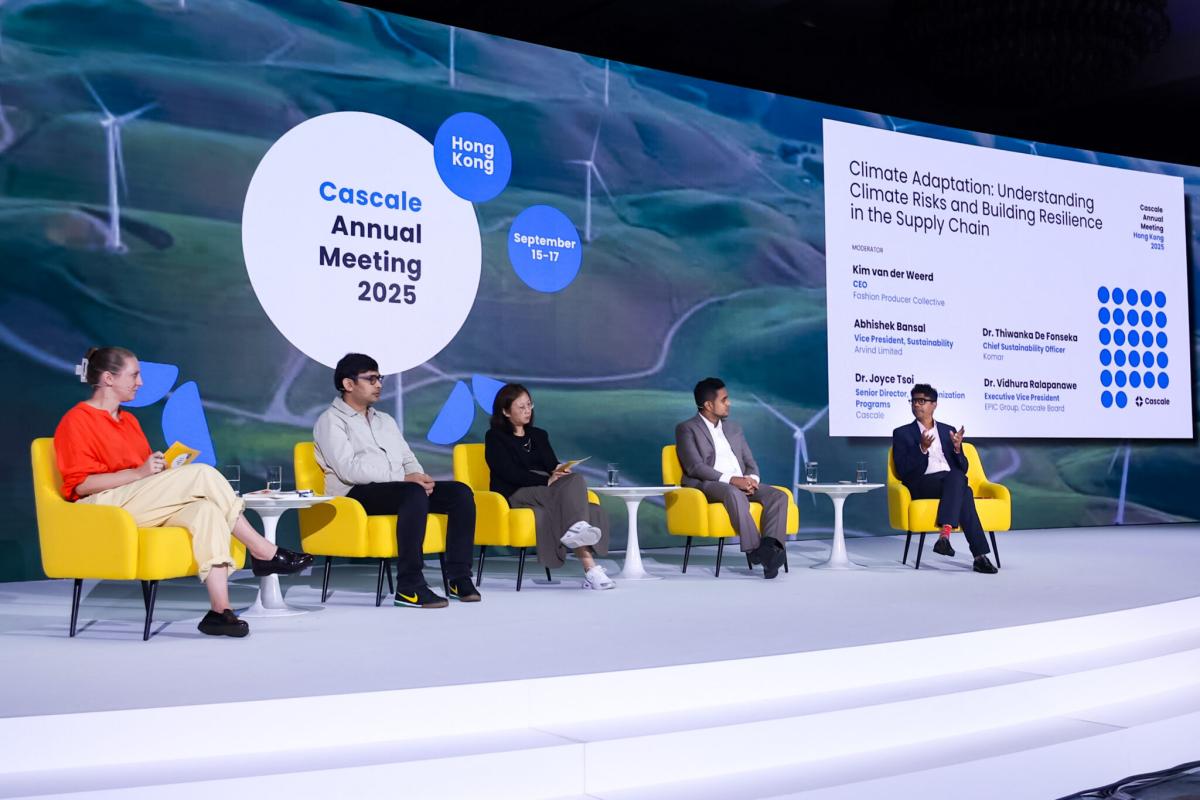
Each year, we strive to raise the bar (evidenced by last year’s Hong Kong meeting being our largest yet). In pursuit of member centricity, our new additions show we are continuing to rethink how members experience the Annual Meeting.
Panels and keynote presentations remain an important part of the program, but these new tailored formats offer expanded opportunities for members to participate. True to our past, we also acknowledge the need for keeping a few things off the record. Some programming will take place under Chatham House Rules to encourage more candid discussion, while others are designed to share practical case studies and lessons that attendees can take directly back to their own organizations.
This year’s program has also been shaped by our member-led Program Advisory Group. Their willingness to challenge our thinking, share their experiences, and test ideas has helped ensure the agenda reflects the realities our members are facing across the value chain. I’d also like to thank my colleagues across Cascale, whose expertise across climate, decent work, policy, member engagement, and events has helped strengthen the program at every stage of its development.
A Final Thought
People sometimes ask me what makes a good conference program. For me, it isn’t the number of speakers or the size of the stage. It’s whether people leave thinking differently than when they arrived.
As we’ve built this year’s program, one thing has become increasingly clear. The conversations have become much less about sustainability itself, and much more about the commercial and broader business decisions that determine whether sustainability can succeed.
That realization has shaped almost every decision we’ve made. It influenced the theme, the problem statement, the voices we’ve invited to the stage, and the formats we’ve chosen to encourage more open, practical discussion.
I don’t expect three days in Athens to solve every challenge our industry is facing. But I do hope people leave with a better understanding of one another’s realities, a few assumptions challenged, some practical ideas they can apply in their own organizations, and new relationships that help move this work forward.
If attendees leave thinking differently than when they arrived, I think we’ll have built a program worth having.
Register for the Cascale Annual Meeting 2026
Christina Mašánová is senior manager, event content and programming at Cascale.