In this case study, the global apparel manufacturer shares how it uses the Higg FEM and Higg FSLM to strengthen performance, improve transparency, and advance sustainability across its international operations.
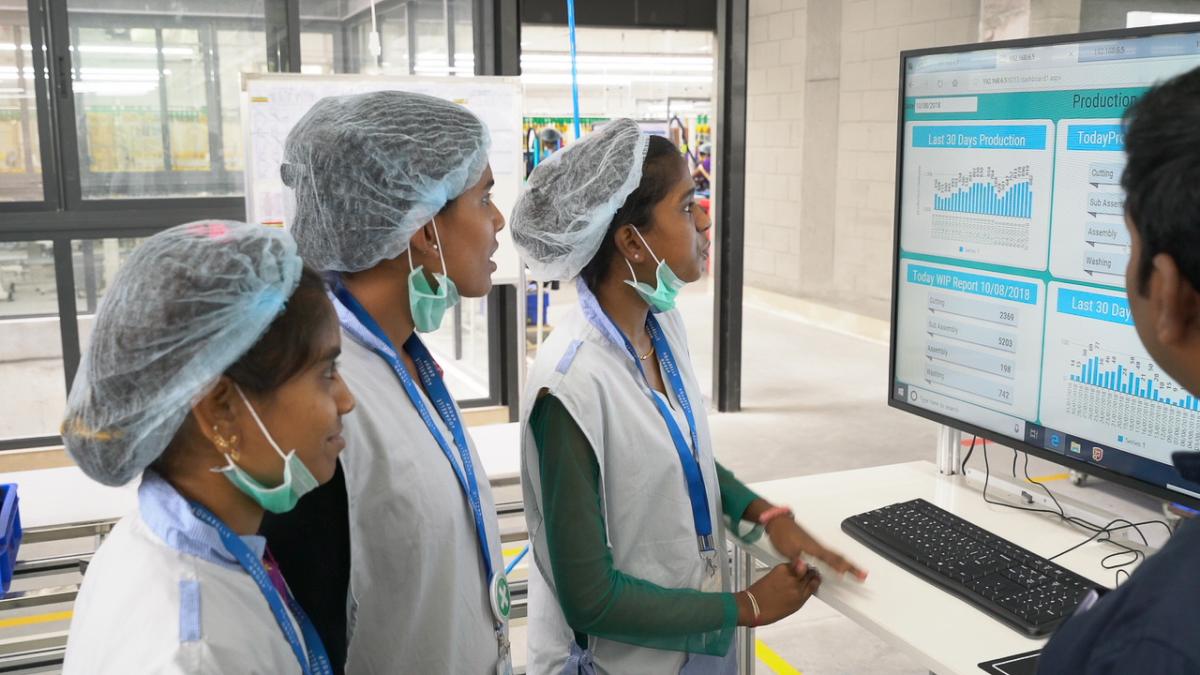
For CIEL Textile, sustainability is more than a reporting exercise. It is a business priority that connects product design, responsible sourcing, resource efficiency, and employee well-being across a global manufacturing network.
A vertically integrated apparel manufacturer with 19 facilities across Mauritius, Madagascar, India, and Bangladesh, CIEL Textile uses standardized measurement to track performance, identify improvement opportunities, and demonstrate progress. Its approach combines shared industry methodologies with targeted action to advance environmental and social performance.
The approach comes through clearly in the company’s 2024 Sustainability Report, which outlines progress across environmental performance, workforce inclusion, responsible supply chain management, and community impact. It is also reflected in facilities such as Aquarelle Samudra in India, highlighted by the late Sarbajit Ghose, former Asia Executive Director at CIEL Textile, in a 2024 episode of Cascale’s “Source of Good” podcast. Details in this case study are sourced from these materials; Cascale has not independently verified the information.
CIEL Textile, at a glance:
- 19 manufacturing facilities across Mauritius, Madagascar, India and Bangladesh.
- More than 20,000 employees.
- Over 32 million garments produced annually.
- A Cascale member since 2017.
Turning sustainability ambitions into measurable progress
CIEL Textile uses the Higg FEM and Higg FSLM, stewarded by Cascale and exclusively available on Worldly, to measure performance consistently across its global operations. By applying standardized assessment frameworks, the company is able to benchmark facilities, identify opportunities for improvement, and communicate environmental and social performance with greater transparency and credibility.
As expectations for supply chain transparency rise, apparel manufacturers face growing pressure to demonstrate environmental and social performance with credible, comparable data. For companies operating across multiple countries and facilities, meeting those expectations requires consistent measurement and a clear understanding of where improvements can have the greatest impact.
The Higg Facility Environmental Manager (Higg FEM) and Higg Facility Social & Labor Module (Higg FSLM) help CIEL Textile bring greater consistency to facility-level assessments. By using common methodologies, the company can benchmark performance, identify priority areas, and monitor progress across its operations.
The assessments also support a more coordinated approach to sustainability throughout the value chain. Shared frameworks help align expectations between manufacturers and their business partners, improve comparability, and reduce duplication in how facilities measure and communicate performance.
Designing lower-impact manufacturing from the start
CIEL Textile’s environmental strategy begins before production. By reducing waste at the design stage, choosing more sustainable materials, and making manufacturing processes more efficient, the company works to reduce its environmental impact at every step.
Its reported initiatives include:
- Virtual product development: Completing 60 percent of development through virtual sampling and evaluating physical samples through an Eco Index.
- Responsible materials sourcing: Using 100 percent certified sustainable trims and 95 percent certified sustainable fabrics.
- Renewable energy: Phasing out coal, reaching 96 percent renewable energy use at key sites, and targeting 80 percent renewable energy across operations by 2030.
- Waste reduction: Advancing circularity and reporting that seven factories have achieved zero waste to landfill.
- Resource efficiency: Investing in wastewater recycling, water conservation, and responsible resource management.
These efforts are evident at Aquarelle Samudra in India, a facility designed around lower-impact manufacturing and employee well-being. Its zero-coal model and focus on renewable energy, natural ventilation, water stewardship, and resource efficiency provide a practical example of how manufacturing infrastructure can support sustainability ambitions.
The facility’s LEED Net Zero achievements sit alongside CIEL Textile’s reported milestone of becoming the first and only manufacturer globally to achieve a 100 percent verified Higg FEM score. Together, these examples underscore the company’s focus on pairing operational action with structured assessment and verified environmental performance.
Putting people at the center of performance
CIEL Textile’s social sustainability strategy focuses on building inclusive workplaces, expanding opportunities for employees, and supporting the communities surrounding its operations.
Through its Foster a Vibrant Workforce pillar, the company invests in digital learning, employee engagement, and diversity initiatives. Its goals include reaching 35 percent women in leadership by 2030 and targeting 5 percent of employees to be persons with disabilities.
Reported progress includes:
- More women in management: The company reports an increase from 15 percent in 2022 to 18 percent, supported by its Go Beyond Gender program.
- More inclusive workplaces: Facilities in Madagascar and India have introduced workplace adaptations and tailored training to support employees with disabilities.
- Employee engagement: More than 16,000 employees participated in the company’s latest Great Place to Work survey, with an 87 percent positive rating reported.
Higg FSLM supports this work by providing a standardized approach to assessing social and labor performance and identifying opportunities for continued improvement. Used alongside targeted workplace initiatives, the framework helps connect social sustainability priorities with facility-level assessment.
Extending impact beyond the factory
For CIEL Textile, sustainability also encompasses the communities connected to its operations. Through its Act for Our Community and Act for Our Environment programs, the company reports delivering more than 1,000 projects since 2015, benefiting over 100,000 people across Madagascar, India, and Mauritius.
The initiatives span education, health, inclusion, and livelihoods, extending the company’s sustainability efforts beyond manufacturing sites. Together, they illustrate how CIEL Textile connects its broader sustainability strategy with operational practices and measurable goals.
Why This Approach Matters for The Industry
CIEL Textile’s experience demonstrates how standardized assessment and targeted action can work together to advance environmental and social performance across a complex manufacturing network.
Its approach highlights three lessons for the apparel industry:
- Measurement creates a foundation for improvement. Consistent facility-level assessments help companies identify gaps, benchmark results, and track progress over time.
- Sustainability works best when embedded in business strategy. Connecting environmental and social priorities with product design, sourcing, operations, and workforce development can help make progress part of everyday decision-making.
- Shared methodologies strengthen supply chain alignment. Recognized frameworks give manufacturers and their business partners a common basis for evaluating performance, communicating progress, and working toward shared goals.
By applying industry-aligned methodologies across its operations, CIEL Textile demonstrates how consistent measurement can support transparency, accountability, and continuous improvement. As sustainability expectations continue to evolve, the company offers an example of how manufacturers can translate commitments into measurable action – connecting facility-level performance with broader business priorities and contributing to progress across the apparel value chain.