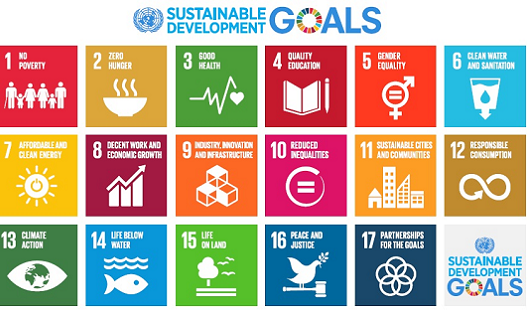
The UN Sustainable Development Goals (SDGs) are an ambitious plan to change human society by addressing pressing global challenges such as hunger, gender inequality and climate change to name only a few. But the final goal, SDG 17, is more fundamental than the others, because if we fail to achieve it, we won’t be able to achieve any of the others. SDG 17 calls for the revitalization of the global partnership for sustainable development, an explicit acknowledgement that our collective ability to achieve the goals hinges upon our willingness to forge partnerships.
“SDG Target 17 is in many ways the most important,” said GRI Deputy Chief Executive Teresa Fogelberg. “The challenges laid out in the other goals can never be achieved if business, governments and civil society organizations fail to work together. At GRI we have always sought to partner with organizations that share our desire to help create a more sustainable economy and world. It’s part of our DNA.”
The specific targets detailed in SDG 17 refer to three systemic issues that need to be overcome and GRI is working on multiple fronts to accelerate progress toward the global goals by focusing on collaboration, innovation and measurement.
Policy and institutional coherence
In order to realize the SDGs, goal number 17 highlights the need to enhance policy coherence for sustainable development and GRI has taken up the call. GRI’s Policy team engages with national and international governing bodies and organizations including the United Nations, national ministries, stock exchanges and other reporting organizations around the world to enable smart policy on sustainability. Sustainability reporting is an important means of increasing coherence because it brings together disparate issues, such as water scarcity, CO2 emissions and working conditions, into one methodology so that organizations and their stakeholders can take a holistic view of the impacts of operations.
Currently, 38 national and regional governments refer to GRI Sustainability Reporting Standards (GRI Standards) in policy and 21 stock exchanges around the world follow suit. GRI has global strategic partnerships with the Organisation for Economic Co-operation and Development, the United Nations Environment Programme and the United Nations Global Compact. GRI Standards enjoy synergies with the guidance of the International Finance Corporation, the International Organization for Standardization’s ISO 26000, the United Nations Conference on Trade and Development, and the Earth Charter Initiative.
In order for decision makers to act in pursuit of the global goals, they need robust sustainability data to inform their decisions. By encouraging companies worldwide to disclose sustainability related information, GRI enables sustainable markets to flourish, and facilitate the creation of data which governments can use to inform better decision making. Working in partnership with leading technology company, Tata Consultancy Services (TCS), GRI created the SDG Target 12.6 Tracker, a database which tracks progress towards the SDG Target 12.6 – the progress of sustainability reporting by companies, and sustainability reporting policies around the world.
SDG 17 also calls for multi-stakeholder partnerships that mobilize and share knowledge to support the achievement of the goals. One of our core values is that we believe in the power of multi-stakeholder partnerships. Our global multi-stakeholder network includes thousands reporting organizations in more than 90 countries, more than 20,000 GRI-trained sustainability practitioners and 600 organizations within our GOLD Community, GRI’s core supporters and leaders in sustainability reporting.