Originally published by CT Insider
By Marissa Weidner
November 28, 2025
Walking through the halls of Stamford High School I noticed displays of student art, placards celebrating graduates and murals extolling team spirit. Go Black Knights!
Outside, students worked with cameras for a photography class and inside classrooms there was a quiet hum of learning.
The three Rs: Reading, Writing, and aRrithmetic.
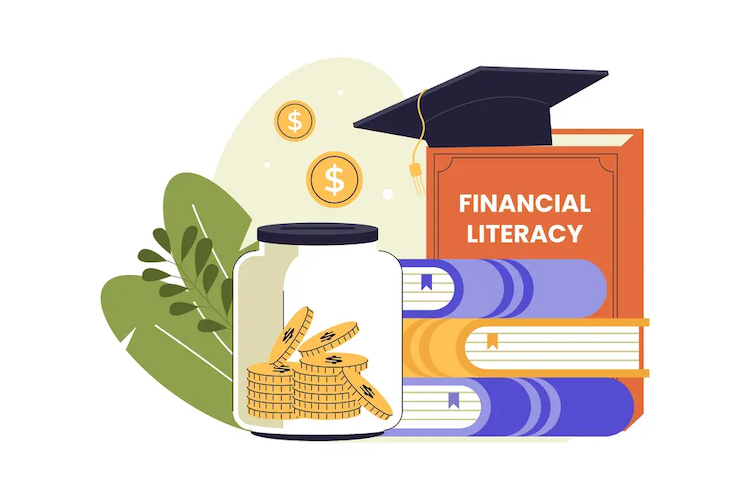
Now, though, more classrooms are bringing in another foundational basic, financial literacy, which has taken on a greater sense of immediacy and meaning to me as a mother of two sons.
Why? In casual conversations with my boys, I found that both are missing a key understanding of issues such as how credit scores work, the importance of fully paying down a credit card balance each month and getting the most out of what, for many of us, is one of the most important investments we’ll make: college.
On one occasion, one of my boys said “I know all I need to know about finance. As long as I make minimum credit card payments, I am good.” He was focused on preserving his credit score, but didn’t realize the mechanics of a credit card’s annual percentage rate, or APR, and that just getting by with minimum payments can erode hard earned savings.
Another conversation involved colleges. After my son drew up a list of schools that sparked his interest, I asked him to look up the cost of tuition, including room and board and other expenses. He was astonished at the total costs. I then suggested to him that he should consider the average salary for what he plans to take on as a career. “Since you will be contributing to tuition payments, do you think spending that money is a good return on your investment?” He soon came back with a different list of schools.
Often, conversations about finances may be awkward and it’s easy to assume that if our children have a basic understanding of the value of a dollar we can stop there. But there’s more to learn and it takes on greater meaning in today’s economy. While we might run the risk of an eye roll, there are opportunities to share teachable moments when sitting around the kitchen table or on a car ride to team practices as schools build out curriculum to fulfill statewide financial literacy requirements.
Ideally, over time these conversations about money between students and parents, and reinforced in schools, will lead to financial empowerment. Financial literacy will serve you in all stages of your life. You’ll need it to understand your budget for money earned at an after-school job. You will use it when moving out on your own and deciding on a career, if you start a family and, eventually, as you plan for retirement.
Which brings me to why I was at Stamford High School on a fall morning. I was there to announce Webster Bank’s three-year, $300,000 grant for Connecticut Financial Scholars. Stamford High School is an early adopter of this program which has been effective in Philadelphia, another school district in the country that has a Financial Scholars program.
This initiative is part of an ongoing effort to bolster financial literacy statewide and I am proud of the support Webster Bank, as lead sponsor, is offering for programming and training. This includes curriculum and paid teacher professional development for in-school financial literacy education, investing enrichment, paid summer workforce development for teens and adult workshops in the school community for parents and families.
Connecticut Financial Scholars is targeting 25 school partnerships in school year 2025-2026 and 75 schools for the following fiscal year.
You may ask, why is Webster doing this? What’s in it for us? This grant is part of a larger series of efforts that reflect our commitment to advancing financial literacy, a core philanthropic pillar at Webster Bank which opened its doors 90 years ago. Other efforts to support financial empowerment include our Finance Lab initiative designed to help nonprofit partners in LMI communities create opportunities for young people to gain skills needed for economic empowerment and financial success, and support of multiple Junior Achievement chapters. We understand the importance of financial literacy and the organizations we support know how to create programs and experiences with a unique approach to financially empower students.
As of this month, 30 U.S. states now require a personal finance course for high school graduation, according to Next Gen Personal Finance, a nonprofit advocating for personal finance education. Connecticut began requiring it in 2023 and a Webster Bank survey that year found that 84% of consumers feel middle and high schools should invest more in financial education. Only a third of that survey’s respondents, which included lower- and middle-income consumers from Connecticut, said they feel fully in control of their financial future.
I could tell the students at Stamford High School were engaged and interested in learning more about taking control of their finances and their teachers were thrilled to get extra resources.
But we can’t stop here.
If you’re a parent, educator, business or community leader, I encourage you to find out about existing programs, teacher training, and partnerships. Talk to your kids about money. Be a positive influence. Together, we can ensure every student completes high school with the ability to make informed financial decisions and build a secure future.
Marissa Weidner is executive vice president and chief corporate responsibility officer at Webster Bank.