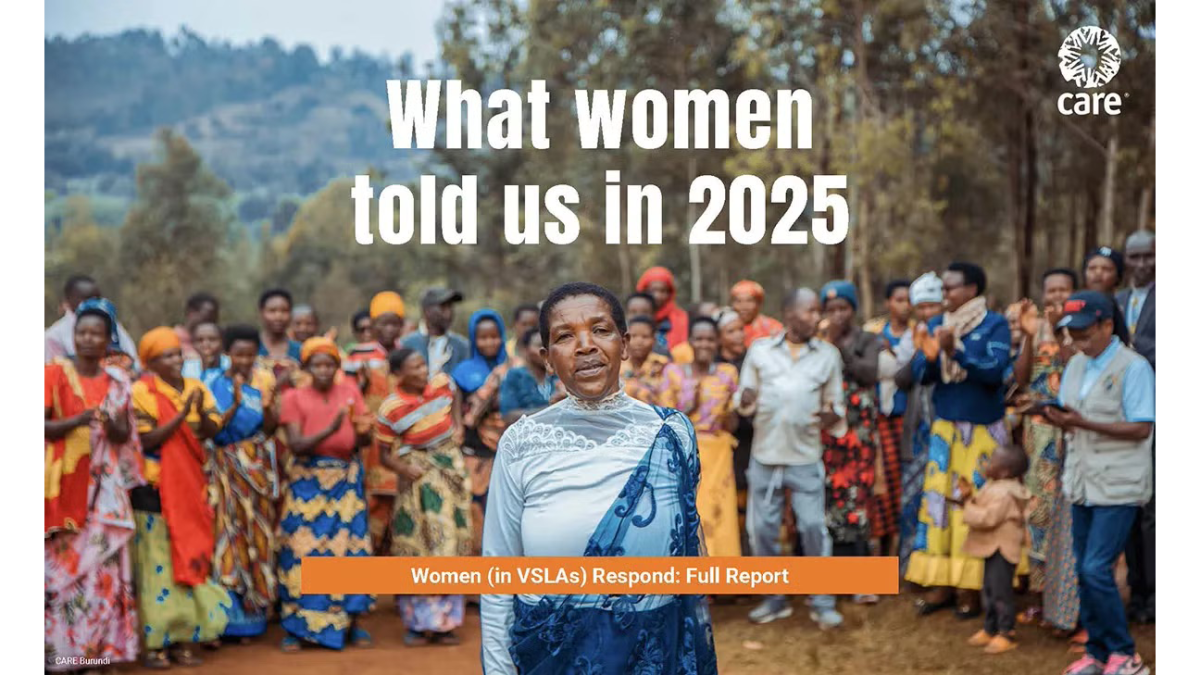
ATLANTA, October 1, 2026 /3BL/ - Women around the world are facing compounding crises – from food shortages and drought to floods, crop losses and conflict – that are leaving them hungrier, poorer and less able to withstand the next shock, according to a new CARE report. For many, these crises are hitting year after year, while support is shrinking just when they need it most.
CARE’s latest Women Respond report paints a stark picture: three in four women say crises are making it harder to earn enough money, two in three say lack of food is the biggest crisis they face, and more than half face drought.
The findings are based on surveys and interviews conducted throughout 2025 with members of Village Savings and Loan Associations (VSLAs) in Burundi, Colombia, Ethiopia, Mali, Niger, Syria and Vietnam. Women reported facing a combination of food insecurity, drought, lack of clean water, crop-destroying pests, floods and conflict.
At the same time, resources available to help communities withstand these shocks were shrinking. Global aid cuts were felt across all seven countries surveyed. Among respondents who were aware of the cuts, more than 80% said they were hurting local economies, health services and aid support in their communities.
And this outlook is expected to worsen. The report’s findings are based on data collected in 2025 and do not reflect additional pressures emerging in 2026. This year’s El Niño, tracking to be one of the strongest on record, is predicted to bring more drought and crop failure across parts of Africa, Asia and Latin America, worsening hunger for millions already struggling to cope. More recent global supply-chain disruptions have added further pressure to food systems already strained by conflict, climate shocks, rising costs and reductions in humanitarian assistance.
From building a future to meeting basic needs
For more than 30 years, CARE has supported VSLAs: self-managed groups whose members save together and access small loans. Predominantly made up of women, the groups help members build savings, invest in businesses and strengthen their livelihoods.
But the new findings show how repeated crises are forcing women to draw on these resources simply to cope, rather than invest in their futures. Within VSLAs, the proportion of members borrowing to cover basic needs rather than invest in their businesses rose from 36% at the beginning of 2025 to 47% later in the year. More broadly, at the end of 2025 one in two women reported using savings to cope with crises, one in four was borrowing money, and one in 10 was selling assets.
For some women, reliance on these coping strategies has been growing for years. In Colombia, the proportion of women selling assets to cope rose steadily from 7% in 2023 to 27% by late 2025.
“These savings are meant to help women invest in businesses, strengthen their livelihoods and build a more secure future for their families,” said Kalkidan Lakew Yihun, CARE’s Program Coordinator, Women and Girls Respond and one of the report’s authors. “Instead, more women are having to use them to put food on the table and meet other basic needs. Women are doing everything they can to adapt, but after crisis after crisis, many are running out of ways to cope.”
Less food, less money
Income pressure, food shortages and rising prices are forcing women to cut back on portion sizes, food quality and how often they eat. In Mali, 96% of women surveyed struggle to eat enough food. In Niger, 55% of women are eating less than they used to, and among those women, just 1% still eat three meals a day, down from 63%. In Burundi, women said they used to earn on average $39 per month, but this has fallen by more than half to $18.
Women also described the growing burden of managing their households as resources become increasingly stretched.
“People often say, ‘Men build the house, women build the home,’ but when crisis hits, that home gets really heavy. Taking care of cooking, cleaning, and managing food all falls on me,” said a woman in Vietnam who participated in Women Respond.
For some families, the pressure is forcing even more difficult choices. A woman surveyed in Syria said: “We completely cut back on family expenses: food, health, education, etc., and we even sold furniture and other household items to cover basic costs.”
Women are taking action
Despite these pressures, women are actively finding ways to respond. One in two is trying to earn income in new ways, and nearly one in two is advocating for more services and resources from local government.
But the report also underscores the limits of what women and their communities can do on their own. Women surveyed identified support to earn an income, adequate food, access to financial services, clean water and healthcare as their most pressing needs.
“Women are doing everything they can with the resources available to them,” said Kalkidan Lakew Yihun. “Savings groups are an important safety net, but they cannot replace the broader support communities need. After facing repeated crises, women need the resources and opportunities to recover and prepare for what comes next.”
Click here to read the full report.
About Women Respond
Women Respond is CARE’s global initiative to lead the way in asking women directly what they are facing, how they are responding to crises, and what support they need most. Since its launch in 2020, Women Respond has heard from 39,000 people—including 29,000 women—across 28 countries, helping ensure CARE’s work is shaped by women’s experiences, voices, and priorities.
About CARE
Founded in 1945 with the creation of the CARE PACKAGE® box, CARE is a leading humanitarian organization fighting global poverty. CARE places special focus on working alongside women and girls. Equipped with the proper resources, women and girls have the power to lift whole families and entire communities out of poverty. In 2025, CARE worked in 121 countries, reaching 58.7 million people through 1,467 projects. To learn more, visit www.care.org.
For media inquiries, email [email protected].