Smile Train’s model turns cutting-edge innovation into locally led, year-round cleft care in places of need.
Surgical innovation is fundamental to Smile Train’s sustainable cleft care model because it helps local healthcare professionals provide safer, higher-quality treatment at scale. While our innovations can take the form of the newest or most complex technology, a simple training resource, affordable patient-monitoring device, or better-equipped operating room is often just as transformative for our patients and local healthcare partners. What matters most is giving medical professionals access to all of the trainings, tools, and infrastructure they need to provide consistently safe, high-quality cleft care in their own communities 24/7.
Why cleft care demands more than a single surgery
Clefts occur when parts of the lip or roof of the mouth (palate) do not join completely during fetal development. A cleft can affect the lip, the palate, or both. Around one in every 700 babies is born with a cleft, and almost five million people worldwide have an untreated cleft of some kind. Clefts are far more than cosmetic. Left untreated, they can make breathing, hearing, and speaking difficult. Sometimes, they can even cause life-threatening feeding complications.
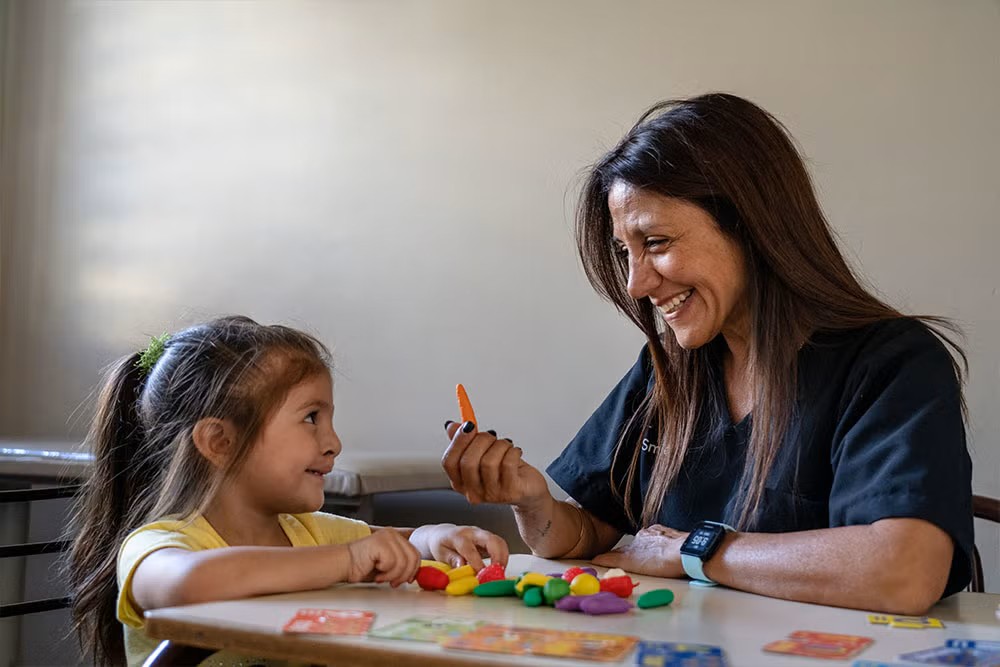
Cleft surgery is transformative, but rarely enough on its own for those affected to thrive. Most people with clefts will also need feeding and nutrition support, speech therapy, dental and orthodontic treatment, ear and hearing care, psychosocial support, and more. Making sustainable cleft care available everywhere means building local systems that can provide these comprehensive services at the right times throughout a patient's life.
How Smile Train's sustainable cleft care model works
Smile Train’s founder, the late tech entrepreneur Charles B. Wang, understood that making his vision a reality would require much more than paying for individual surgeries. It would necessitate major investments in scaling medical knowledge sharing, surgical training, and durable, high-quality surgical tools.
That insight planted the seed for Smile Train's "teach a person to fish" model: Rather than sending foreign doctors on temporary medical mission trips to perform surgery sprints and then leave, we empower local hospitals and healthcare teams in more than 75 countries to provide year-round cleft surgery and comprehensive cleft care in their own communities. This means patients can access the multifaceted care they need on the timeline that is best for their individual treatment journey, from providers who share their language and culture, long after outside mission groups pack up and go home. Smile Train’s model ensures better outcomes for patients and families while strengthening local health systems around the world.
This approach is both sustainable and profoundly effective. In 2025 alone, Smile Train supported:
- 94,450+ cleft surgeries across more than 75 countries
- 131,875+ non-surgical cleft treatments, including:
- 25,750+ nutritional interventions
- 80,210+ speech sessions
- 25,900+ orthodontic appointments
- Nearly 34,620 hours of training delivered to 2,450+ healthcare providers
Training is the multiplier in Smile Train’s model: one properly equipped healthcare professional can treat patients year after year, train colleagues, and strengthen the wider local health system. While a cleft surgery can change one person's life, a trained, properly equipped healthcare professional can care for patients year after year, share knowledge with colleagues, and strengthen all facets of local healthcare beyond clefts.
How Smile Train made cleft surgery training portable
Smile Train's earliest surgical innovations were designed to allow expert surgical knowledge to travel places it had rarely been before. In 2002, we began distributing surgical training CD-ROMs to partner healthcare centers; the following year, the Tech Museum of Innovation honored our use of technology to promote sustainable cleft care. In 2008, we distributed our first DVDs for virtually training cleft surgeons.
These tools may seem basic, but they addressed the same essential problem as more advanced solutions: How can a surgeon learn a specialized technique when the nearest expert is hundreds of miles away?
How virtual surgical simulation expands cleft surgery training
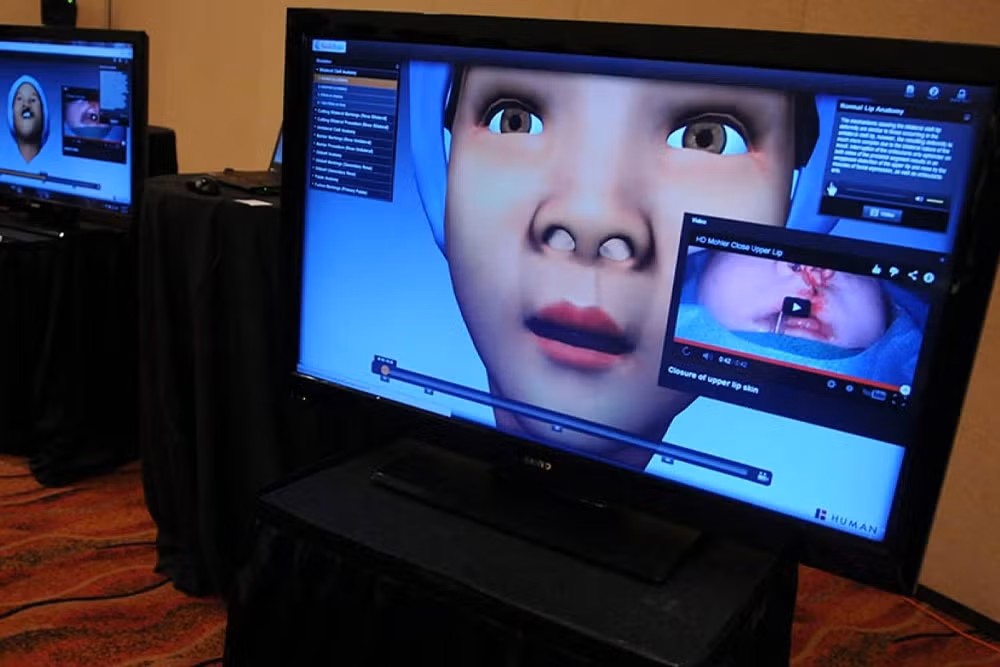
In 2013, Smile Train's digital training capacity took the next step forward with the launch of the Virtual Surgery Simulator (VSS), the first web-based, 3D, interactive surgical explorer for cleft care. Developed in partnership with the software company BioDigital and expert surgeons, it combines interactive 3D anatomy, operative footage, text, and narration. The VSS is freely available, multilingual, and designed for self-guided learning, allowing medical professionals to review complex procedures from their phone or computer from anywhere.
Unlike a paper textbook, the VSS allows learners to examine anatomy from different angles and move through a procedure step by step. It does not replace supervised clinical education; rather, it gives trainees a consistent resource they can revisit before and after hands-on instruction.
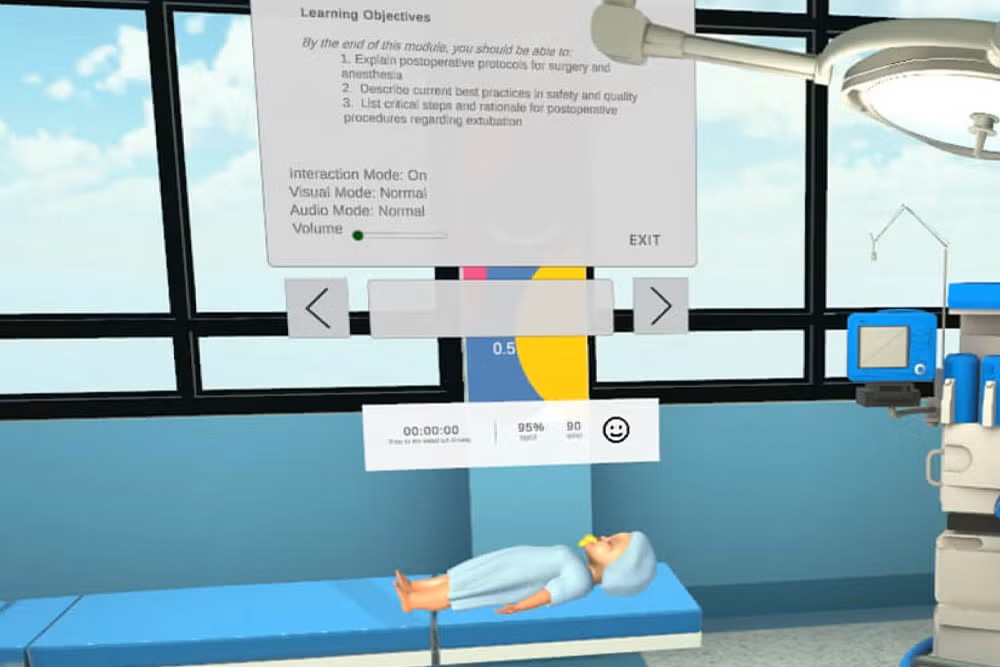
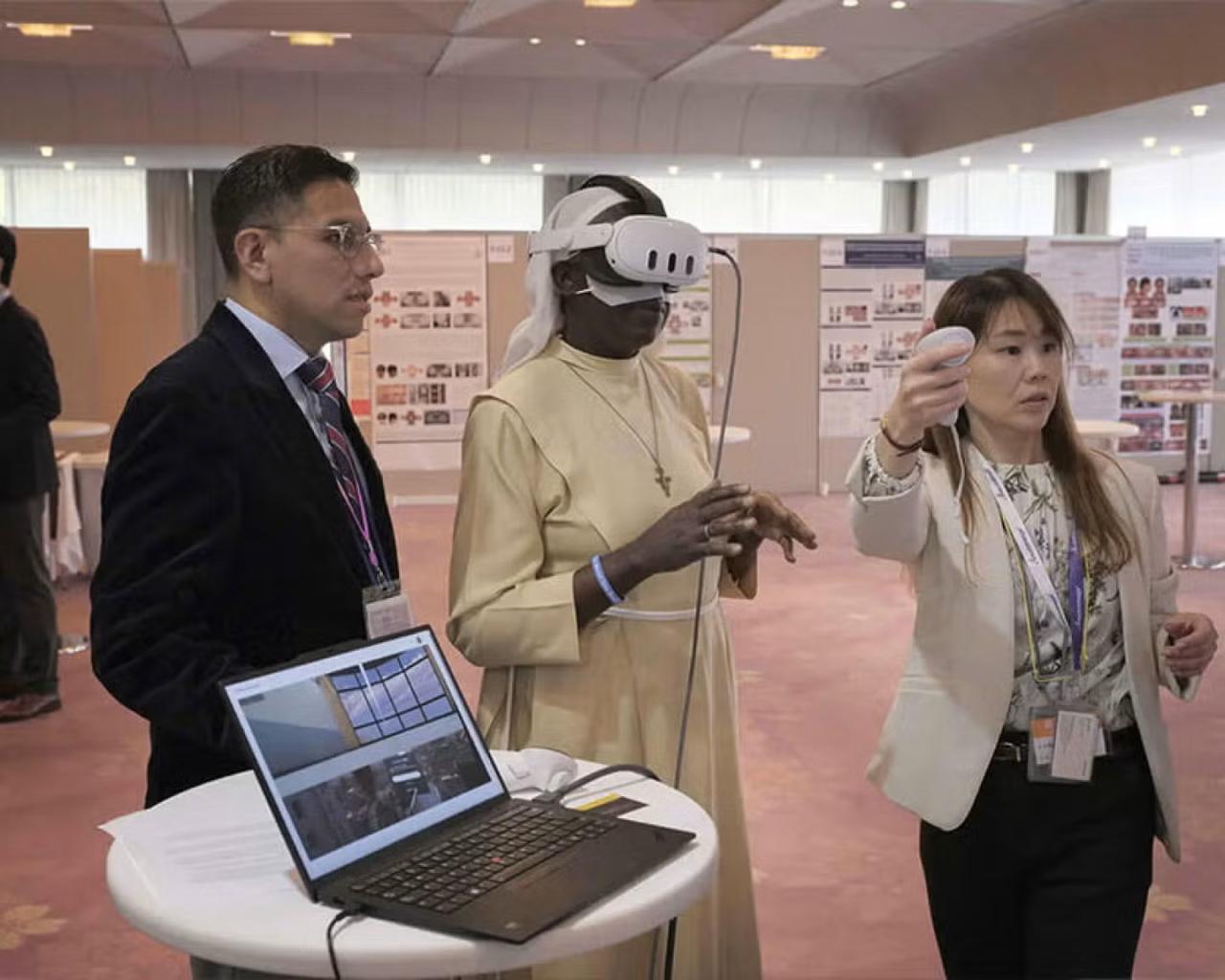
In 2025, we built on this idea to create the Virtual Reality Operating Room. Here, a surgeon can put on a headset and enter a simulated operating room alone or join an instructor to practice under supervision — even when the participants are thousands of miles apart.
In one study of 20 plastic surgery residents, participants reported that the VR operating room significantly increased their understanding of cleft palate surgical techniques and boosted their confidence using VR for surgical education. Though the study did not measure long-term patient outcomes, it nonetheless demonstrates how virtual training can effectively extend expert instruction across distance.
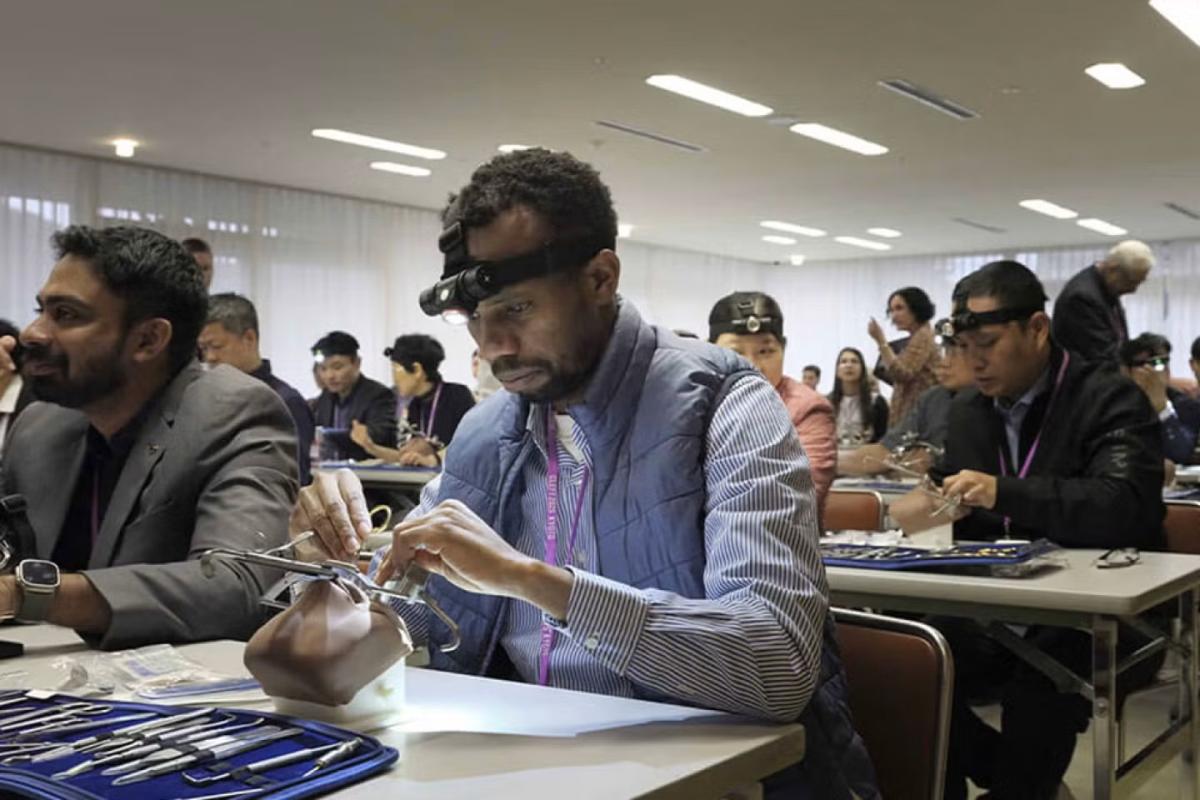
Inside Cleft 2025 in Kyoto
Smile Train and our local partners used the world’s premier cleft conference to showcase the many ways we are transforming cleft treatment worldwide.
How Simulare Medical’s cleft surgery simulators support safer training
Digital tools are only one aspect of cleft surgical training technology. Surgeons also must practice the delicate, precise physical movements their craft requires in ways that no digital space could replicate, including making incisions, separating delicate tissue layers, and suturing within the tiny space of a baby's mouth and face.
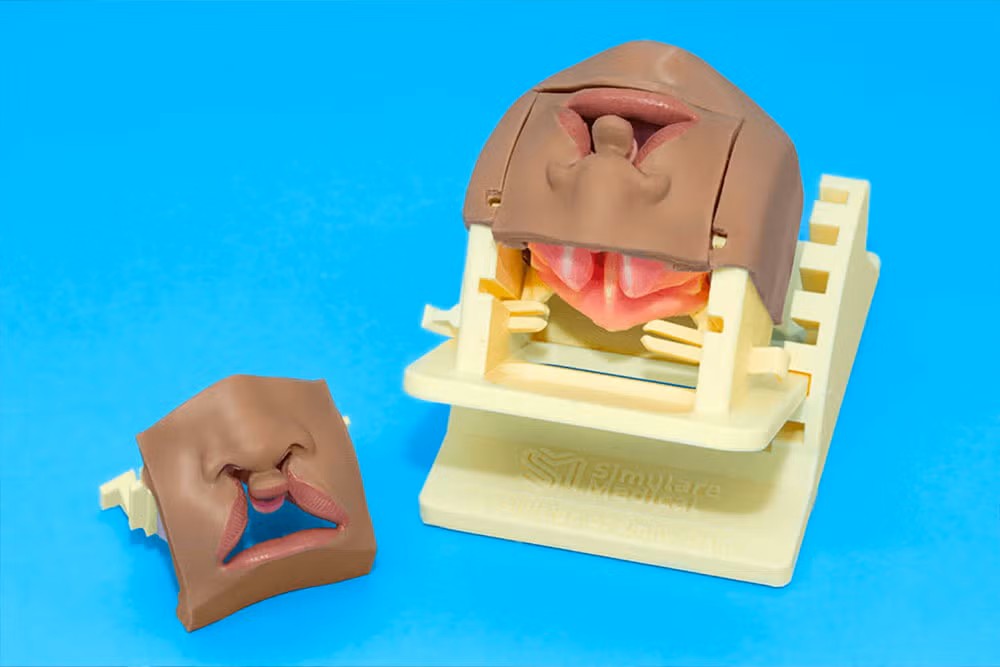
Yet there was no tool for this until Drs. Dale Podolsky and David Fisher, two surgeons at SickKids Hospital in Toronto, created a lifelike, 3D-printed cleft simulator. The response was so positive that they formed a company to produce and distribute them globally, Simulare Medical. In 2020, Smile Train took on the company’s operations to place these state-of-the-art training devices into the hands of those who live and practice far from the major centers of medical training and innovation, for free.
Simulare Medical simulators are life-size and anatomically precise, with layers designed to reproduce the visual and tactile experience of operating on skin, muscle, bone, and other tissue. Since becoming part of Smile Train, Simulare Medical’s product line has expanded from cleft lip and palate models to the world’s first bilateral cleft, alveolar bone graft, and speech surgery simulators.
At supervised workshops around the world, trainees repeat difficult steps, receive feedback, make mistakes safely, and refine their technique before ever touching a real patient.
The need for these tools is not limited to lower-resource settings; after all, Simulare Medical was created out of necessity at one of the world’s premier children’s hospitals. That’s why Smile Train is now exploring strategic partnerships with some of America’s leading hospitals and medical associations to make these simulators more widely available to all who could benefit from them.
Behind the Scenes at Simulare Medical
An inside look at how our dedicated team meticulously handcrafts every Simulare Medical simulator.
Partnerships make innovation scalable
No organization and no technology can solve every challenge in global surgery on its own. Smile Train seeks out partnerships with other leading global health leaders whose expertise complements our own.
Lifebox
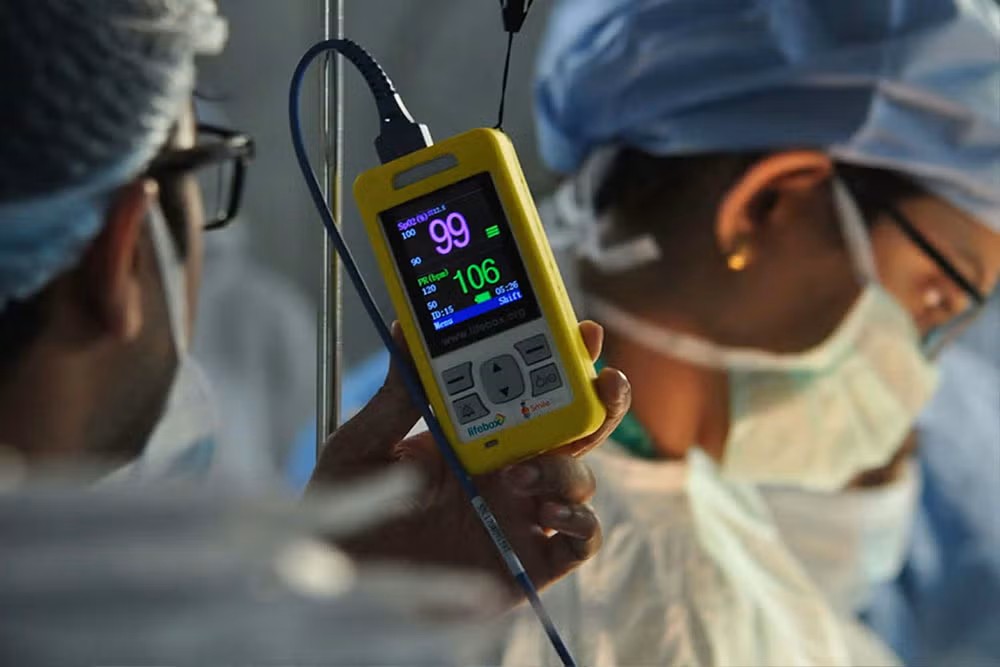
Co-founded by leading surgeon, author, and public health advocate Dr. Atul Gawande, Lifebox is the premier organization making surgical technologies that are standard in high-income ORs available worldwide.
In 2020, we launched the multi-year Safe Surgery and Anesthesia Initiative. The goals were to support the distribution of Lifebox’s low-cost, high-quality pulse oximeters and develop and distribute an affordable, durable capnograph designed specifically for pediatric care. The initiative was a success, and our organizations continue to work closely together to improve surgical outcomes around the world.
Kids Operating Room
Scottish charity Kids Operating Room and Smile Train are working together to transform outdated operating rooms in Africa and Asia into vibrant, comforting, and fit-for-purpose surgical spaces designed specifically for children.
We are also partnering to address an urgent and sometimes deadly issue facing surgical care across the continent: frequent power blackouts in operating rooms. Our solution: Upgrading these spaces with solar panels and battery systems that serve as critical backup power. By harnessing the power of the sun, we are keeping vital equipment running when local electrical grids fail — while saving lives and making safe, reliable surgery available to all in need, not just people with clefts.
What makes global surgery innovation sustainable?
A surgical innovation is more likely to make a lasting impact when it is:
- Developed around a real clinical or training need
- Practical for local teams to use and maintain
- Paired with education, mentorship, and uncompromising quality standards
- Available throughout the year, not only during occasional visits
- Able to spread through local institutions and professional networks
That is why developing a local surgical workforce is central to Smile Train's model. Our goal is not merely to outfit our partners with more technology; it is to give them the knowledge, confidence, equipment, and institutional support they need to lead scalable cleft surgery programs themselves.
Key takeaways
Smile Train’s history of surgical innovation is not a straight line from low-tech to high-tech tools. It is an ongoing effort to identify the simplest effective solution to a problem, test it, improve it, and place it in the hands of local professionals.
From CD-ROMs and online videos to virtual reality, from solar-powered operating rooms and 3D-printed surgical models to affordable, durable anesthesia monitoring equipment and everything in-between, every surgical innovation Smile Train has fueled since our founding in 1999 has served the same purpose: helping local teams provide safer, higher-quality, and more sustainable cleft care today, tomorrow, and for generations to come.
In review
How does Smile Train improve access to surgery?
Smile Train improves access to cleft surgery by partnering with local hospitals and healthcare professionals, funding cleft treatment, and investing in training, equipment, technology, and infrastructure around the world. Because the care we support stays in communities, patients can receive treatment at the time that’s best for them rather than waiting for a visiting surgical program.
What is Smile Train's "teach a person to fish" model?
Our “teach a person to fish” model focuses on equipping local professionals to provide safe cleft surgery and other comprehensive care in their own communities. Training providers benefits many future patients and strengthens the wider local health system, making this approach more scalable than relying only on individual short-term interventions.
What is sustainable cleft care?
Sustainable cleft care is locally led, year-round treatment that communities can continue providing over time. It includes high-quality cleft surgery as well as nutrition, speech, dental and orthodontic care, ear and hearing services, psychosocial support, and other treatments as needed.
How does surgical simulation support high-quality cleft surgery?
Surgical simulation allows trainees to practice difficult procedures repeatedly without putting a patient at risk. Digital, virtual reality, and physical simulators each support technical practice, expert feedback, and preparation for the operating room in their own unique way, complementing, rather than replacing, supervised clinical experience.
Additional Media
Images