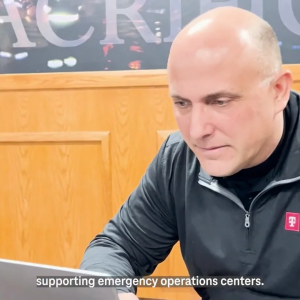
After leading emergency response during one of New York’s most dangerous winter storms, this T‑Mobile public safety strategist now helps ensure first responders have the connectivity they need before, during and after a crisis.
“Extreme winter weather just becomes your norm here,” says Brian Gould, Industry Segment Advisor, T-Mobile. “I love the snow but, sometimes, I feel like I’d be alright with moving somewhere I’d never have to see it again.”
As Gould looked at images of winter storm Fern, a storm that impacted millions in 34 states in January 2026, a familiar tension built. He knew better than most how extreme winter weather could affect a community after being at the forefront of emergency response during a historic blizzard just three years earlier in his home of Cheektowaga, New York.
Just days before Christmas in December 2022, with many residents on the roads for last-minute holiday shopping, a powerful blizzard struck Western New York, bringing a dangerous combination of heavy lake-effect snow, extreme winds and subzero wind chills.
“I remember sitting in the command center, hearing 911 calls of people having medical emergencies in their vehicles, knowing that if we didn’t get there, that person was likely going to die,” he says, reflecting on his time as a police chief.
As conditions worsened, police vehicles became stranded and power outages disrupted utilities, leaving some residents without heat. During the multi-day rescue operation, first responders were hampered by strained communication systems as the scale of the emergency intensified.
What I learned during the Buffalo blizzard is why I am here now: to ensure first responders’ voices are heard when it comes to having the lifesaving connectivity they need to do their jobs.
Brian Gould, Retired Police & Fire Chief, T-Mobile Industry Segment Advisor
“We were trying to coordinate across dozens of agencies, and it became incredibly difficult to keep people on the same page,” he says. “At the base of all of it with police, fire, highway crews, contractors and senior services was communication. And that became a major challenge during the storm.”
The event underscored how quickly emergencies can escalate and how critical real-time communication, coordination and preparedness are when every minute matters.
That’s why, after 30 years in public service in roles that span from 911 dispatcher, to volunteer fire chief and police chief in Cheektowaga, Gould is still focused on keeping people safe from the dangers of intense weather and helping first responders stay connected as a public safety strategist for T-Mobile, a role he’s had since 2023.
“It’s still service, it just looks a little different now,” he says. “I’m here to dig in, sit alongside first responders and make sure their technology works when they need it most. Serving the community has really formed who I am.”
That technology comes from T-Mobile’s modern and intelligent network. From self-healing infrastructure powered by AI and data to 5G enabled drones, satellite connectivity and prioritized 5G for first responders, T-Mobile is evolving what it means to be ready.
Gould says he and almost 50 retired police officers on T-Mobile’s public safety team, who have nearly 1,400 years of combined experience, inform the company on ways to best keep communities and first responders connected nationwide.
“Our approach is layered, because that’s the kind of redundancy needed during an emergency,” says Gould. “What I learned during the Buffalo blizzard is why I am here now: to ensure first responders’ voices are heard when it comes to having the lifesaving connectivity they need to do their jobs.”
|
The Technology Behind T-Mobile’s Public Safety StrategyT-Priority: A dedicated 5G network slice designed specifically for public safety, providing first responders with the highest priority access, lower latency and faster speeds across all 5G bands, especially during times of congestion. |
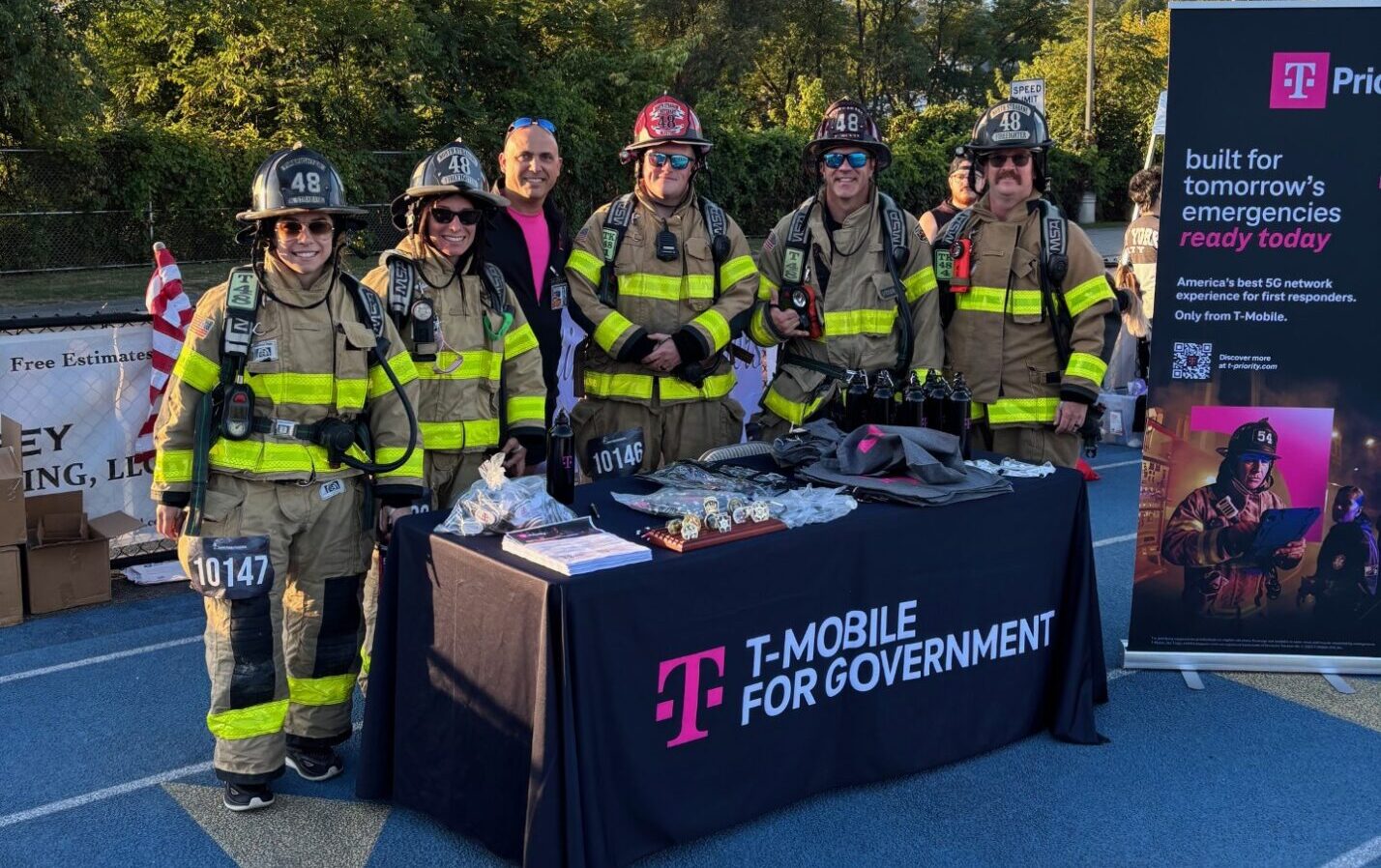
Technology at the Forefront
While sitting in his car, with a steady snowfall now covering his windshield, Gould took a video call with members of his public safety team regarding plans for storm Fern, the focus being on helping people stay safe, connected and informed while T-Mobile coordinated with public safety and emergency management partners to assess their needs.
“I support both sides — helping T-Mobile understand what first responders actually need and helping them understand what’s possible with today’s technology.” Gould explains. “T-Mobile’s technology is way more advanced than what agencies have traditionally relied on.”
T-Priority is a key T-Mobile public safety solution that opened his eyes to the innovation that sets the company apart, he says. T-Priority features a dedicated 5G network slice that helps provide first responders with lower latency and faster speeds more consistently to give them the highest priority across all 5G bands.
That means the essential tools that agencies depend on every day, like smartphones, tablets, thermal imaging and radios, run on a network that keeps up with them, even during times of extreme congestion.
“We optimize traffic around to help keep emergency communications moving,” Gould explains. “It’s technology that also comes with someone like me to reach out and see how I can fix this challenge you’re experiencing so you can focus on doing your job in those most critical moments. It’s what I would have wanted for me and my team during the 2022 blizzard.”
He often explains to people that if you don’t see a T-Mobile satellite truck out during an emergency, it doesn’t mean the network isn’t up and running. Alternatives like the company’s Self-Organizing Network (SON) are at play, using AI and automation to remotely tilt antennas and reroute signals around outages more efficiently and safely in harsh conditions.
“I mean it when I say T-Mobile saw the future and built for it,” Gould says. “T-Satellite is an example of a unique T-Mobile solution that already has proven data. It’s wild to think there are more than 650 satellites orbiting over the United States that our compatible smartphones can automatically connect to.”
Gould says when you combine T-Mobile’s technological innovation with his team’s personalized service, you get solutions before, during and after a major event.
“It’s not just about how we show up in the events,” he says, “but also on our blue-sky days, when nothing is happening, the real work begins to make sure first responders understand what’s available before they ever even need it.”
|
How T-Mobile Responds When Disaster StrikesT-Mobile’s expanded drone program supports emergency response by providing temporary coverage, situational awareness and aerial visibility — especially in areas inaccessible by ground vehicles. Vehicles such as SatCOWs (Satellite Cell on Wheels) and SatCOLTs (Satellite Cell on Light Trucks) can be quickly deployed to restore coverage when infrastructure is damaged or overwhelmed. |
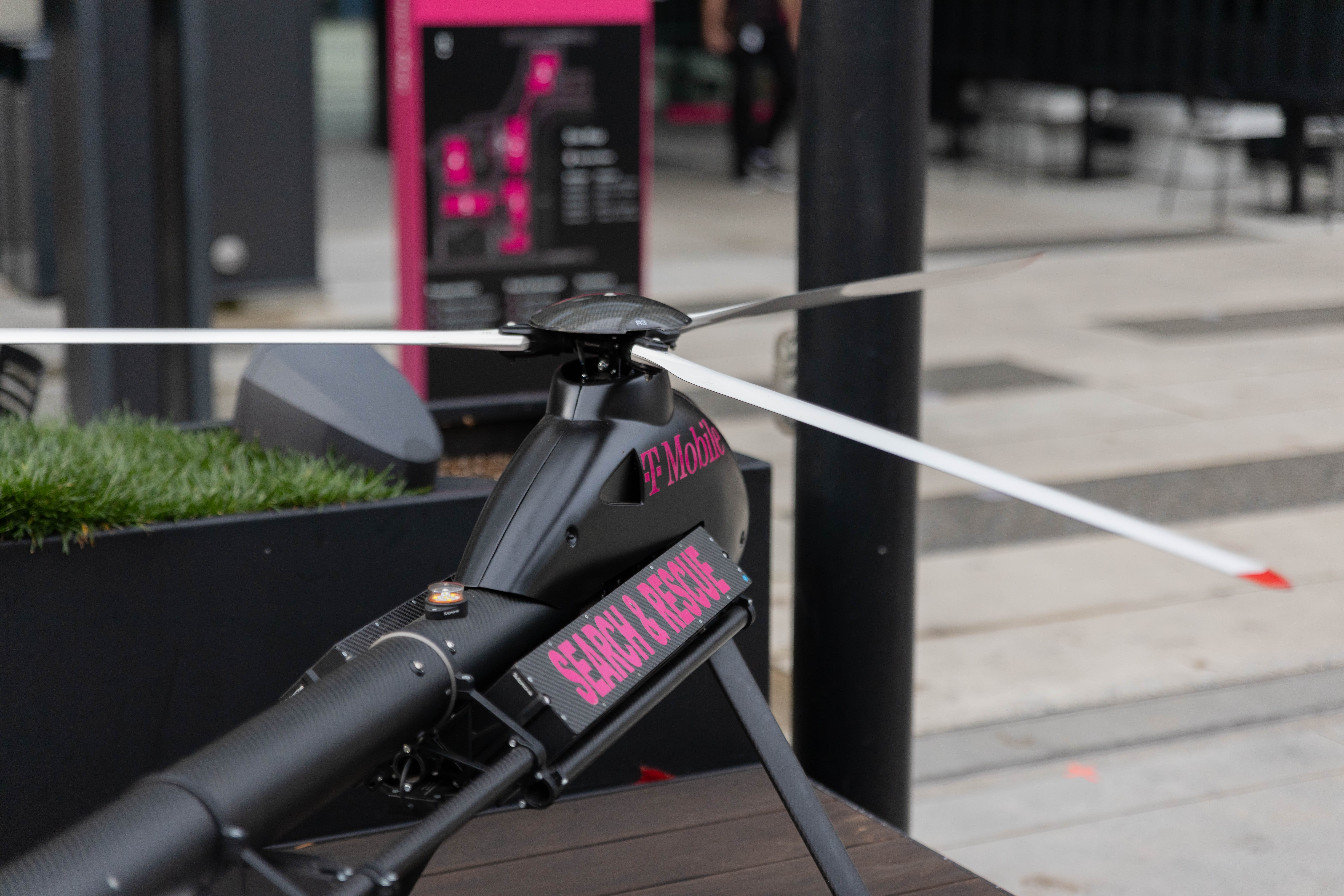
Service Before and After the Storm
In January, as he and his teammates discussed strategies to meet the needs of communities in Fern’s wintery path, Gould reflected on how the philosophy of his work has remained intact as he transitioned careers.
“I was a Boy Scout and a lifeguard before I became a 911 dispatcher and then a firefighter and police officer. I honestly feel this was a natural next step in my journey to serve,” Gould explains. “I know firsthand how the decisions to equip teams with the right connectivity tools can make all the difference and my job now is to prove that we’re looking, we’re listening, we’re learning and we’re always striving to do better.”
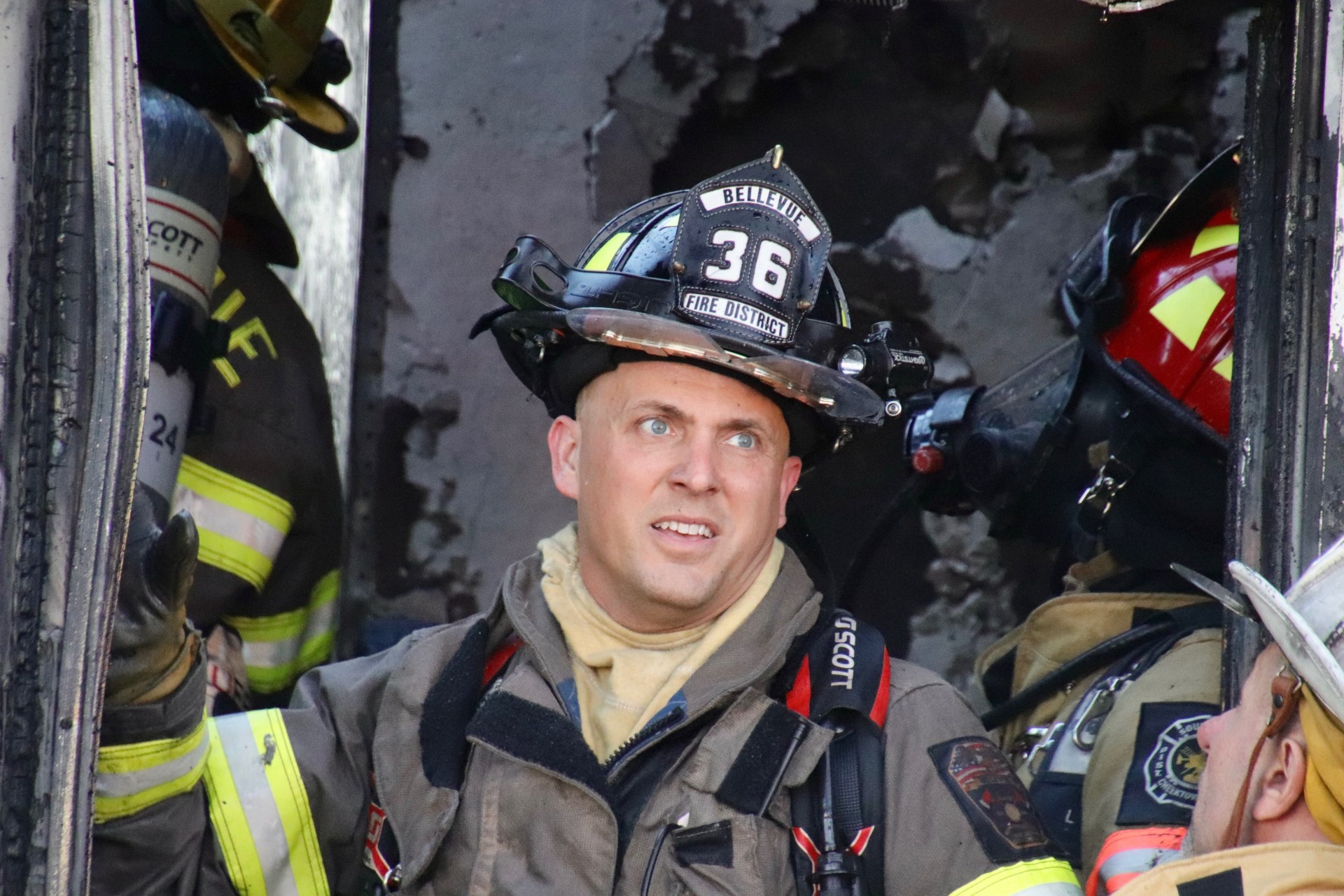
Later, as he passed by his locker of tactical gear at the fire station where he is still an active volunteer firefighter responding to emergencies in his free time, he picked up his black helmet — just one of many hats he’s worn as a public servant and now at T-Mobile.
“What I love about my role at T-Mobile is I am here to understand what communities need and to support them, whether they’re T-Mobile customers or not,” he says. “We are going to be reaching out to the agencies and communities that are affected by disasters, offering to support them however we can. We’re here to help and we’re here to keep communities safe.”
For more on how T-Mobile is responding to winter storm Hernando check out updates here.
Additional Media
Videos